In late 1990 and early 1991, Aerosmith were the most valuable band in rock and a band still under contract to someone else. Tim Collins had walked David Geffen out of a re-signing meeting on Robertson Boulevard with the symbolic small win of refusing to pay for lunch, and walked into Michele Anthony’s office at Sony with the bigger one: a multi-album deal that would soon be reported as one of the richest in rock. The catch was that Aerosmith still owed Geffen one more album before any of the Sony money could be earned. The Pump tour had only just ended. Steven Tyler and Joe Perry were already writing in Perry’s basement studio in Duxbury, Massachusetts, the room everyone in the camp called the Boneyard.
What the world bought on April 20, 1993, was the second version of Get a Grip. An earlier finished record, tracked through January and February 1992 at A&M Studios in Hollywood, was rejected by John Kalodner in March 1992 with a verdict that every participant later recounted in their own way. Across the two writing periods, the band wrote, demoed, and in many cases fully tracked roughly thirty more songs than the fourteen that made the album, and most are still in the vault. Two wall charts photographed from the producer’s wall and the surviving Beta SP documentary footage map out an album that was made twice, and a second album that was made once and never released. This is the story of both records, and of the camera that was rolling for the death of the first.
Late 1990 – early 1991: The Sony deal and the documentary man
The deal that re-routed the band’s commercial life came together fast. Collins had pushed Geffen to match Sony’s offer and Geffen had refused, in Collins’s telling in Walk This Way with a final dismissive “Go make your fuckin’ deal with Sony.” Michele Anthony’s number at Sony was $25 million plus another $5 million in related deal points, roughly $30 million guaranteed, with royalties closer to 25 percent than the industry norm. The press first picked it up in September 1991, and a Rolling Stone item on October 3 framed it as one of the most lucrative rock contracts ever negotiated.
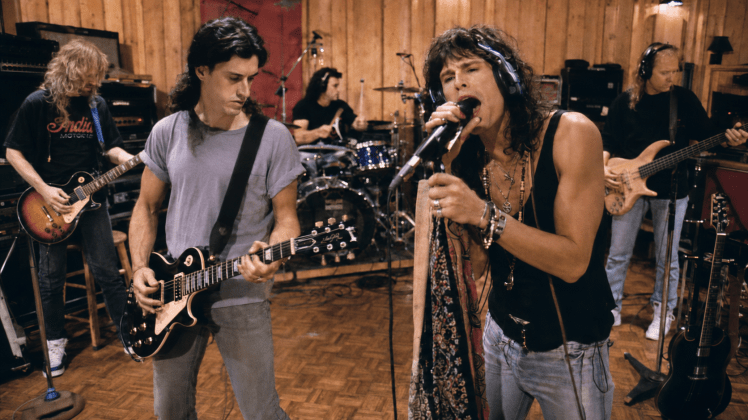
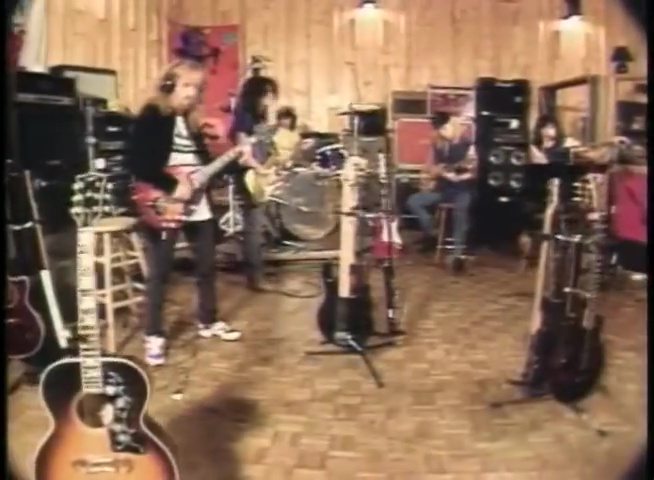
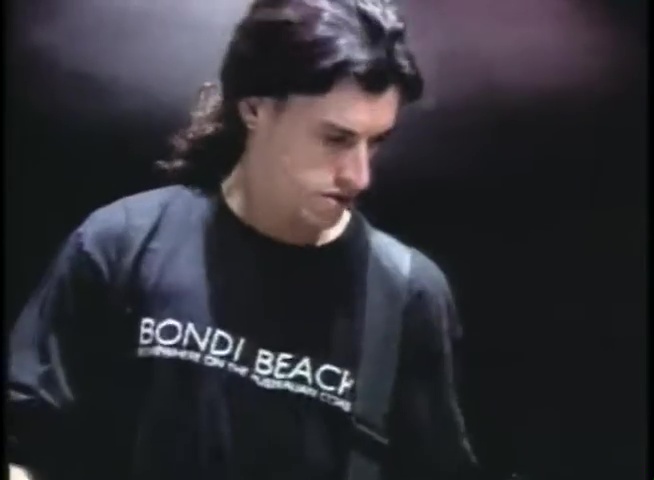
Inside Collins Management, Keith Garde was preparing for the next album. He hired a Boston videographer, on a leased Sony Beta SP rig, to film the writing and recording process from the beginning. The brief was simple: document everything, with a Making of Get a Grip video modeled on the Making of Pump MTV special as the eventual deliverable. The band was sober. Tyler and Perry were writing daily in the Boneyard, Perry’s basement studio at 1405 Tremont Street in Duxbury. Brad Whitford, Tom Hamilton, and Joey Kramer had families and houses on the South Shore. The bones of the next record were already going down on DAT before any contracts were signed.
Early 1991: Seeds in the Boneyard
The real writing started in February 1991. Through 1990 the band had been on the road with Pump, and between legs the members still found time to drop the occasional idea at the studio, but nothing cohered into the new album until Tyler and Perry turned the Boneyard on at the start of the year. Joe’s basement studio in Duxbury was a small 24-track room with the DAT machine always running. David Frangioni, the band’s MIDI specialist, whom Tyler nicknamed Gyro Gearloose because “he could rewire a Walkman to record 4-track,” kept the front-of-house gear running at both ends. That single habit of always rolling shaped the next two years: Perry told EQ Magazine in April 1993 that the Boneyard demos were really templates, and that when the band could not reproduce the original feeling later at A&M, they would lift the parts directly off the demo tape. Through the first half of 1991 the writing happened almost entirely as Tyler and Perry alone in a room, with the demo recording rotating between the Boneyard, Rik Tinory’s in Cohasset, and Courtland Studio in Hanson, Massachusetts. The songs from this stretch are, with a couple of exceptions, the rawest and most sexual on the whole Get a Grip timeline, in classic late-80s Aerosmith mode.
Two of the keepers came almost immediately. “Fever” was, by Perry’s account in EQ, the first song developed for the album, cut at the Boneyard in early February 1991 with the intro effect generated on a Lexicon LXP-5 in the room. Tyler told Red Beard in 2018 that when he first heard the track he ran down the road behind his house in headphones thinking, this is it. The same early-February Boneyard tape caught the jam that became “Boogie Man”, the eventual closing track, which was never re-cut. What ended up on the album is, per Perry’s EQ account, “the last two minutes of that jam right off the DAT,” after he and Tyler had jammed for forty-five minutes with Tyler at the keyboards playing a slap-bass part. Joe Perry, asked years later by Larry Katz to name the core of the record, put the early survivors together: “We had Eat the Rich, Get a Grip, Fever, Amazing, and Crazy, which was really the core of the album, you know, in LA.”
The dropouts came just as fast. The Courtland sessions in February 1991 produced early demos of “Lizard Love”, a sexual rocker about a snake-tongued woman, and “Dime Store Lover”, a half-spoken Tyler and Perry rocker about a cheap-and-tacky woman the narrator can’t resist, alongside scratchpad ideas like “Mama Wants” and “Hungry Lonely” that never developed. “Meltdown”, Tyler’s eventually seven-minute apocalyptic vision of climate collapse, started life at Rik Tinory’s in March 1991 as a pair of instrumentals. “Amazing” started at Courtland in April 1991, and the next day the Boneyard delivered the early demo of “Cryin’,” “Wham Bam”, a comic-book rocker about a seven-year sexual itch written with Richie Supa, and “Walk on Down,” the Joe Perry track that would eventually make the album with Perry on lead vocal.
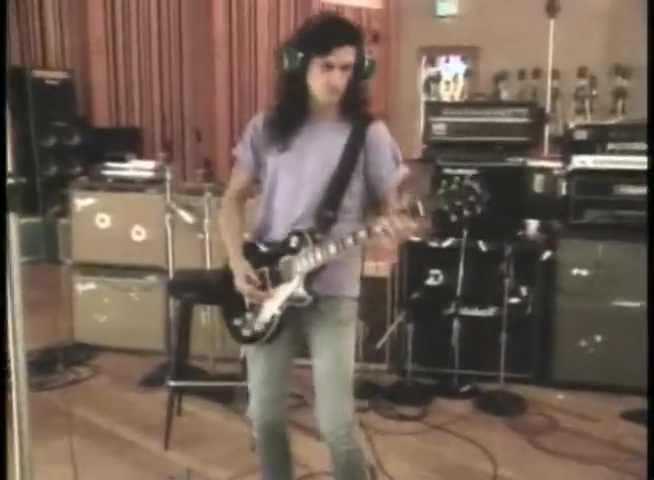
Three clips from this early Boneyard period were sanctioned years later by Vindaloo Music for the official Aerosmith.com archive. “Rehersal at Joe’s” is an instrumental jazz-bluesy jam with Tom Hamilton’s slap-style bass and Tyler scatting over the top, never developed into a song; the clip survives as greatmoments91. “Brass Ballz”, tagged SO91 on the same page, survives only as the line and a half “Somebody throw me a line, I’m down here where the sun never shines, abandoned by my daddy at birth” before the clip cuts. A third file, under the filename pianoSO91, is a piano-and-vocal-melody demo that is identifiably the 1991 skeleton of “Crazy,” cut before Desmond Child was involved; the chord shape and melodic center were on the Boneyard DAT a year and a half before the Vancouver writing session with Child refined the lyric into the version the world bought.
The first half of 1991 also pulled a couple of old outtakes off the shelf. In June 1991, three tracks were cut at a Boston-area room logged only as “Studio F”: “Eat the Rich,” “Ball and Chain,” and “Suzy Q.” “Suzy Q” was the working title for what would become “Devil’s Got a New Disguise”, carrying “Sweet Susie Q” melodic scraps from the Pump sessions of 1988 and 1989, and it would be retitled at A&M in January 1992. “Walking on Danger Street”, a swaggering rocker left over from the 1987 Permanent Vacation sessions, was another that got tried again in this window. Most of these early ideas never got past the demo stage. The ones that did were the songs Tyler and Perry would bring to Bruce Fairbairn when full tracking began.
Late 1991: Vancouver, Long View Farm, and the writing road
Through the second half of 1991 the writing rotation widened beyond Tyler and Perry alone, and the first outside session of note was with Diane Warren. At her Malibu beach house, Tyler and Warren wrote “Good Thang”, a 1950s-flavored mid-tempo ballad registered with the US Copyright Office on September 27, 1991, and demoed by Warren’s publishing company with Tyler’s vocal on top; Aerosmith never picked it up for proper tracking. The same beach-house session, a little before that registration, also developed the demo of “Devil’s Got a New Disguise,” the trio updating the “Suzy Q” lyrics from June. In October 1991, between writing trips, Aerosmith and a fifty-seven-piece orchestra taped a “Dream On” performance for MTV’s Tenth Anniversary Special at the Wang Center in Boston. The piano-descent rehearsal, Tyler floating down from the flies in a tailcoat and playing the chord intro, was shot six or seven times to get the camera coverage, all of it on Beta SP.
November brought two big demo sweeps at the Boneyard and Courtland that, between them, gathered almost the whole pool of in-progress songs in one place, a snapshot of the band’s live working set going into the A&M sessions. The keepers were there: “Crazy,” “Gotta Love It,” and “Line Up.” So were the dropouts: “Black Cherry”, a dark Tyler rocker about a man with a prostitute that Kalodner would later call perverted, captured here in an early Boneyard demo; “Strange”, a rocker about a man in trouble with drug lords; “Trouble”, a Tyler, Perry, and Supa rocker that never finished its drums; “Yo Mamma”, a fun bluesy Tyler rocker about a young man who accidentally sleeps with his girlfriend’s mother; “Meltdown”; “Lizard Love”; “Amazing”; and the first demos of “Thirteen”, a mellow dark ballad that took its working title from its chart position because Tyler never finished the lyrics. The same sweeps caught the two-part writing demo of “Head First”; “Sedona Sunrise”, a country-flavored Pump-era leftover logged under its working title “Heat of Love”; an idea listed only as “Ain’t Gonna”; and “Funk Stomp”, the instrumental demo of the title track “Get a Grip” before its lyrics were written, an audio clip from 1992 was hosted on the web.
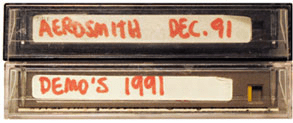
In December 1991, Jim Vallance, the Canadian songwriter who had co-written with the band on Permanent Vacation and Pump, hosted Tyler and Perry in Vancouver. Vallance has dated their visit to December 2–5, 1991, and places the writing of “Legendary Child” in that window, in the same block as “Don’t Stop”. The direction Vallance brought was structural: longer-form arrangements, tighter architecture, more defined melodic centers than the loose Boneyard rockers. “Legendary Child” is the song that proves Get a Grip was always part archaeology. Its riff predates the album by years; Perry was already throwing out the basic melody during Sweet Emotion medleys on the 1990 Pump tour, including the Tinley Park show that July, and the riff itself traces back to the Pump-era demo “Guilty Kilt.” Vallance kept work-in-progress DATs in his basement, and a 2012 dispute over “Legendary Child” credit was resolved when he produced labelled tapes from December 1991 with the three of them on them.
The title track and “Head First” were written further east, at Long View Farm Studios in North Brookfield, Massachusetts. Vallance’s photo from the title-track session shows him and Perry in the loft with a Macintosh SE running Performer to generate drum loops. On a since-removed version of his “Head First” page, Vallance recalled a passing worry during the writing that the song “might sound too much like The Stones’ ‘Street Fighting Man.'” “Head First” ended up a B-side on the “Eat the Rich” CD single and went on to become the first track Aerosmith ever released as a free online digital download. Between trips, Tyler worked in his own writer’s studio, a forty-square-foot floating room above his two-car garage in Marshfield, sitting on rubber stoppers with two inches of air around it, where he could push it to 120 dB at three in the morning without waking the house. The deepest piece of archaeology was a Pump-era leftover, “Deuces Are Wild”, written by Tyler and Vallance in Vancouver across December 1988 and January 1989 and pulled from Pump by Kalodner over a title dispute. Dusted off now, it would eventually come out using, for the most part, the original 1988 home demo with Tyler’s vocal and harmonica added on top.
November 1991: Sierra Tucson
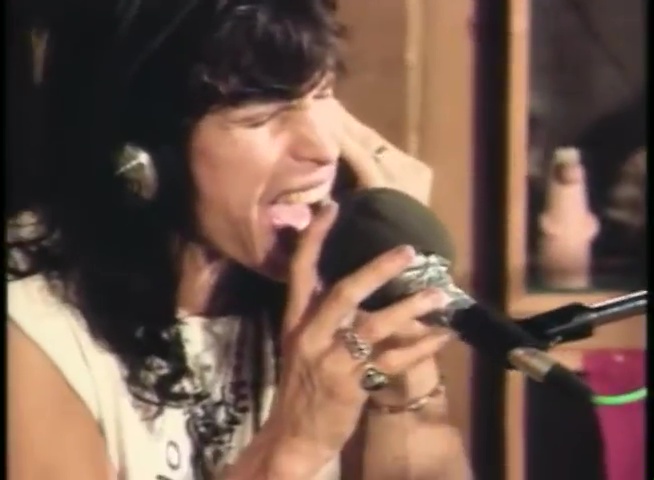
By the late fall of 1991, Tim Collins had decided the entire band needed to go to Sierra Tucson, and none of them had used in years. Joe Perry, in Rocks, said his exact thought at the band meeting was that they were sober, and had been sober for six years. Brad Whitford’s wife Karen was due to give birth. Billie Perry was eight months pregnant with the Perrys’ son Roman. Tom Hamilton’s wife Terry had just had surgery. Collins’s response, as Perry later described it, was that he could not in good conscience walk into Sony and say the band was in shape to take the millions if he believed they were falling apart. The threat was implicit and unmistakable: the Sony deal could be killed. They went, and so did Bruce Fairbairn, whom Collins also pushed into rehab. The therapists who took the intake sessions, in Perry’s account, concluded within days that there was no reason for the band members to be there, and Perry’s own therapist told him directly that whatever was happening could have been handled as outpatient work back in Boston.
Tyler had checked in earlier, on his own, for codependency, and in his 2011 memoir Does the Noise in My Head Bother You? he described family week: the band and their wives, Collins and his hand-picked therapists, and tour manager Bob Dowd, a former Nevada trooper Collins had hired as a “drug cop,” all sitting in a circle in a treatment room in Arizona. Tyler had been complaining that Dowd was watching him and Perry try to write and blowing the vibe, and he laid into Dowd at the session. Collins defended Dowd directly to the counselors. One of the counselors looked back at Collins and told him he was the sickest person in the room. Tyler grabbed boxes, pushed them into the middle of the floor, threw his giant scarf over them, and named the pile the Shroud of Touring. He raised a coffee cup as a goblet and toasted that he hoped hell would be as much fun as getting there. The band that walked out of Sierra Tucson was sober and at war with its own management. The firing of Collins eventually came in 1996, after Nine Lives, and Collins gave his own version of it to Larry Katz in June 1997, but the burr that Tom Hamilton named as the burr under the saddle for the next five years went in during that family week.
January – February 1992: A&M Studios, Hollywood
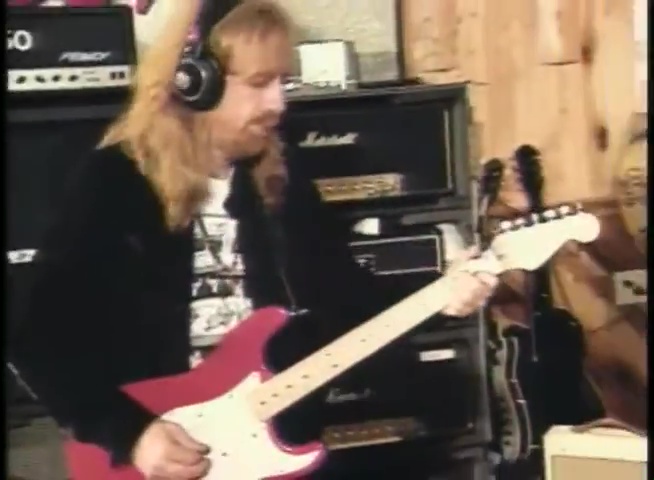
In January 1992 Aerosmith began full-band tracking at A&M Studios in Hollywood, in the Charlie Chaplin lot’s Studio A, the room with the oversized glass door that Perry remembered in Rocks as the “famous glass Star Wars door,” usually on the blink, so “everyone wound up walking into the glass at least once, always reminding us of the Three Stooges.” The Pacific Northwest had been the home of Permanent Vacation and Pump; after Sierra Tucson, the band refused to be sent back, and the compromise was Los Angeles with Fairbairn at the console. Fairbairn’s method across these records was to come down from Vancouver, work the band hard for a week or two, find the holes, and send Tyler and Perry back to the Boneyard with notes before returning; asked once what made Perry useful in a tracking room, he said Perry plays on his feet, that you can ask him for a solo five times and get five different takes, each just as good. Perry rented apartments in West Hollywood, where Sam Kinison lived in the building, and the four families on the lease produced four boys inside six months: Roman Perry, Taj Tyler, Graham Whitford, and Julian Hamilton. Shelly Yakus, an old friend from the Record Plant, opened his vintage-gear stash, and by Fairbairn’s own count in his “Back in the Saddle” EQ sidebar, Perry used something close to fifty vintage amplifiers across the sessions, with a Park amp split with an aged Epiphone Combo singled out as one of the bizarre-looking combinations that sounded extraordinary on tape.
From the turn of 1992 through February, A&M was the band’s main tracking room, with the Boneyard and Courtland still picking up writing and demo work between LA trips. The sessions opened with a “Get a Grip” pass at the very end of December 1991 and ran daily through January, working the songs the band had brought west: “Dime Store Lover,” “Don’t Stop,” “Suzy Q” (retitled “Devil’s Got a New Disguise” around early January), “Lizard Love,” “Meltdown,” “Thirteen,” “Yo Mamma,” “Steel Tips” (the working title for “Fever”), “Joe’s Psycho,” “Amazing,” and “Black Cherry.” A January 17 Boneyard session caught further work on “Crazy” along with the first appearances of “Ain’t That a Bitch”, one of three completely different songs the band would write under that title between 1991 and 1996, plus “Shut Up and Dance” and “Can’t Stop Messin’ with It” in early forms. The “Can’t Stop Messin'” demo had an alternate guitar melody, electric drums, and an extended outro with Steven going breathing sounds with his mouth as the guitars ascended from low to high (same lyrics though). Around February 1992, the working pool was gathered onto two Courtland compilation tapes, one a full mix and the other the same set with the guitars stripped out, logged in the band’s paperwork as the Courtland “copulation” tapes. The first day of lead vocals at A&M appears to have been February 18, 1992, when Tyler cut a vocal he was commintng to for “Get a Grip” and gave two old outtakes one more try, “Hollywood”, an industry-critical rocker first attempted in 1986, and “Walking on Danger Street,” neither of which developed past a few alternative vocal lines over old basic tracks. Previous vocal takes were likely temp, demo or live-in-studio takes only. The tracking-room wall told the working story.
The LA wall chart, Mid-March, 1992
The LA chart, photographed in the Bruce Fairbairn estate archive, listed sixteen songs in a numbered grid with columns for Basics, Guitar O/D, Lead Vox, B.V., and Keys. Hand-drawn icons (a polka-dotted Basics column, a skull-and-crossbones over Guitar O/D, a blue airplane, a dinosaur, a “wobbley thing”) gave each cell its track-status code. Don Henley flew in around March 6, 1992, to put backing vocals on “Amazing,” in exchange for the band agreeing to play a benefit for his Walden Woods Project, which they fulfilled with a six-song set in Foxborough, Massachusetts, on September 6, 1993; his signature on the chart anchors the date. The sixteen LA songs, in chart order:
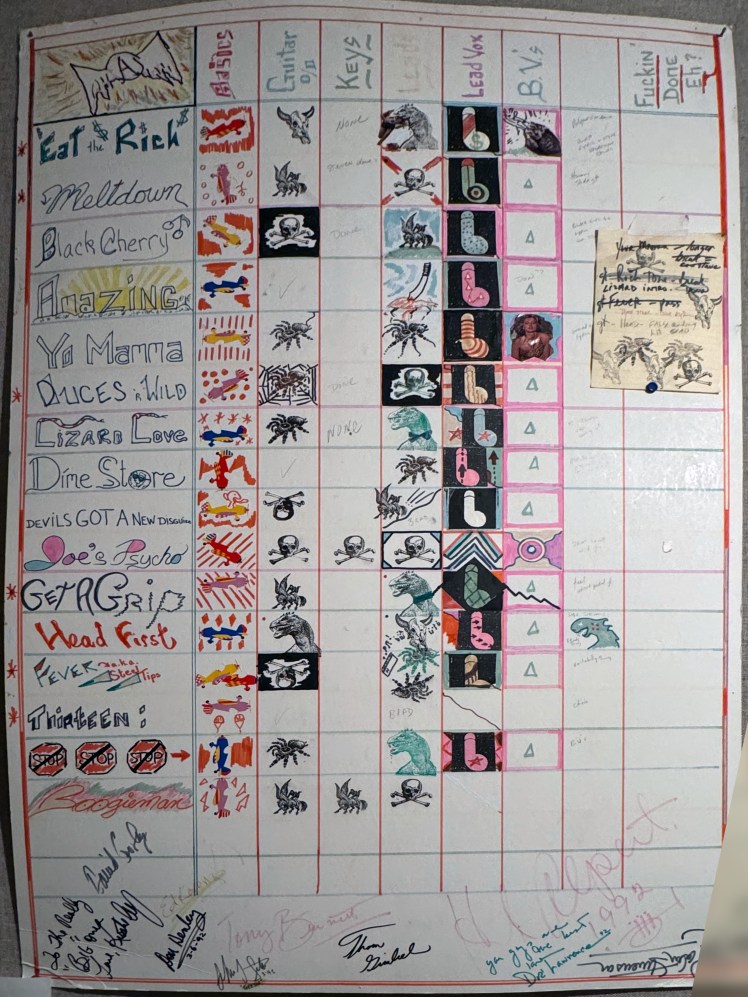
- “Eat the Rich”: stylized on the chart, a Tyler / Perry / Vallance rocker about class warfare, with the polka-dot Basics column already marked done.
- “Meltdown”: the seven-minute apocalypse, with a polka-dot Basics, a spider over Guitar O/D, and an X through the Lead Vox column.
- “Black Cherry”: a male symbol added beside the title; skull-and-crossbones over Guitar O/D; “Done” marker in Keys.
- “Amazing”: a sunburst Basics column, blue airplane Guitar O/D, a checkmark in Keys, a B.V. triangle, ready for Henley.
- “Yo Mamma”: striped Basics, a spider over Guitar O/D, and a picture of a woman drawn into the B.V. column.
- “Deuces Are Wild”: written as Duces ‘r Wild on the chart, the resurrected 1988 Vallance demo with new vocal, polka Basics and “Done” in Keys.
- “Lizard Love”: stars on Basics, “NONE” written in Keys, and a lizard drawn into the Lead column.
- “Dime Store Lover”: listed as “Dime Store”; orange Basics with a checkmark in Guitar O/D.
- “Devil’s Got a New Disguise”: orange Basics with a skull in Guitar O/D, a small devil figure drawn into the Lead column, and a “3 BD” annotation alongside.
- “Joe’s Psycho”: Perry’s January 1990 Tinory demo, made it all the way to a chart line two years later, diagonal Basics and multiple skull-and-crossbones across columns.
- “Get a Grip”: the Long View title track, diagonal Basics, a dinosaur over Guitar O/D, a lightning bolt drawn into the Lead column.
- “Head First”: eventually a CD-single B-side, vertical-stripe Basics, dinosaur Guitar O/D, beer-can-style lettering in Lead Vox.
- “Fever”: listed as Fever a.k.a. Steel Tips, the chart confirming Steel Tips as the working title; airplane Basics, skull-and-crossbones in Guitar O/D, “wobbley thing” note in B.V.
- “Thirteen”: yellow airplanes in Basics with a “BRAD” annotation in the Lead Vox column.
- “Don’t Stop”: written as a pictogram, three crossed-out STOP signs followed by an arrow; spider in Guitar O/D, dinosaur in Lead.
- “Boogie Man”: character drawings in Basics; spider in Guitar O/D; three skulls across columns. Still listed even though the eventual album version was the 1991 Boneyard DAT jam untouched.
The chart represents almost everything Tyler and Perry had written across fourteen months at the Boneyard, Tinory’s, Courtland, Studio F, Long View, Vancouver, and A&M, sequenced into what the band thought was their next record. Most of it was the two of them alone in a room. Jim Vallance had co-written four of the sixteen, all in late 1991, and no outside writer had yet been brought in by Kalodner. The sex, drugs, and blues axis that defined classic Aerosmith was prominent, and light on obvious singles. A mix tape dated March 13, 1992, logged as “Aerosmith A&M Mixes,” carries the same sixteen titles in the same order as the wall chart. That tape is almost certainly the playback the band assembled for Kalodner, which pins the listening to on or just after March 13, 1992.
March 13, 1992: “I don’t hear it.”
Kalodner sat in at A&M to hear that March 13 mix, fresh off a Jimmy Page solo album in England. Fairbairn ran the playback, with the band, Tim Collins, and Keith Garde in the room and Kalodner’s eyes closed for most of it. The line that followed was caught on tape by the band’s videographer, Peter Martinez, who watched Steven stay “nervous the way he would always be in a situation like that, because it’s like his kid,” and who has remembered the verdict word for word: “I don’t hear it. I don’t hear the hits. We need to do more work.”
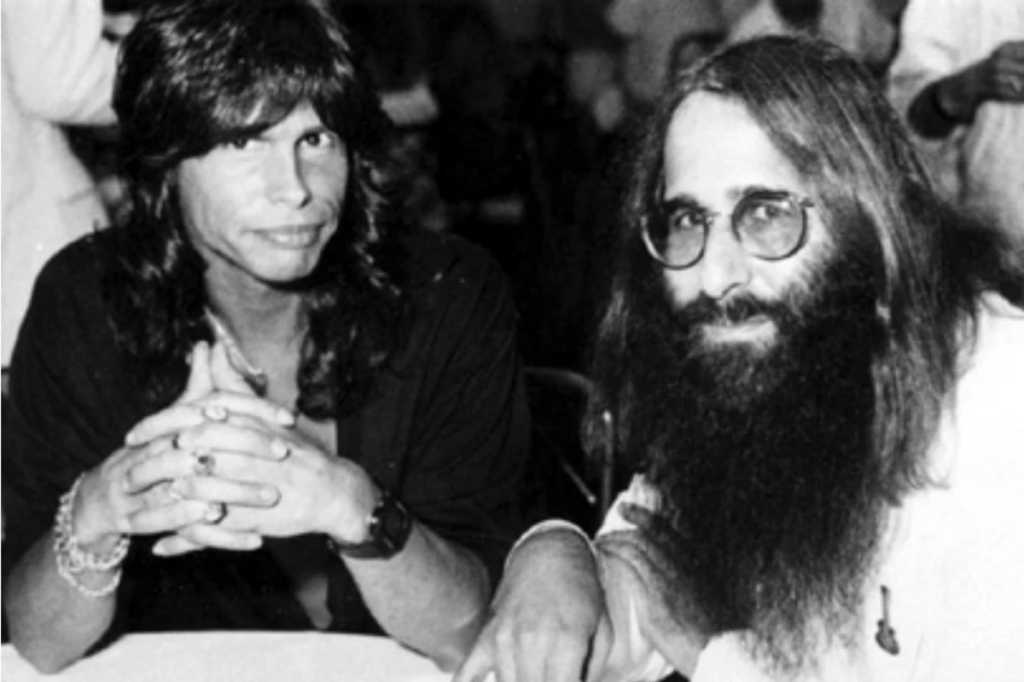
Every participant later told the moment in his own way, and each told it on the record. In Walk This Way Kalodner framed it as a market read: he had trouble with the lyrics on “Black Cherry” and the raunchier outtakes, which he called perverted, called the production not happening, and told Collins and Fairbairn the band needed new co-writers and new songs, because if he would not buy it he was not going to ask anyone else to. Joe Perry, in Rocks, remembered the line as “I don’t hear a single” and his own reaction as smoldering while Tyler went off the deep end, though Perry liked the raunchy songs and thought they fit the band, and the pragmatic call to fly back to Vancouver and write more was his. Tyler read it as a fight over hearing, Kalodner listening literally while Tyler sang between the notes, and what stung most was watching Collins let Kalodner threaten to take his name off the record. Tom Hamilton, both in Walk This Way and the following year to Larry Katz, pushed back on the whole framing: the band had laid down basics, overdubs, and rough vocals, and the consensus among themselves before Kalodner arrived was simply that they were short a few songs. Whatever the precise phrasing on the day, the album scheduled for a third-quarter 1992 release was dead in that form. The project went on hold the moment the plug got pulled. There would be no Vancouver tracking run yet; first came months of new writing, back at the Boneyard and on the road.
Spring 1992: Back to the Boneyard
The second writing period began back at Perry’s basement studio in Duxbury, with Tyler in his floating room over the garage and Perry in the basement. The management visit Tyler later recounted came in this period. Collins, counselor Lou Cox, and the band’s therapists came to Tyler’s house with a concern about how the album was going. They had decided, in Tyler’s account, that he was not writing the way he used to and that some sexual outlet on the road might help the songs come, telling him it would “really be all right to get a blow job once in a while.” Tyler’s response was to refuse and to call the management package the total Aerosmith management package. The Brain Trust, as Perry called the same apparatus, had taken its meddling into the lyric department.
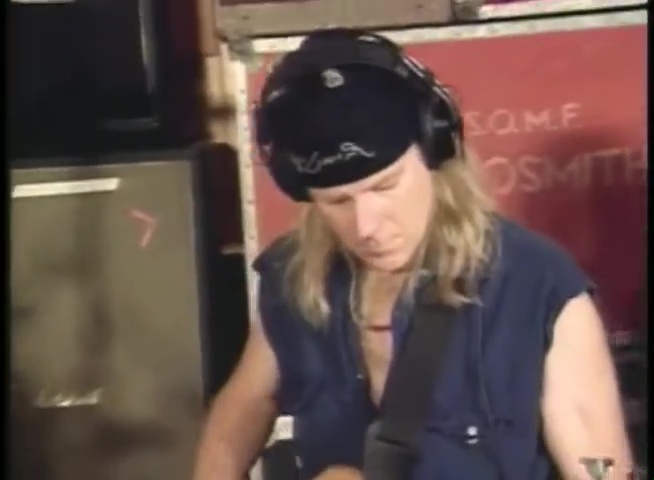
The “Fever” lyric standoff with Tom Hamilton happened in the same period. Tyler brought a couplet to a band run-through comparing a buzz off crack with an alternative he considered more rewarding and more graphic, the line “I’d rather be OD’in’ on the crack of your ass.” Hamilton listened, then turned and told Tyler, “That’s not going on my album.” Tyler has called the line one of his favorites of all time, and points out that he wrote the song. The lyric, in a softened form, eventually appeared on the released “Fever,” with the body part changed from second-person to third-person possessive while the rhyme stayed. The standoff was the larger point: the second round of songs had to land at radio, everyone in the band knew it, and the room argued out, song by song, where the line was. The writing also went back on the road. In April 1992 Tyler and Perry returned to Vallance in Vancouver, the trip on which Vallance dates the finishing of “Legendary Child.” On the same visit they pulled out “Is Anybody Out There?”, a melodic mid-tempo song the three of them had started during the 1987 Permanent Vacation sessions and never finished, and tried a new vocal over the original 1987 demo; the new words did not quite work, and the song went no further.
The co-writer tour
Once the rewrite period started, Kalodner began bringing in outside writers, and with them came a wider thematic range than the Tyler-and-Perry-alone LA chart had carried. This is the richest songwriting stretch in the whole story.
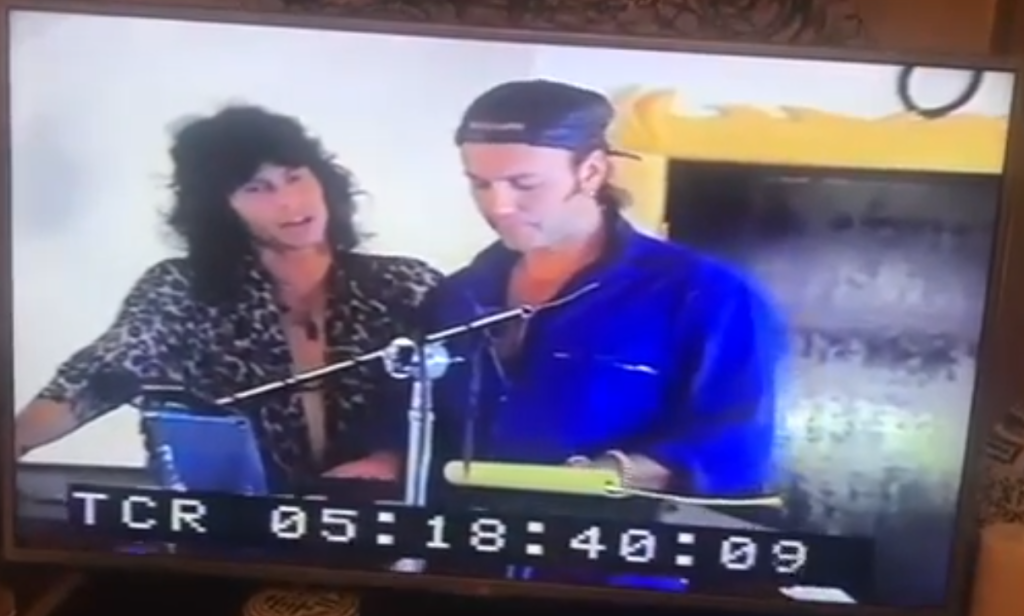
Desmond Child, returning from “Dude (Looks Like a Lady),” “Angel,” and “What It Takes,” worked with Tyler on “Crazy,” refining the 1991 Boneyard piano demo into the released radio single, and worked on “Flesh.” “Crazy” had been set aside earlier by Kalodner for sounding too close to “Angel.” A clip of Tyler and Child at Child’s Miami studio working through the first verse of “Crazy” shows the granular work: Tyler arguing that the opening drops the listener into the middle of an argument with no setup, the two of them landing on the image of a girl leaving on a “7:30 train” to paint the whole picture.
Mark Hudson, whom Kalodner suggested the band meet, arrived expecting to write Aerosmith-by-numbers and got redirected. Hudson has told the story many times, including in his solo retelling, with Nube 9, with Rebecca Cesarz, and at the 2009 Rock ‘n’ Roll Fantasy Camp alongside Tyler. His first impression of Perry was of a quiet man who gave him almost nothing back while Hudson filled the silence with small talk about the Red Sox and clam chowder, and he thought it was going to be a long day, until Tyler swept in and changed the room. The pivot was Tyler asking what Hudson would bring if he were actually in Aerosmith, which pushed Hudson toward the social-conscience songwriting of John Lennon. “Livin’ on the Edge” was written in the climate of the late-April-to-early-May 1992 Los Angeles riots, though its real subject is perceptual as much as topical, located in how people see the world. The bridge was improvised under pressure; with nothing prepared, Hudson has described silently calling on Lennon, God, and Jesus before the section arrived almost from nowhere, and Perry supplied the lift, identifying what Hudson calls the “money chord,” a B-flat. The demo later released on the single preserves an earlier lyric shape Tyler later sharpened. After the record had progressed, Tyler called Hudson down to the Four Seasons, sat him in front of a pair of big speakers, and played him the finished track; Hudson remembers Tyler becoming emotional by the first chorus.
Jack Blades of Night Ranger and Tommy Shaw of Styx flew in and wrote “Shut Up and Dance” with the band on the South Shore. Blades has told the story more than once, including to Ultimate Classic Rock: the band was so deep in its own catalogue that every idea kept colliding with something already recorded, “Nah, we did that on Rocks,” or “we did that on Draw the Line,” or “that sounds too much like ‘Mama Kin,'” until Blades pulled out what he has called his “Rubicon funk roots,” started a groove, and Tyler said, “I love it.” Blades has stressed how much Tyler’s drummer instincts drove the writing, because Tyler hears rhythm first.
Taylor Rhodes had Kalodner’s blessing for a single day and finished lyrics on Joe Perry’s eighteen-month-old “Cryin'” demo. The song had a strong emotional and melodic core early, but Kalodner disliked Tyler’s lyrics, and it went through more lyric scrutiny than anything else on the album. Lenny Kravitz showed up at the Boneyard in his RV, since he didn’t fly, and co-wrote “Line Up.” The spoken “Come on, Joe” interjection on the released “Line Up” came straight out of Kravitz talking in the room while Tyler kept the DAT rolling, and it survived from that original Boneyard demo onto the final track. “Line Up” made the album, and the following year it also appeared on the Ace Ventura: Pet Detective soundtrack.
Two writers bridged both halves of the record. Jim Vallance stayed on the writing team across both periods, returning for the final “Eat the Rich” pass in Vancouver in 1992, the rewrite that turned the working title “Fuck the Rich” into the released song. Vallance has recalled that the song came together in his Vancouver basement studio, starting with Tyler hammering like a banshee on a Korg M1 keyboard, the source of its underlying jungle feel, with Perry supplying the verse riff and Vallance adding the two-chord descending guitar phrase over it. Richie Supa, four years sober and back in Tyler’s writing room, brought “Trouble” in and had added early keyboards to “Amazing” the year before. Don Henley’s named contribution stayed at the backing vocals on “Amazing.” By August 1992 the new batch had cohered far enough to fill a working tape whose jacket Perry labeled in his own handwriting, “New Stuff.” It held “Can’t Stop Messin’,” “Shut Up and Dance,” “Walk on Down,” “Wham Bam,” “Flesh,” “Gotta Love It,” “Cryin’,” “Ain’t That a Bitch,” “Trouble,” “Strange,” and “Line Up.” The rewrite Kalodner had demanded in March was, by late summer, most of an album.
The honest reading of Get a Grip as a finished commercial object is that it is structurally a session-writer’s album wearing an Aerosmith jacket. Five of the eventual fourteen songs carried outside co-writers on the credit, and several more had outside producers’ shaping. The LA chart had been sex and blues with one or two breakouts; the new songs broke the album open thematically, a survival anthem in “Livin’ on the Edge,” a heartbreak ballad in “Cryin’,” a teen-rebellion sex parable in “Crazy,” and the album’s last sexual statement in “Flesh.” Aerosmith’s classic sex themes were preserved in the new songs; the change was that the album was no longer dominated by them, and the band knew the second draft was being engineered for radio.
September – November 1992: Little Mountain Sound, Vancouver
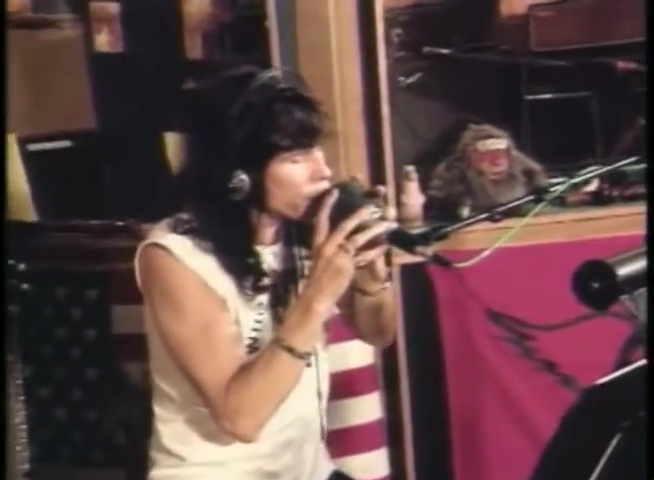
Once the new songs were ready, the band reversed itself on Vancouver and went to Bruce Fairbairn at Little Mountain Sound for the second tracking run, with the documentary camera still rolling. Fairbairn was back at his console, and Mike Plotnikoff, Ed Korengo, and John “Geedis” Aguto handled second-engineer duties. A demo set from October 14, 1992, shows how far the work had come by mid-run, pulling together “Gotta Love It,” “Can’t Stop Messin’,” “Trouble,” “Cryin’,” “Get a Grip,” “Walk on Down,” “Shut Up and Dance,” “Flesh,” “Livin’ on the Edge,” “Wham Bam,” “Crazy,” “Line Up,” “Strange,” and “Legendary Child,” reading like a progress check, most of the eventual album already in place, plus the last of the outtakes still in contention.
The hardest single fight of the Vancouver stretch was over a lyric. Tyler holed up in a hotel room for a month with the new words Kalodner wanted for “Cryin’,” the walls covered in Scotch tape and scraps of paper, and rewrote three or four times before telling the room he was going to sing his original lyrics. His defense, framed as a paraphrase of George Bernard Shaw, was that reasonable people adapt to the situation they find themselves in while the unreasonable ones insist on making the world see things their way, so the unreasonable people are the catalysts of progress. The vocal arc was the song, Tyler argued; the exact words mattered less than what they did in the singing. The “Cryin'” the world bought opens brokenhearted, the tables turned on a love gone wrong, and lands on a chorus where pleasure and pain leave almost no breathing room between them. For all its power-ballad reputation, the released lyric is more carnal than it sounds: the chorus pivots on the line “down on me,” which listeners have long taken as a nod to oral sex.
By the end of the run, the tracking-room wall held the near-final picture. The Vancouver chart, undated but most likely from late November 1992 as the sessions wound down, listed eighteen songs, all stamped RUSH and signed by Andy Gurman, a mix of new co-written material, LA carryovers, and a lower band of LA carryovers that needed final passes. The eighteen Vancouver songs, in chart order:
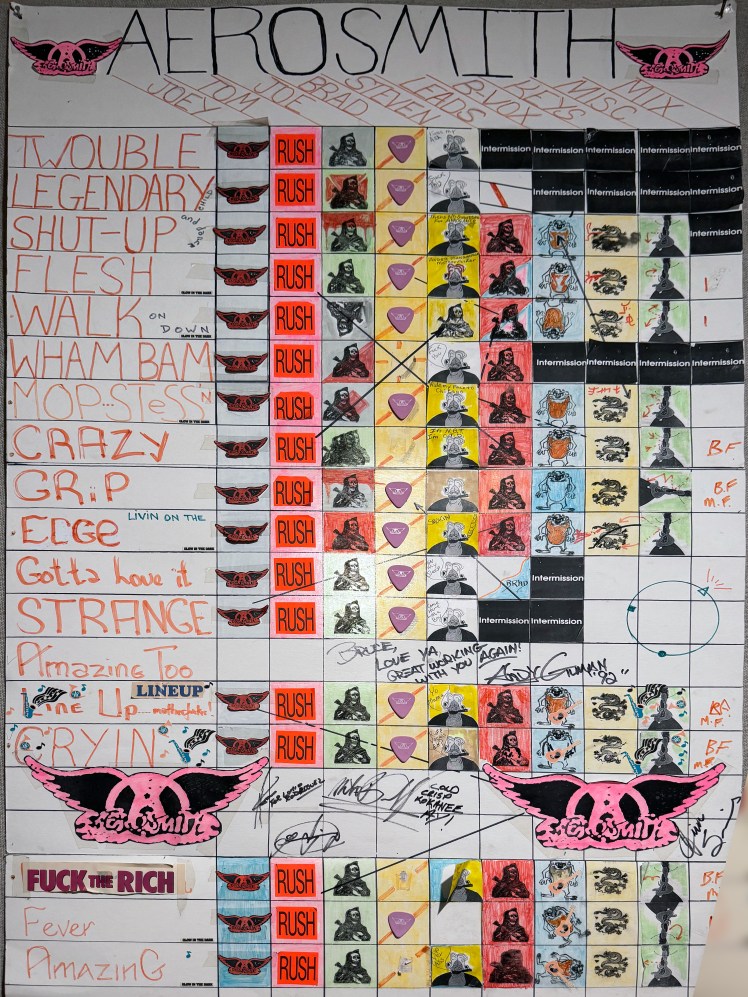
- “Trouble”: hand-lettered as “TWOUBLE” in chibi-style.
- “Legendary Child”: the 1991 Vallance co-write, fully tracked at Little Mountain in the September 1992 sessions, then shelved for twenty years until 2012’s Music From Another Dimension!
- “Shut Up and Dance”: the Blades / Shaw / Aerosmith co-write, with the “…and dance” added in smaller handwriting after the main title.
- “Flesh”: the second Desmond Child co-write.
- “Walk on Down”: the Joe Perry sex-and-cars rocker that would eventually carry Perry on lead vocal on the album, with “On Down” added in smaller handwriting after the main title.
- “Wham Bam”: the Supa co-write that had carried over from LA.
- “MOP-STeSS’n”: it’s Can’t “STop MeSSin” With It. Tyler was probably goofing around with a fun writing gimmick.
- “Crazy”: written as “CRAZY”; the Desmond Child rewrite of the 1991 Boneyard piano demo.
- “Get a Grip”: written as “GR.iP” on a sticker.
- “Livin’ on the Edge“: written as “EDGE” with “LIVIN ON THE” annotated above; the lead vox cell has a “Smokin'” annotation.
- “Gotta Love It”: the Mark Hudson co-write that almost got lost in the mixing crisis three months later.
- “Strange”: the LA-era rocker, here in its final mastered mix that still didn’t make the album.
- “Amazing Too”: an unresolved Vancouver-only entry; possibly a second “Amazing” variant or rework attempt.
- “Line Up”: with a “motherchucker” joke variant on the chart; carried over from the LA writing period.
- “Cryin'”: with saxophone notes drawn around the title, anticipating Thom Gimbel’s part.
- “Fuck the Rich” (= “Eat the Rich”): LA carryover with a “Fuck the Rich” sticker over the original title.
- “Fever”: LA carryover.
- “Amazing”: LA carryover, second appearance after position 4 on the LA chart.
The eighteen Vancouver songs collectively read sharper and shorter than the sixteen LA songs they replaced. “Crazy,” “Cryin’,” “Livin’ on the Edge,” and “Flesh” were the radio architecture Kalodner had asked for, and the raunchier outtakes that had dominated the LA chart had been pulled. Aerosmith were no longer arguing for the album they had originally written; they were tracking the album Kalodner had described.
January 1993: The mixing crisis at Can-Am
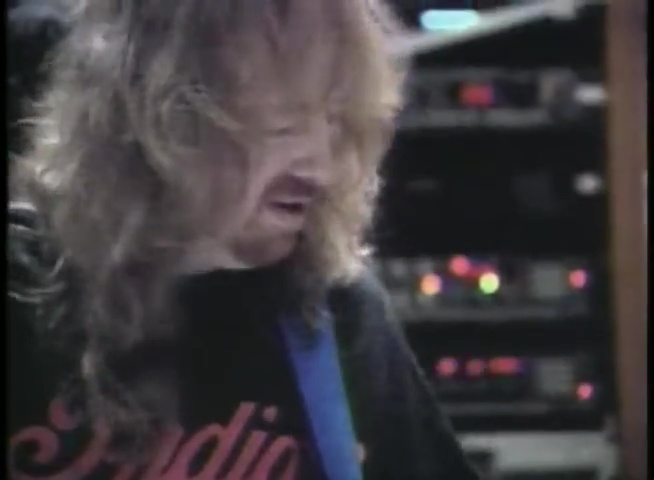
By January 1993 the band was at Can-Am Studios in Tarzana, mixing with Brendan O’Brien, who had come up through the Black Crowes, the Georgia Satellites, and Stone Temple Pilots and had the band-sound reputation Perry was chasing. The mixing run spanned roughly eighteen days that January, with almost every track passing through. The most documented save of the run was on “Gotta Love It,” though the faintly off-tempo backing vocals audible on the released “Don’t Stop” leave open the possibility that it was that song that got the same treatment, or both. Perry told EQ that the day before the mix deadline, when the band finally pulled the multitrack up, the keyboards, strings, and backing vocals were all missing, surviving only on the demo. O’Brien proposed flying everything off the demo onto the master, but the demo had been recorded at a slightly different speed and the SMPTE would not lock. So, as Perry described it, every four to six seconds O’Brien had to stop the tape, fly it in, and slap one reel with his hand because it was moving too fast. Perry had not seen the technique done in fifteen years. It worked, and took him forty-five minutes tops. Greg Fulginiti at Masterdisk handled the eventual master under David Donnelly’s supervision.
By the time the masters were handed in, Get a Grip was deliberately loud. Tyler told EQ the band liked to record and master “really hot,” and put a number on it: “Get a Grip is 4 dB up from Pump. This is our most aggressive sounding album to date. It’s gonna make ears bleed.”
The videos and the money
Sony spent. Marty Callner directed “Livin’ on the Edge” at a reported $400,000. The “Cryin'” video, shot at a former church in Fall River, Massachusetts, associated with the Lizzie Borden case, included a bridge-jump shot that reportedly cost roughly $10,000 for a few seconds of film, and Alicia Silverstone became the visual emblem across “Cryin’,” “Crazy,” and “Amazing,” with Liv Tyler co-starring on “Crazy.” The “Amazing” video, with its computer-projected visual trips, eventually ranked among the most expensive of the decade and was variously reported at over $900,000. Against all of that, Keith Garde and the band’s videographer directed the “Eat the Rich” video at Soundtrack Studios in Boston in a single day for roughly $16,000. Per Collins, in his 1997 interview with Larry Katz for the Boston Herald, the cheap version “got a better response than the $400,000 video, because Keith knew the essence of Aerosmith.” The Polynesian log drummers credited on the album track appear in the studio footage with the room re-dressed with plants pulled from elsewhere at A&M to make it look like a jungle.
April 20, 1993: Release
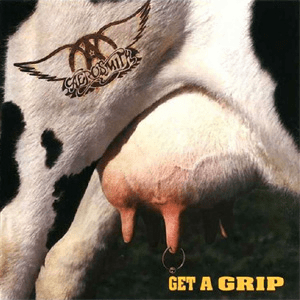
Get a Grip came out on April 20, 1993, with a Hugh Syme cover, a cow’s udder pierced with a brand. The first single, “Livin’ on the Edge,” hit number one on the Billboard Album Rock Tracks chart in May, and the album entered the Billboard 200 at number one, Aerosmith’s first number-one studio album, twenty years into their career. “Eat the Rich” was second out of the gate, “Cryin'” went to number twelve on the Hot 100 and won three MTV Video Music Awards, and “Crazy” and “Amazing” carried the record through 1994 and 1995.
June 1993 – December 1994: The Get a Grip tour
The tour that followed ran about 240 shows across thirteen legs between June 1993 and December 1994, opening in Topeka, Kansas, and broke the band internationally for the first time in markets that had only known them through the Run-D.M.C. “Walk This Way” remake, as Joe Perry told Larry Katz from London in December 1993. Megadeth was fired off the bill in Houston after Dave Mustaine bad-mouthed the band in a radio interview. Two of the album’s songs won Grammys for Best Rock Performance by a Duo or Group with Vocal, “Livin’ on the Edge” in 1993 and “Crazy” in 1994. The tour closed with the opening of the band’s Mama Kin Music Hall in Boston on December 19, 1994. By its end Get a Grip had passed twelve million copies sold worldwide, eventually more than twenty million, the band’s commercial peak.
The documentary that stayed in the can
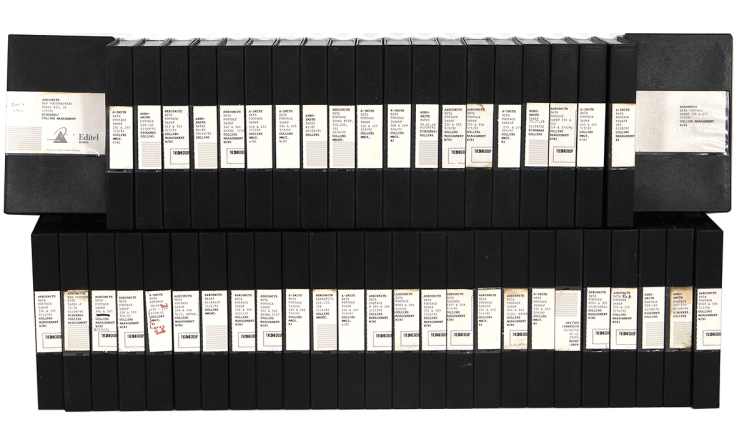
Peter Martinez’s roughly fifty hours of Beta SP footage, shot across the writing, recording, label meetings, and early tour, was never cut into the Making of Get a Grip video the project was conceived for. The plug got pulled with the album rejection in March 1992, and the edit never happened. What the public got from the era was a short promotional Get a Grip electronic press kit that Sony circulated to media, and a handful of fragments inside the later home-video release Big Ones You Can Look At. Forty-five of the tapes surfaced at a GottaHaveRockAndRoll auction in April 2022, the masters are believed to be in Aerosmith’s storage, and the full story of the project, the tapes, and the videographer’s copyright position is told in the Back-Burner’s dedicated documentary article.
What got cut, why, and what’s still in the vault
Across the two writing rounds the band wrote, demoed, or fully tracked far more songs than the fourteen that made the album, and the reasons they fell away sort into a few clear groups. The largest is simply what Kalodner heard at the March 13 playback and rejected as not hits: the sexual, raunchy, hard-rocking outtakes that Tyler and Perry had written almost entirely on their own. “Black Cherry,” “Rocket 88,” “Wham Bam,” “Yo Mamma,” “Lizard Love,” “Dime Store Lover,” “Joe’s Psycho,” and “Devil’s Got a New Disguise” were all worked hard and set aside, and none were consciously held back for a later record. Kalodner’s specific objection to “Dime Store Lover” was a worry that a 1992 buyer would no longer know what a dime store was. A few resurfaced years later by accident rather than design: “Devil’s Got a New Disguise” came out on the 2006 compilation of that name, and “Legendary Child,” fully tracked in Vancouver in 1992, sat untouched for twenty years before appearing on 2012’s Music From Another Dimension!
A second group failed on structure rather than content. “Thirteen” never got finished lyrics, so without a vocal it could not be judged as a single. “Meltdown” ran seven minutes and was too strange for radio. “Strange” was exactly that. “Ain’t That a Bitch” (1992) was a serviceable song that did not sound much like Aerosmith, and only its title survived, reused for a completely different song on 1997’s Nine Lives. “Brass Ballz” belongs here too, though it survives only as a fragment and its full identity is still uncertain. A third group arrived from earlier album cycles and never took hold in the Get a Grip frame: “Walking on Danger Street” and “Hollywood” were both dusted off in 1992 and got no further than brief revisits, “Is Anybody Out There?” got its April 1992 lyric attempt and went no further, and “Good Thang” stayed a Diane Warren publishing demo. “Trouble,” worked hard because Supa brought it in, made it as far as two live performances at the band’s secret G-Spot club shows in November 1995 but never onto a record. Underneath all of these sat a scratchpad layer of working titles, instrumental sketches, and demo-only fragments that never grew into songs at all.
Pulled together, the full set of Get a Grip-era songs that never made the fourteen-track album looks like this:
- Black Cherry: dark rocker about a man with a prostitute, called perverted by Kalodner.
- Meltdown: seven-minute apocalyptic climate-collapse epic, mastered and cut for length.
- Strange: rocker about a man in trouble with drug lords; mastered but cut.
- Trouble: Tyler/Perry/Supa rocker, played live twice in 1995, never finished.
- Walking on Danger Street: 1987 Permanent Vacation-era street rocker tried again.
- Wham Bam: comic-book rocker about a seven-year sexual itch, with Richie Supa.
- Thirteen: mellow dark ballad whose lyrics Tyler never finished.
- Good Thang: Diane Warren mid-tempo ballad that never fit the band.
- Is Anybody Out There?: 1987 outtake with Vallance, given a new vocal in 1992 that didn’t land.
- Lizard Love: sexual rocker later reworked for the 2003 Rugrats Go Wild soundtrack.
- Yo Mamma: bluesy rocker about accidentally sleeping with a girlfriend’s mother.
- Ain’t That a Bitch (1992): only the title survived, reused for a different song on Nine Lives.
- Dime Store Lover: half-spoken rocker Kalodner thought no buyer would understand.
- Hollywood: industry-critical rocker first attempted in 1986, revisited in 1992.
- Rehersal at Joe’s: 1991 Boneyard jazz-blues jam, never a song.
- Brass Ballz: fragmentary SO91 Boneyard clip, a line and a half.
- Devil’s Got a New Disguise: “Suzy Q” descendant, finally released on the 2006 compilation.
- Legendary Child: Vallance co-write fully tracked in 1992, released on 2012’s Music From Another Dimension!
- Rocket 88: sexual rocket-ship-innuendo lyric copyrighted 1992, never tracked to release.
- Sedona Sunrise: country-flavored Pump-era song with Vallance, logged early as “Heat of Love.”
- Deuces Are Wild: the 1988 Tyler/Vallance song pulled from Pump, revived over the old demo; surfaced on The Beavis and Butt-Head Experience soundtrack (1993) and Big Ones (1994).
- Head First: Tyler/Perry/Vallance song that became the “Eat the Rich” B-side and Aerosmith’s first free online digital download.
- Don’t Stop: the December 1991 Vallance co-write, released as a B-side rather than an album track.
- Can’t Stop Messin’: a 1992 song held back as a CD-single B-side.
- Joe’s Psycho: Perry’s January 1990 solo demo, on the LA chart but never finished.
Underneath all of these sat the scratchpad layer that never became songs at all: “Steel Tips” (the working title for “Fever”), “Funk Stomp” (the title-track instrumental), “Suzy Q” (the working title for “Devil’s Got a New Disguise”), “Amazing Too,” “Tofu,” “Slide,” “Mama Wants,” “Hungry Lonely,” “Blues Don’t Bother,” “Funk Chunk,” “Scratch,” “Ain’t Gonna,” and “Ball and Chain,” plus the studio-only “Rough Sequence” and “Jam Session” entries from the 1993 mixing period. Two wall charts, photographed from the Bruce Fairbairn estate archive, name what was being tracked and to what level, the clearest surviving map of how far each song had gotten.
A Get a Grip Legendary Edition?
The precedent any future archival release would now sit against is the March 2026 Aerosmith Legendary Edition of the 1973 debut album, a full remix built from the multitrack sources, with Tyler and Perry working alongside producers Zakk Cervini and Steve Berkowitz to present the original tracks the way the band has said they wish they could have presented them in 1973. The signal is that Aerosmith are actively revisiting their own catalogue.
The thirty-fifth anniversary of Get a Grip falls on April 20, 2028. The two wall charts exist and have been photographed. The forty-five Beta SP tapes exist somewhere, between Aerosmith’s storage and the buyer pool from the April 2022 auction. Roughly thirty finished or near-finished songs from the sessions remain unreleased, including the sixteen-song LA album that was killed in March 1992 with “Black Cherry,” “Yo Mamma,” “Dime Store Lover,” “Thirteen,” “Devil’s Got a New Disguise,” and “Meltdown” on it. The original videographer holds a credible position on the copyright of the camera output, and the producer’s estate has cooperated with the Back-Burner on the wall-chart material. Nothing about any of this commits Aerosmith, Sony, or what remains of the Geffen catalogue at UMG to a thing. But the pieces are on the shelf, the rejected album is real, and the question is on the shelf next to them.
Sources
- Books and autobiographies. Davis, S., with Aerosmith (1997), Walk This Way: The Autobiography of Aerosmith (Avon Books); Perry, J., & Ritz, D. (2014), Rocks: My Life in and out of Aerosmith (Simon & Schuster); Tyler, S., with Dalton, D. (2011), Does the Noise in My Head Bother You? A Rock ‘n’ Roll Memoir (Ecco / HarperCollins).
- Industry publications. Perry, J., Tyler, S., Frangioni, D., & Fairbairn, B. (1993, April), “Not the same old song and dance,” EQ Magazine.
- Radio / podcast. Red Beard (host), “Aerosmith — Get a Grip,” In the Studio with Red Beard (2018).
- Interviews. Peter Martinez, personal interview with the Aerosmith Back-Burner (May 2026; see the documentary article and profile). Larry Katz Collection, Northeastern University Archives: 1992 Aerosmith group interview, December 1993 Joe Perry interview from London, and June 1997 Tim Collins interview.
- Songwriting interviews and video accounts. Mark Hudson on writing “Livin’ on the Edge”: solo account, with Nube 9, with Rebecca Cesarz, and at the 2009 Rock ‘n’ Roll Fantasy Camp. Steven Tyler and Desmond Child on the first verse of “Crazy”. Jack Blades on “Shut Up and Dance” with Ultimate Classic Rock and on his “Rubicon funk roots”.
- Jim Vallance songwriter commentary. “Deuces Are Wild,” “Don’t Stop,” “Eat the Rich,” “Get a Grip,” “Head First” (and its 2007 archived version with the “Street Fighting Man” reflection), and “Legendary Child.”
- Aerosmith Back-Burner song articles. Black Cherry, Meltdown, Strange, Trouble, Walking on Danger Street, Wham Bam, 13 / Thirteen, Good Thang, Is Anybody Out There?, Lizard Love, Get a Grip outtakes overview, Yo Mamma, Sedona Sunrise, Ain’t That a Bitch (1992), Making of Get a Grip documentary, Dime Store Lover, Hollywood, Rehersal at Joe’s, Brass Ballz, Devil’s Got a New Disguise, Boogie Man, and Aerosmith’s Legendary Edition.
- Aerosmith.com archive audio (Internet Archive Wayback Machine). pianoSO91 (the 1991 Boneyard piano demo of “Crazy”), 11thruffsSO91 (an early “Black Cherry” Boneyard demo), brassballzSO91 (“Brass Ballz”), funkstompSO92 (“Funk Stomp,” the title-track instrumental), greatmoments91 (“Rehersal at Joe’s”), and the “Rocket 88” lyrics page.
- Official music videos (YouTube). “Livin’ on the Edge,” “Eat the Rich,” “Cryin’,” “Crazy,” “Amazing,” and the Get a Grip electronic press kit.
- Wall charts and archival materials. Bruce Fairbairn (1992), A&M Studios Hollywood and Little Mountain Sound Vancouver wall tracking charts.
- External sources. Aerosmith: Eat the Rich music video (IMDb); Get a Grip (Wikipedia); Aerosmith — Livin’ on the Edge single listing (Discogs); Ace Ventura: Pet Detective: Music from the Motion Picture (MCA Records, 1994), which includes “Line Up”; and the Aerosmith (Legendary Edition) reissue (Capitol / UMe, 2026).


Wow,this was seriously an awesome post! Never knew they filmed this for a follow-up to the Pump video. Well done!
LikeLike
And meant to add didn’t even know there is a another version of the album out there.
LikeLike
Mop STeSSin is STop MeSSin! Tyler was probably goofing around with that fun writing gimmick he did with Night In The Ruts. I can’t believe that just hit me now after years of wondering. Though, I do wonder if it could be a cover of “Stop Messin Around” as that song did replace “Red House” on the tours after GAG was released. Probably not, but still a neat theory!
LikeLiked by 1 person