Aerosmith’s two previous albums had both been made twice. Get a Grip was rejected by the label in 1992 and written again. Nine Lives was recorded in Miami, scrapped, and recorded again in New York. On 5 August 1999, two weeks after the last show of the tour that followed it, bassist Tom Hamilton wrote in his online diary that the band was sick of taking two years to make a record and determined not to go through that again.
Just Push Play is what they did instead. Steven Tyler and Joe Perry took the producer’s chair for the first time, sharing it with two co-writers who had become part of the inner circle: Mark Hudson and Marti Frederiksen. The record still had producers, but two of the four were the band’s own singer and guitarist, which gave Tyler and Perry more say over its direction than any outside producer had allowed them. It was made almost entirely at home, in Perry’s basement studio and at Tyler’s house, and it was the band’s first fully digital album, written and recorded straight to hard drive with no tape at any stage. Hamilton had a pun for it on the radio premiere in release week: look at the word digital, he said, and it says dig it all.
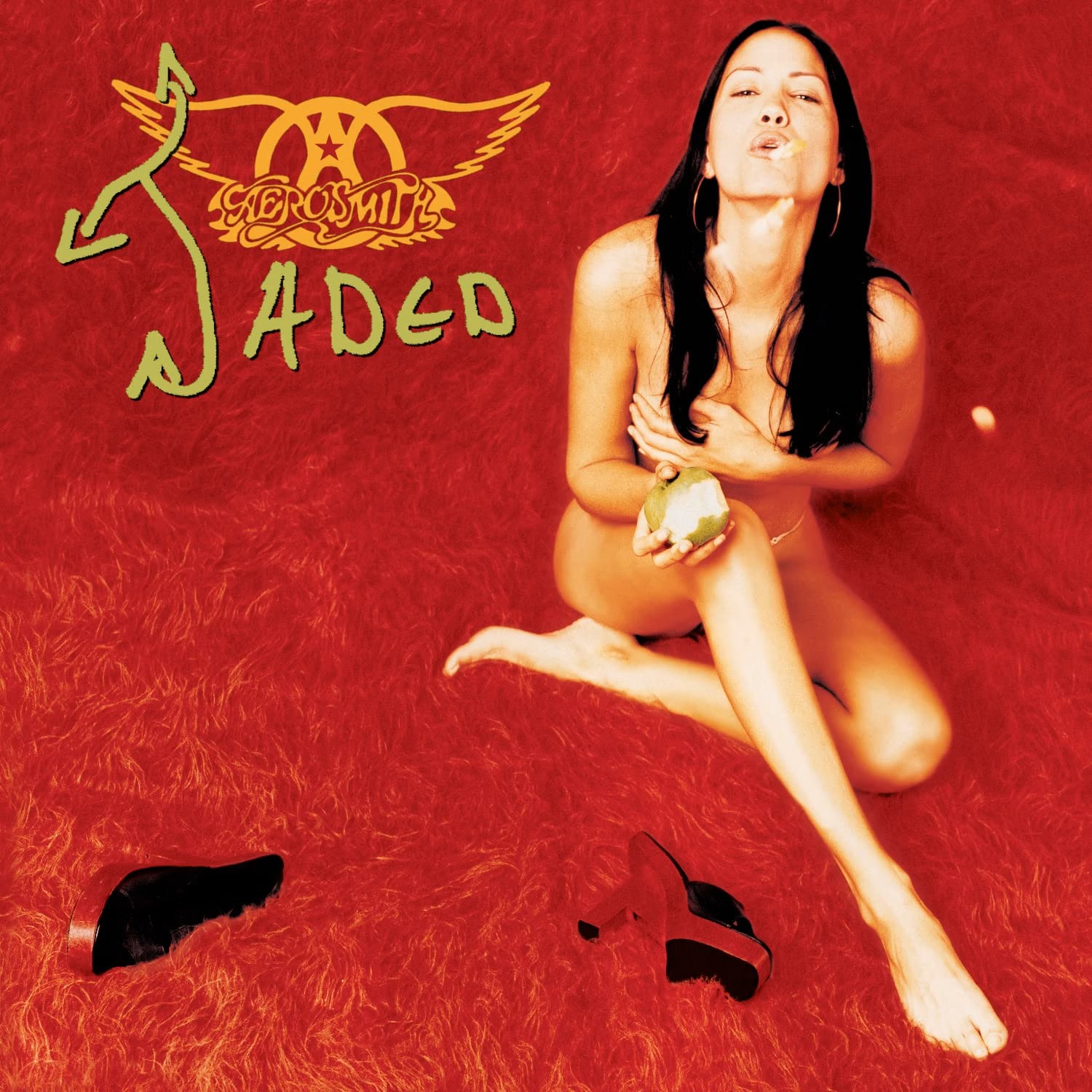
Nobody sent it back. The label heard it half finished in the summer of 2000 and asked only for a single. It was also the album on which the five members never played a song together in the same room while making it, and the one Perry would later call the most disconnected the band ever put its name on.
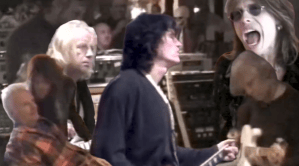
It is a record of its moment. Loops, rapped verses, a turntablist, strings added late, and every part edited to the grid: this was what rock radio sounded like in 2000, and Just Push Play sounded like it too. Perry admitted in release week that he had been afraid it would sound too slick. Newsweek called it overproduced. Years later its co-producer admitted to correcting much of it in Pro Tools.
Perry’s own verdict moved from pride in 2001 to regret by 2010. Both views are true to their moment. This is the story of how the album was made, set against the dated discs and diary entries that survive from the sessions.
July 1999 to March 2000: off the road
The Nine Lives tour ended in Europe in July 1999, and the rest of the year was ceremony: the opening of Disney’s Rock ’n’ Roller Coaster in Florida, the Saturday Night Live anniversary, and a special award at the Billboard Music Awards in Las Vegas in December. The night before the awards the band went to see Cirque du Soleil’s O, and Hamilton watched Tyler climb onto the practice trapeze backstage. Through all of it the diary repeats one phrase: getting ready for album mode.
Tyler was already talking about the album to the press. In early December he told the Hollywood Reporter that work had begun, that he was thinking of calling it Does the Noise in My Head Bother You?, and that among the new songs was “Innocent Man”, written with Hudson. The title waited twelve years and became his memoir. On 26 December a New Hampshire newspaper profile carried another candidate: the album might be called something like Just Push Play.
The band saw in the millennium at the Osaka Dome. Back home in January, the fan club was told there was no title and no producer yet, only a couple of songs.
There was also unfinished business with Diane Warren. In March 1999 MTV reported that the band had recorded her ballad “Blue Eyes Blue” for Runaway Bride and then withdrawn it, and the song went to Eric Clapton. Tyler told MTV it was not suitable for framing Aerosmith in. A second Warren ballad, “Painted on My Heart”, survives on a Touchstone promo CD-R dated 1 February 2000 as an Aerosmith demo for Gone in 60 Seconds, Tyler’s vocal over a track built by Warren’s studio. But in April MTV reported that the band had recently recorded the song with Matt Serletic producing, which points to a fuller version made in the weeks before the album sessions began, and quite possibly weighed for the record as well as the film. It was dropped from the soundtrack, and the Cult recorded it instead.
The Boneyard was busy before the album sessions had a name. Tyler, Perry and Frederiksen cut a new version of “Back in the Saddle” for Shanghai Noon, credited to the Boneyard Boys, which plays over the film’s end credits. The film opened on 26 May 2000, so the recording was finished by spring at the latest.
On 24 March Hamilton wrote that they were going into the studio that week to try out new material. On 5 April he reported most of a week spent in a studio he could not name. In late May, Glen Ballard told Launch he had written a song with the band in Boston about two months earlier, a mid-tempo piece called “Beyond Forever”. That places him in the same late-March window. The spring of 2000 was one long stretch in which writing and recording ran together, which is the method the whole album would follow.
The producer question
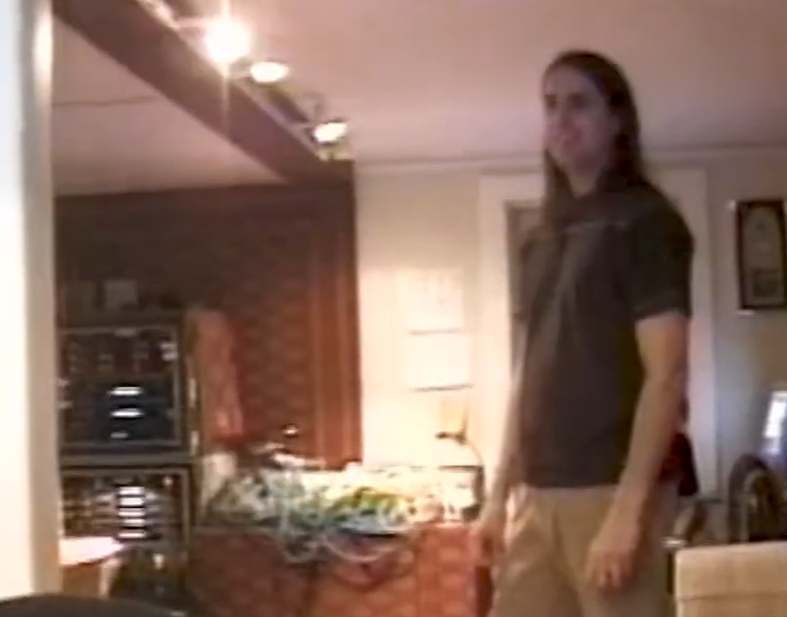
In Perry’s 2014 memoir Rocks, the decision takes two sentences. After discussing the band’s history with producers, he and Tyler thought they should produce the record themselves. He suggested Frederiksen as engineer; Tyler wanted Hudson too.
The contemporaneous record has a name in it that Rocks leaves out. In February 2000 a label representative told Rolling Stone that the band had chosen Matt Serletic, who had produced “I Don’t Want to Miss a Thing” and was coming off Santana’s “Smooth”. In April the Boston Herald had Hamilton saying their producer was coming to town that week, and Serletic told Sonicnet he had just spent two weeks with the band in Boston.
On 25 August 2000 Billboard reported that Tyler and Perry would produce with Hudson and Frederiksen. John Kalodner, the band’s A&R man, said they had never got out of pre-production with Serletic and that the band already had a vision for the record with Marti and Mark. Rolling Stone’s news page said Serletic had been ousted.
Every side of it
Hamilton, in the group interview Larry Katz taped in early 2001, described a scheduling accident. The producer could not come for a few months, the writing carried on, and because writing on Pro Tools was also recording, it became clear they could keep going.
Perry, on the same tape, said he and Tyler had proposed co-producing with Serletic and were told the label needed to know the producer had control. That, he said, was when he understood what a producer is to a record company: the adult who gets the rock stars to deliver.
Tyler said they would never have made the record without co-producing. His stock line in release week was that they had heard they were hard to work with and wanted to find out if it was true.
Serletic’s representative told Sonicnet in December 2000 that there was no love lost, and that he would have been there if needed.
The label, by Perry’s account, expected them to have their fun in the basement and come begging for a producer. Columbia president Don Ienner told Rolling Stone in February 2001 that he had been scared, and then blown away.
Where the evidence leans. A producer was hired, did two weeks of pre-production in April, and was overtaken. By the time he was free, the band had most of an album and the label liked it. Rocks compresses that into a decision made at the start, and in doing so removes the one stretch in which the band tried to make the record the usual way.
The Boneyard, the Bryer Patch and the house next door
The fullest account of how the album was physically made is Blair Jackson’s studio report in Mix, published in April 2001, with Perry, Frederiksen, engineer Richard Chycki and Boneyard engineer Paul Caruso all interviewed.
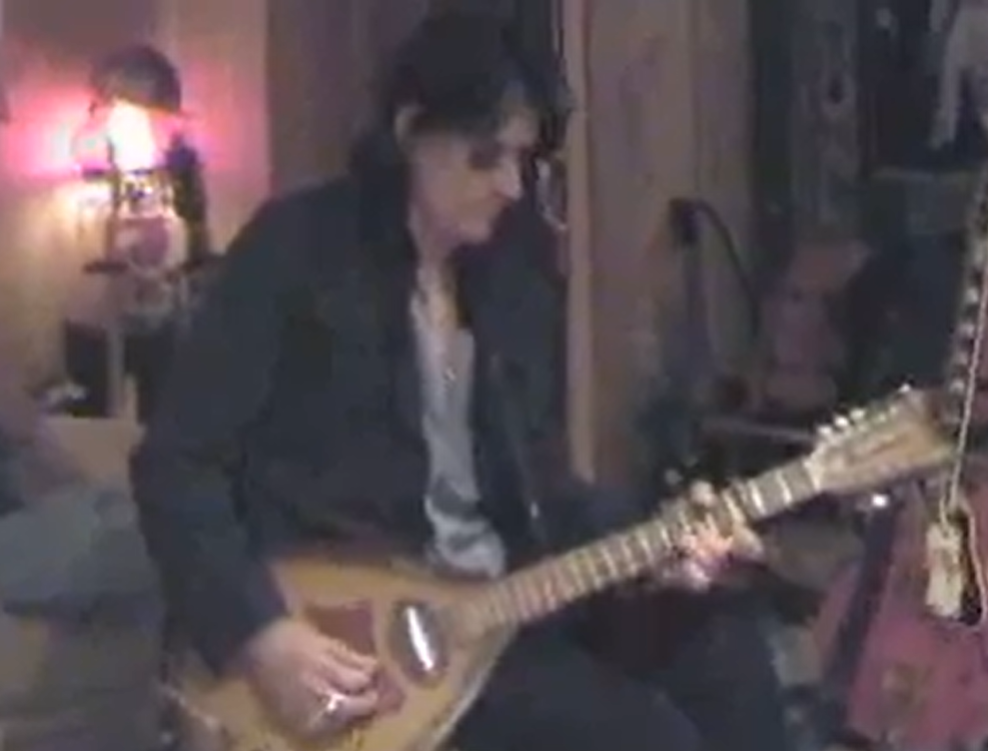
The Boneyard was built around a Neve 8068 console that had come out of Boston’s public broadcaster WGBH. A Studer tape machine sat unused in the corner. Everything went to Pro Tools, spread over five or six rigs and 160 gigabytes of drives. Tyler’s studio a few miles away, the Bryer Patch, had a matching vocal chain, so a vocal started in one house could be finished in the other. David Frangioni ran the systems; Paul Santo was house engineer at Tyler’s.
The unit of work was the hard drive. Perry explained on release day that if he wanted a part Tyler had been working on two days earlier, he went and got the drive. Hamilton told VH1 about someone walking in with a metal briefcase and flipping the lid. In the old days, he said, anything could have been in there. Now it was the latest song.
Perry ran lines into his steam shower for its natural echo, and Tyler told VH1 a background vocal on “Jaded” was tried in there. Frederiksen set up a second rig in the family room so editing did not hold up recording, and by Perry’s account moved his own family into the guest wing for months.
Chycki joined by telephone. He told Tape Op that Frederiksen rang on a Wednesday to ask if he would come east for five days of drum recording, and only named the band when asked. By Monday he was at Long View Farm in North Brookfield setting up for Joey Kramer. He stayed eleven months as head engineer.
For mixing, Perry bought the property next door and converted it. The album credits call it the Living Room. Mike Shipley mixed there on an SSL while tracking continued in the basement.
The day ran from eleven in the morning to eleven at night. Tyler told Katz that if you show up for twelve hours every day, you will get something. Hamilton, talking to Launch in May 2001, gave the other side: working in someone’s home was odd, and he sometimes felt he was imposing if he wanted a sandwich.
Perry and Tyler called the Boneyard the Net, Perry wrote, the place where they caught ideas. On this record the catch was kept. There were no demos in the old sense of a rough version made to be replaced. There were earlier versions of songs, and every instrument and vocal take went to disk and stayed there, so the record was built out of its own first drafts. Frederiksen told Mix the intention from the start was to turn the demos into the album. Tyler put it more simply to the New York Daily News in March 2001: “This record is our demos. We just polished them up.”
Four writers, two teams
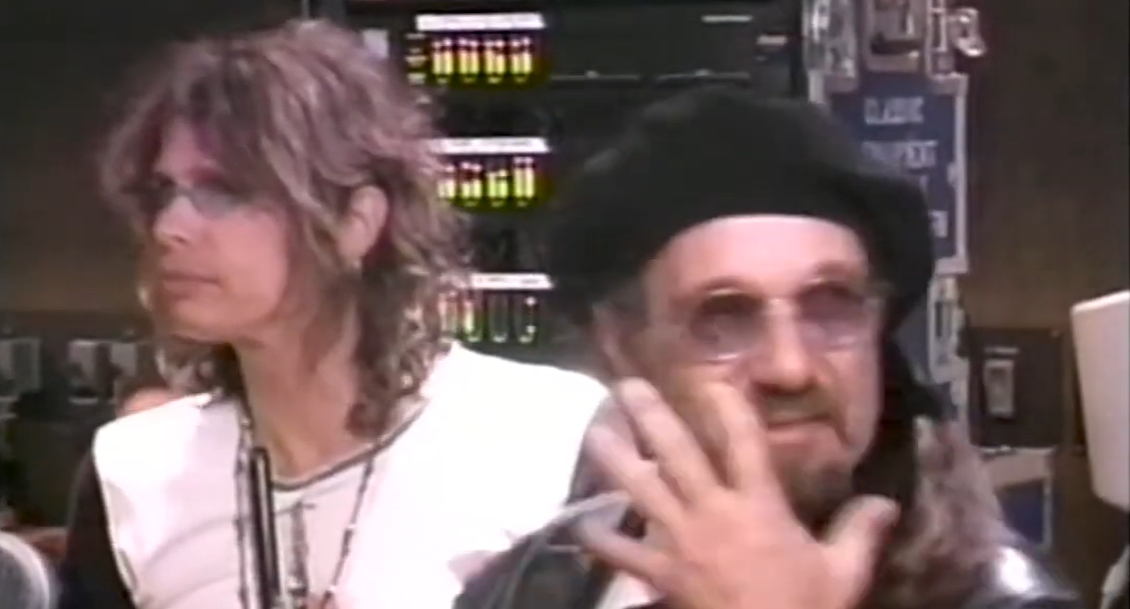
At the start, Perry wrote, the teams were Joe with Marti and Steven with Mark. Perry and Frederiksen handled the hard rock. Tyler and Hudson worked their own way, measuring everything against a Beatles record. About half the songs began from a loop, Mix reported, and half from acoustic guitars. Tyler told Rolling Stone that nobody left the writing room until there was a song.
“Outta Your Head” was the first new song Kramer heard. It came to him on a CD from Perry’s house, and he told Katz he took it up to his own studio and wanted to play it instead of learn it. Tyler told Katz the rapped verses were simply what the groove called for, and that he went for it. The released vocal is essentially that demo take. Ienner asked him whether he was going to fix it. Perry’s son Tony did the scratching.
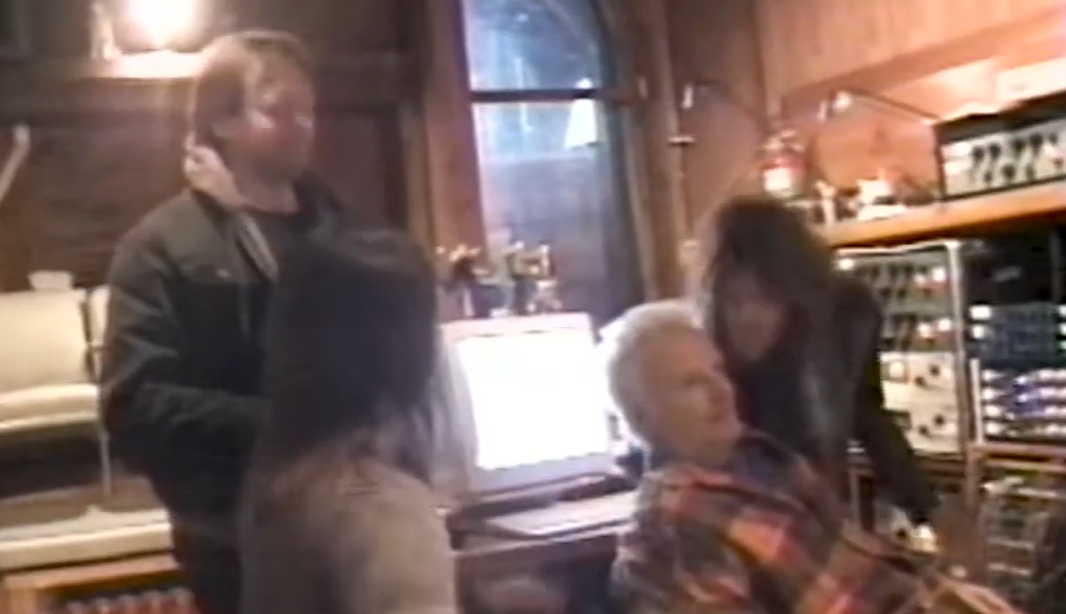
“Beyond Beautiful” was the other song Kramer heard first. He remembered it arriving under a working title he gives on the tape as “Primal”, with “Tribal” coming up in the same breath, and either fits the tom-heavy groove of the verses. It was written in a night. At his 2020 Rock ’n’ Roll Fantasy Camp masterclass, Frederiksen said he was watching television at the Perrys’ at ten one evening when Perry asked if he wanted to go down and lay some things down. They built stomps and loops, Perry added the riff, and two hours later the music was almost done. Frederiksen took it to Tyler’s for melodies. The dial tone that opens the track came later: Tyler told VH1 someone picked up a phone during a session and it was in the key of the song.
“Just Push Play” is older than the rest of the album, and its roots go back to Hudson’s work with Ringo Starr. Perry told Katz it began as pieces recorded at Ringo sessions with Steve Dudas on guitar, and that when Frederiksen first heard it he came over shaking his head. The working title on the tape sounds like “Soca”, the Caribbean dance style, though the transcription offers several readings. Perry said that as first presented it sounded as if the parts had gone through a blender. The song is credited to Tyler, Hudson and Dudas.
Tyler cut harmonica and drums for Ringo’s Vertical Man in mid-November 1997, with Hudson producing, in the middle of the Nine Lives tour. He told Katz he was on the road when the pieces came together. If those are the sessions Perry meant, the title track began as a 1997 idea that waited out the tour, which would explain how Tyler already had the album title by Christmas 1999, though a later Hudson session with Ringo would fit the two remarks just as well.
The strangest element came from a world-music CD. Tyler told Katz and the radio premiere that they found a man and a woman singing near the end of it, lifted the passage and wrote around it. He thought it was Swahili and asked a university linguistics department to identify it. It was Jamaican patois, and the line he built on was explained to him as a reference to six years of no war: the fighting is over, and it is time to enjoy the peace. On the radio he said the university was MIT. On the Katz tape Perry corrected him: Harvard.
The song had a second life that has never been confirmed. A loading screen in the video game Guitar Hero: Aerosmith states that after the Hall of Fame induction in March 2001, Tyler went to recut the title track with added vocals from Kid Rock. A short clip of such a remix, a vocal exchange between the two in the bridge, surfaced on a fan forum around 2005 and then disappeared.
“Under My Skin” took ten minutes of argument, Tyler said on the radio premiere, over where the girl in the first line lives. His daughter Chelsea’s voice, taped at home, is on it, and a short reprise of the song is hidden after “Avant Garden” at the end of the album. The song had a quieter afterlife as a possible single. In October 2001 the band filmed a Dodge Ram commercial performing it on an industrial set, which aired that December, and Hamilton was pleased that a corporation wanted deep album tracks. No one has said whether the label saw it as a follow-up single, but it was the one album track beyond the singles that was filmed as a performance.
“Trip Hoppin'” is the song Perry singles out in Rocks. He told Tyler it had no place on an Aerosmith record, and Frederiksen agreed with him privately without saying so in the room. On the radio premiere in 2001 Perry was puzzled that people heard it as the most old-Aerosmith thing on the album. Whatever its place in the argument, it has one of the album’s best guitar moments: a solo passage traded between Perry and Brad Whitford, with Tower of Power’s horns behind it.
“Drop Dead Gorgeous” has Perry singing the verses through an effect, with the chorus done as a duet with Tyler.
“Sunshine” was the song that made the label believe. It is on the 27 July rough-mix disc, and Perry and Tyler told Katz it was the track that turned heads when the label visited. Hamilton’s diary has the band in full production by 6 June. The likeliest window for its writing is late May or early June 2000, late in the spring and shortly before the label heard the first batch.
“Fly Away from Here” is the one song on the album with no band member among its writers. It is credited to Frederiksen and Todd Chapman. Hamilton told SFX.com in May 2001 that it had been meant for a film soundtrack and sat in the knapsack when the deal fell through. Fans have long guessed that the film was Armageddon and that Frederiksen wrote the song entirely on his own, though nothing on record supports either idea. The album credits list extra recording for that track alone at three Los Angeles rooms, including Frederiksen’s own, which fits a song that arrived part built.
The same fan lore holds that Frederiksen wrote most of the album and that Tyler and Perry’s names were added afterwards, but every account of how “Beyond Beautiful”, the title track and “Jaded” came together describes shared writing.
“Avant Garden” was Whitford’s pick on Boston radio in August 2000 and Hamilton’s on Brazilian television in April 2001. Hamilton has returned to it since as one of his favourites, and it has become one of the album’s fan favourites. Mix names it as one of the string tracks, some of which ran to more than a hundred tracks. The EPK video has about a full minute of the demo version with no lyrics an Tyler shaping the vocal melody (“is any body in?” Tyler scatted), and Tyler directing Perry on notes to hit during the solo.
27 July 2000: nine songs, nearly finished
The earliest hard date in the making of the album is a disc labelled “Just Push Play Rough Mixes”, dated 27 July 2000. It holds nine songs, and “Jaded” is not one of them.
As a whole it sounds like what its label says: a rough mix of the album. Many of the final parts are already in place. Some of the digital effects and loops are unfinished or sit lower in the mix, a few extra loops and percussion parts were later taken out, and where the orchestra will go there is mostly a synthesiser, or nothing yet.
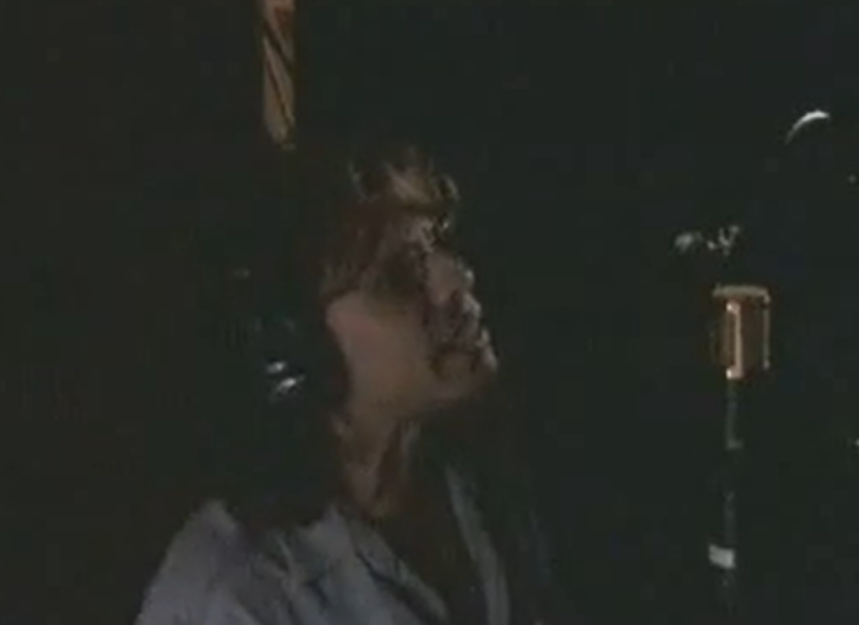
The single most important thing about it is what did not change. The lead vocals on this disc are, for practical purposes, the vocals on the album. So are most of the guitars. A few lines were later swapped and fills were added or moved, but four months into the sessions proper the performances that define these nine songs were done. What changed between July and December was the frame around them: orchestra, extra production, edits, levels.
A track-by-track review of the disc notes these differences.
- Beyond Beautiful. No dial tone. The intro sounds less driven. The sitar in the chorus and the verse harmonies are louder, and Perry’s closing solo starts later.
- Sunshine. A snare drenched in reverb, more electric guitar in the verses, and no orchestra in the first half.
- Outta Your Head. Tyler’s high vocals are louder, Whitford’s power chords stand out, and there are extra shakers and hand percussion. Not every vocal line is the final choice.
- Fly Away from Here. Perry’s guitar is clearer in the intro, and synthesised strings hold the place of the orchestra.
- Trip Hoppin’. A deeper bass intro, an extra high vocal in the chorus, and synth strings where the real ones would go.
- Luv Lies. A different closing line in the first chorus, and some of the intro guitar parts are missing. An extra acoustic imitates a mandolin in the bridge.
- Face. A full-band arrangement: an electronic intro in the style of the rest of the album, drums, electric guitars over the acoustics, digital effects, an extra line in the final chorus, bells at the end, and a slide solo from Perry. It is the most different track on the disc.
- Light Inside. Sounds like an earlier mix than the rest, with different balances.
- Avant Garden. A dry mix with a louder whisper in the verse (“I went to the wise”).
This is the strongest support there is for what Perry and Frederiksen said in 2001. Perry told VH1 that the vocals sound like first performances because they are, and that solos he played at two in the morning as placeholders were never replaced. The July disc bears that out.
It also explains the label’s reaction. Perry told Mix they shocked Columbia by playing it the first eight tracks. On the Katz tape he and Tyler describe inviting Ienner up once they had a body of songs, and sending tracks to outside mixers to be sure they were technically sound. When the label had heard it, Perry said, the band asked about album art. Ienner had one request. Tyler: they wanted the first single, and he did not think they had it yet.
Kalodner’s count to Billboard in August was nine or ten songs done, more to record in September or October, and mixing in November and December. Whitford told Boston radio the same week that the target was March. Every one of those dates held.
Three album tracks besides “Jaded” are missing from the July disc: the title track, “Under My Skin” and “Drop Dead Gorgeous”. All three carry Hudson’s name.
One player at a time
Perry described the method in Rocks in one line: the four writers wrote the songs and played the demos, then Whitford, Hamilton and Kramer came in to cut their parts, one player at a time.
In 2001 nobody hid it. Kramer volunteered on release day that he recorded his drums last instead of first. Mix reported that no song on the album was performed by the band, and that Kramer and Hamilton waited months for their turn. Perry defended the method to Mix as practical and admitted they would have to learn the songs for the tour.
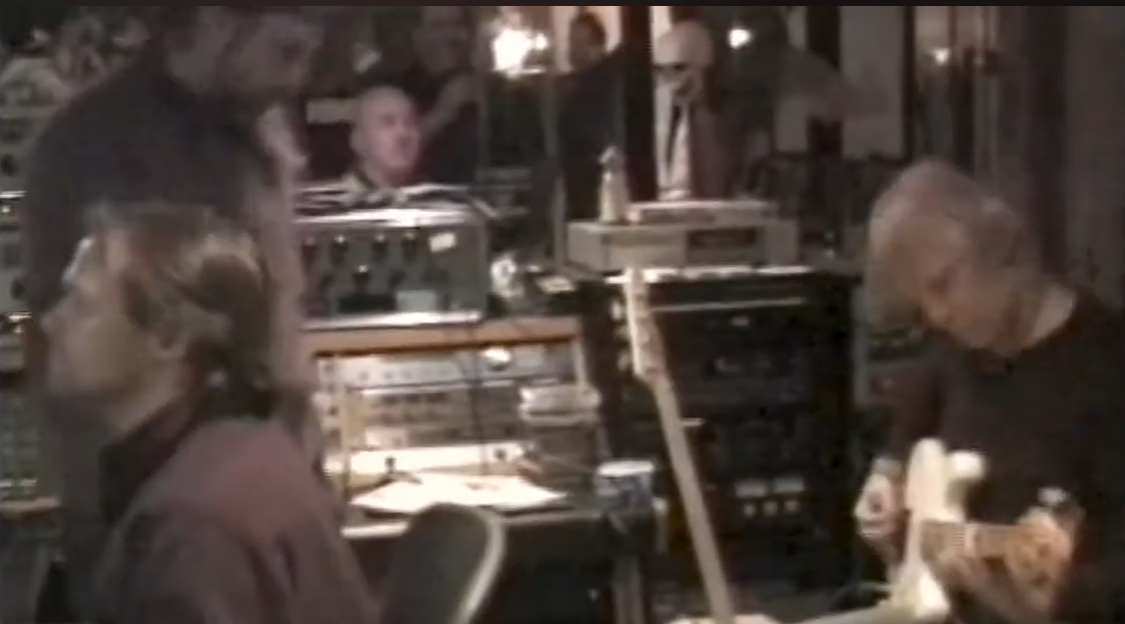
Hamilton made the case for it on the radio premiere. If he thought of a bass part too hard to play straight off, he could loop the section until he had one good pass, which let him go further than his hands would. Tyler added the other half: they had built the middle of “Outta Your Head” first, and Hamilton then had to learn it.
That is as close as 2001 gets to the complaint in Rocks, where Perry says Hamilton had to learn parts Frederiksen had written, that he argued the band should play what they felt, and that he lost. “Most of the arguments were three to one,” he wrote, “and I was the one.”
Kramer went to Long View Farm because, by Perry’s account, he did not think he could get his sound in the Boneyard. Perry adds that much of the drum sound ended up as samples anyway. There is a puzzle over when. Mix and Kramer say drums went on last; Chycki says his first job was drums at Long View, and that he then stayed eleven months, which would put the start around March 2000. The July rough mixes already have drums. The likeliest reading is that “last” describes the order of work on each song rather than the calendar, and that Long View was used more than once from spring onwards.
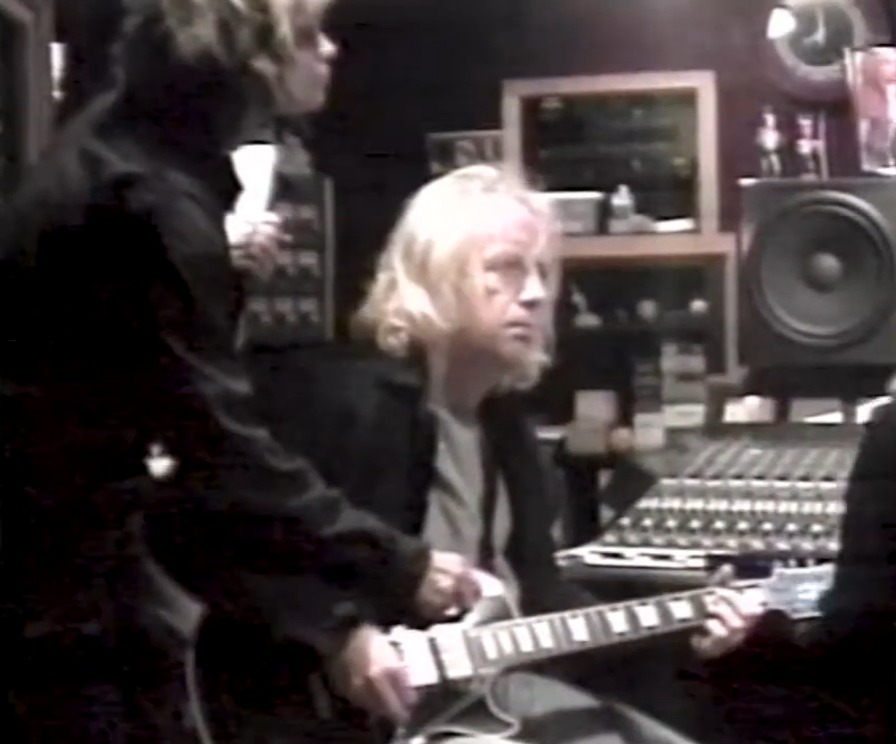
Whitford’s parts were not all first takes. The earliest dated “Jaded”, from 18 November, is labelled with his original guitar, and Rolling Stone reported in April 2001 that he had played three different parts on the studio version and was still choosing which to play live hours before Saturday Night Live.
The same Rolling Stone feature recorded that in mid-March 2001, with the album in the shops, “Jaded” was the only song on it that the five of them had played all the way through together.
Sunapee
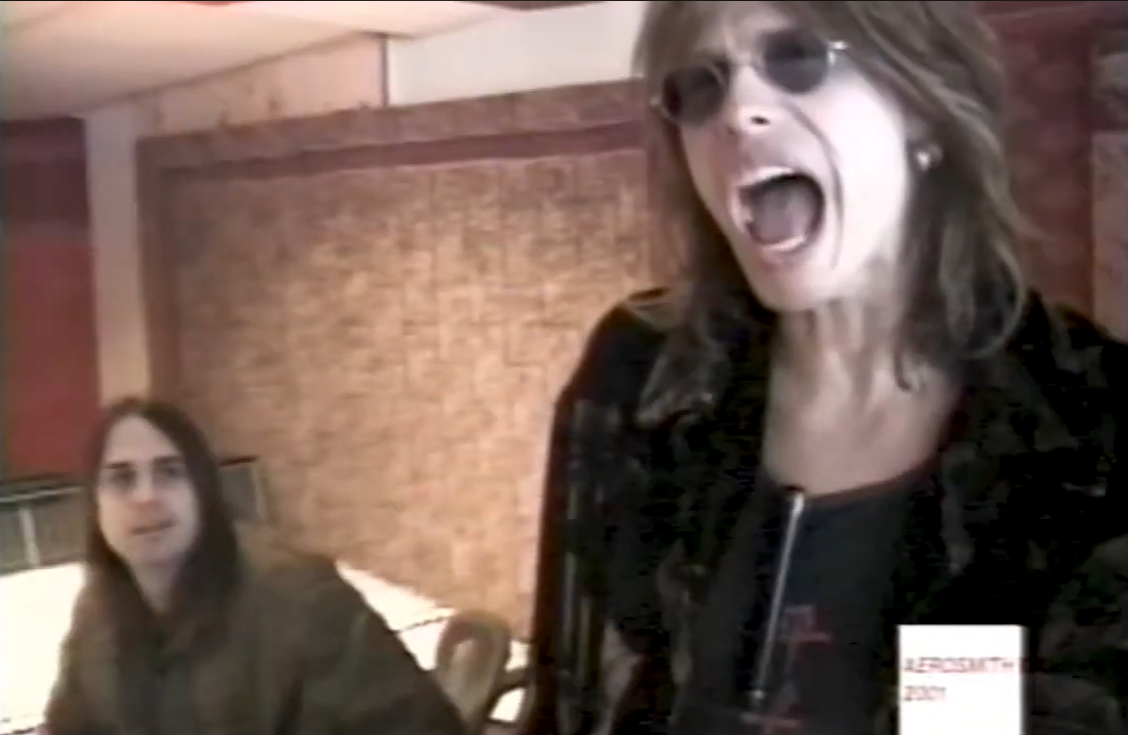
Columbia wanted a single. Tyler and Frederiksen went to Tyler’s house on Lake Sunapee in New Hampshire and came back with “Jaded”, credited to the two of them.
When. Tyler told Katz they took August off and wrote it at the lake. On release day he said October or November. On the radio premiere he said the idea was so right they shelved it for a couple of months before finishing the words. The discs fix the far end: no “Jaded” in July, a near-final version with orchestral fills by 18 November. A song written in August, set aside, then finished and tracked in October and November would square all of Tyler’s versions.
Who. Frederiksen has told it the same way in 2002, in 2012 and at the 2020 masterclass: acoustic guitars at the lake, a riff of his that grew out of playing around with the feel of a Smashing Pumpkins song, Tyler shouting from the phone to ask what it was, and a demo by the end of the day. Tyler’s memoir tells it two ways within a page.
The grievance. In Rocks, Perry asked to be called if they started anything new and heard about it afterwards. In Tyler’s version Perry had said he was taking the weekend off to go to the movies with his wife, and a lyric cannot be put down halfway. Tyler called what leaked out of that weekend his “sideways anger” toward Perry.
The stakes. Tyler wrote in 2011, and said on stage in Nashville in 2013, that Ienner told him the band would have been dropped without the song. Nothing from 2000 or 2001 supports a threat of that kind. Ienner’s own words at the time are those of a label that loved the record, and Perry told Katz that Ienner and Sony’s Michele Anthony had been supportive from the day of the visit. A label can love a record and still know it has no single. The contemporaneous evidence points to pressure for a hit, not a threat to the deal.
Autumn 2000: side roads
On 10 September Perry turned fifty. The party was at Mount Blue, the restaurant he and Tyler part-owned, and midway through a set with Cheap Trick his guitar tech handed him the 1959 Les Paul he had sold in the early 1980s and spent years trying to buy back from Slash, who sent it as a gift.
In October a new Aerosmith song reached radio, and it was not from the album. “Angel’s Eye” was on the Charlie’s Angels soundtrack, credited to Tyler, Perry and Frederiksen. Frederiksen said in 2020 that it came from his Nine Lives writing and was finished with new words for the film. Its roots are in a 1996 Perry and Frederiksen rough known as “When the Monkey Comes”, part of the first sessions the two did together. It became the B-side of “Jaded”.
Hamilton’s diary entry of 14 November is the only first-hand report from inside the sessions that autumn. The record was cruising, it was their first in-house record since their first one, and it was on schedule. If this were their last album, he added, they would only be halfway through.
Strings, horns and the Mix House
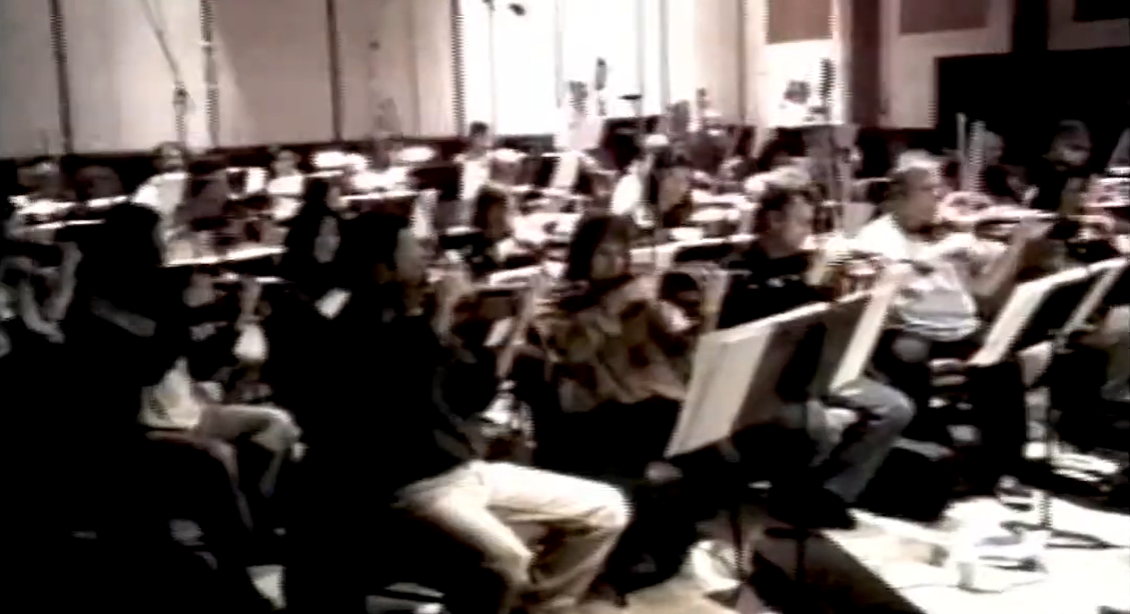
Because everything was played to a grid, Tyler told VH1, they knew early which songs would take an arrangement. David Campbell scored them, with large sessions at Ocean Way and the Village in Los Angeles and a small one in Boston. Tower of Power played on “Trip Hoppin'”.
The mix dates survive because they are written on the discs. A set compiled on 7 December dates “Luv Lies” to 28 November, “Outta Your Head” 30 November, “Beyond Beautiful” 4 December, “Light Inside” 6 December and “Jaded” 7 December. Two days later a disc labelled “Aerosmith Xmas Break” gathered the state of play as the band stopped for the holiday: seven album tracks and, at the end, “Easy”, a full-band song with brass that did not make the album.
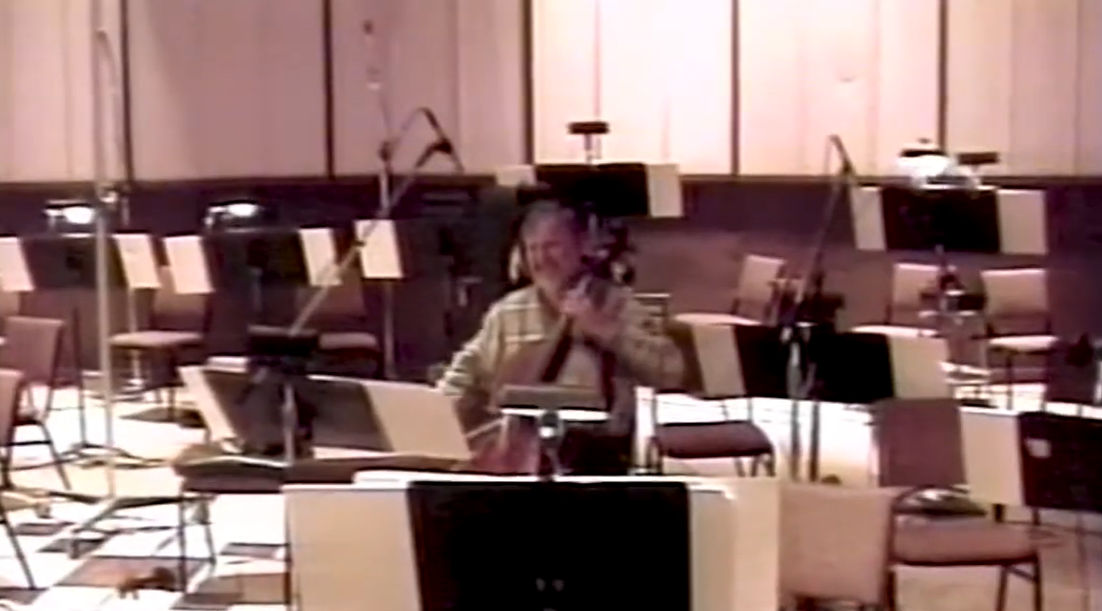
On 18 December six songs went to George Marino at Sterling Sound, and his reference disc lists them with mix dates and alternates. “Avant Garden” came with a choice of Tyler’s alternate verse or Shipley’s mix. “Fly Away from Here”, mixed 14 December, was the latest. “Jaded” had gone ahead on its own, which left five album tracks still to come a week before Christmas: the title track, “Trip Hoppin'”, “Sunshine”, “Under My Skin” and “Drop Dead Gorgeous”.
Work ran into the new year. Mix says tweaks were still being made on Super Bowl weekend. Hamilton’s diary has the band listening to newly mastered songs on the bus to the Tampa press conference, and Tyler told Howard Stern on 6 March that the album had been mastered three weeks earlier.
By Tyler’s count the record took fifteen months from conception to the last drum. By Chycki’s it took eleven.
The title and the robot
The title was announced in the week before Christmas 2000. It was not the only candidate. Besides the two Tyler floated in 1999, he told the Dutch magazine Aardschok at a European press day in Boston in February 2001 that they had first wanted to call the album Avant Garden, and dropped it because it sounded too sixties. Tyler told MTV that Just Push Play was what you say when someone asks what the record is like. Hamilton read it as the other half of “Outta Your Head”: stop thinking, go with your gut.
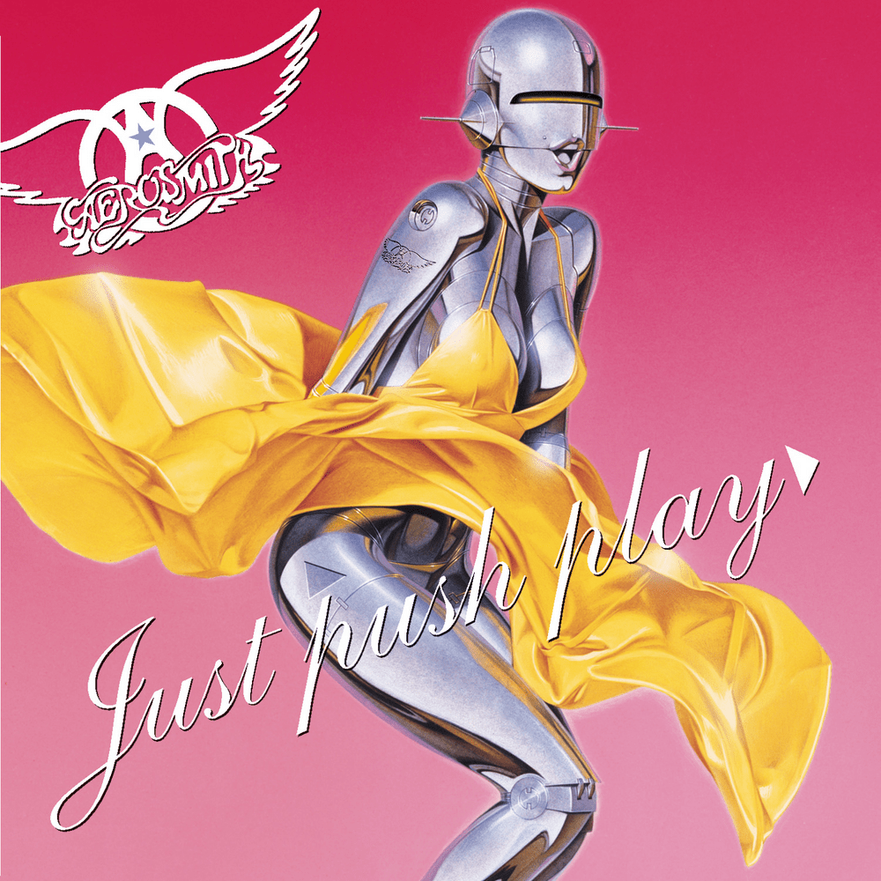
The cover is a painting by Hajime Sorayama from his Sexy Robot series: a chrome female figure in Marilyn Monroe’s pose over the subway grate. Hamilton’s diary records the work behind the booklet, including a day with photographer Mark Seliger across five built sets and a round of motion capture for the band’s 3D online world.
Perry’s verdict in Rocks is that the cover was a chauvinistic rip-off of a perfect photograph, and that he was outvoted over women dressed as robots at press events, which he calls a flop. The release-day plan in New York had robot girls parading through Times Square; it was snowed off. Robot women did appear at the Dodge press conference in New York on 25 June 2001, which may be the event he meant.
December 2000 to March 2001: out of the bunker
Hamilton called it the transition to doing it in public, and said on the radio premiere that the gap between finishing the album and the Super Bowl was non-existent.
On 8 January the band played “Jaded” at the American Music Awards with aerialists on silks, contortionists and stilt walkers. The rehearsals that week were the first time the five of them had played the song together. Thirteen months after Tyler tried the trapeze backstage in Las Vegas, the circus had come to them, and the video would complete the circle with Cirque performers.
On 28 January they played the Super Bowl XXXV halftime show in Tampa with ’N Sync, Britney Spears, Mary J. Blige and Nelly. Perry said he hung up the first time the call came. Hamilton’s diary says they rehearsed “Jaded” for four days. MTV showed Making the Video on 13 February ahead of the premiere of Francis Lawrence’s clip with Mila Kunis. “Jaded” topped Billboard’s Mainstream Rock chart and reached number 7 on the Hot 100, the band’s last top ten single.
The release date moved twice, from 20 March to 13 March to 6 March, to catch the Super Bowl attention. A syndicated two-hour radio premiere aired the weekend before.
On 6 March the north-east was under a blizzard. With Times Square cancelled, Tyler and the label improvised a day at home. Tyler rode a dogsled up to a Strawberries store in Cambridge with a flashing wooden crate of CDs. The rest of the band were meant to meet him at the door, but they were inside signing autographs and missed their cue, so the arrival was shot twice. The TRL appearance went out by satellite from a studio in Watertown, where, the Boston Herald reported, the crew put beach scenes on the screen behind the band and Tyler told Carson Daly they were in Maui. Outside, for the live shot, the dogs bolted ten seconds early, and Hamilton wrote that the snow, packed hard by people walking on it all day, was so slippery he expected the band to fall over on camera. Nobody did.
The band played Saturday Night Live on 17 March and were inducted into the Rock and Roll Hall of Fame on the 19th.
Reception and the charts
Just Push Play entered the Billboard 200 at number 2 with about 240,000 copies. The second week of the Dave Matthews Band’s Everyday kept it off the top, ending the band’s run of number one studio debuts. The album that beat it was produced by Glen Ballard.
A week-by-week SoundScan run preserved by the Rock This Way news archive shows what followed. Sales nearly halved in week two, the album left the top twenty in week five, and by the time the tour opened it was selling under 20,000 a week. The total on 5 July was 937,654. The RIAA certified it gold and platinum on the same day, 3 April, on shipments.
In June Jim Farber of the New York Daily News used it as his lead example of veteran acts who fill arenas and no longer sell records.
The reviews were better than the curve, and they split on the question the album still raises: how much polish is too much. Rolling Stone called it the band’s least self-consciously commercial record since the comeback and heard two Aerosmiths in it. The Boston Herald found it technically assured and anything but self-indulgent. Steve Morse in the Boston Globe heard a rock record with Beatles hooks, noted that it was made on Pro Tools, and quoted Perry admitting he had been afraid it would sound too slick. Morse’s judgement was that the energy of the first takes still came through.
Jeff Giles in Newsweek heard the opposite. He found the album hectic, overproduced and straining to sound new, while allowing that Perry was playing as well as ever. It was among the harshest notices the album received, and the one that has aged closest to how the band came to talk about it.
At the Grammy Awards in February 2002 the album drew three nominations: Best Rock Album, Best Rock Performance by a Duo or Group for “Jaded”, and Best Short Form Music Video for “Fly Away from Here”.
What got left behind
The band gave several counts of what they had recorded, and they are closer than they first look.
In December 2000, with the album still untitled, Sonicnet and USA Today both reported more than twenty songs recorded. At the European press day in February 2001, Tyler told Aardschok there had been twenty, that eight fell off the album, and that the rest were for B-sides and the next record. Hamilton told the German magazine Rock Hard in April that they had eighteen good songs and had to choose twelve. Asked about the other six, he said the band had already started thinking about the next album, that those songs might be its basis, and that after the long gap between the last two records the next would come out much sooner. Tyler’s own rule of thumb, on the radio premiere, was that staying in creative mode long enough gets you 25 songs or so, and that the leftovers become bonus tracks for Japan and Australia.
Counting what can be tied to the sessions gives roughly the same figure: twelve album tracks, two released bonus tracks and the half-dozen outtakes below that can be placed in 2000, close to both Tyler’s twenty and Hamilton’s eighteen.
In May Hamilton told SFX.com that the knapsack was still full of unused material, enough for a box set someday.
The outtake that got furthest is “Easy”. Tyler, Perry, Hudson and Frederiksen wrote it, and it was taken all the way to a finished full-band recording, with piano and a brass section over the band. It balances pop and rock. The verses carry a pop melody of the kind Tyler would write two years later for “Oxygen”, and the chorus leans on a chord progression and guitar sound that recall the Rolling Stones’ “Gimme Shelter”. The production matches the album, digital effects included, and the song ends in a jam with unusual solo lines from Perry and Whitford. When the band hits an F chord in the outro, Tyler reaches for the same high notes as the chorus of “Wham Bam!”, an older outtake Richie Supa wrote for the band, which may be a deliberate nod. The lyric finds the band in a light, flirtatious mood: falling in love, then getting burned.
Late in 2000, Cowboy Mach Bell, who had sung with the Joe Perry Project, told an AOL fan forum that Perry had played him a new song at the Boneyard that opened with a twist on the children’s poem “Wynken, Blynken, and Nod”. That has long been taken to be “Easy”, though no one has confirmed it.
“Easy” is also the clearest sign of how the sessions ended. Perry said in the album’s press kit that everything was a work in progress up until the end. On 9 December the song sat at the end of the “Xmas Break” disc, after seven album tracks, and the version Tyler teased on the radio premiere in March was a later mix than December’s, with heavier brass. Work on it did not stop in December, and the likeliest reading is that the band never stopped writing and recording at all: in the end the release date, not a shortage of songs, decided what made the record.
Tyler introduced the teaser as something prepared for Napster: a few seconds of the instrumental outro, from a song he said would be on the next record, due after the tour. “Easy” was registered for copyright in May 2001 and was still on the studio whiteboard during the aborted sessions of 2006 and 2007. It has never been released.
The next record was never made either. The band wrote two new songs for the 2002 compilation O, Yeah! at sessions in Maui, made a blues covers album in 2004, and did not release another album of original songs until 2012. The Maui sessions left outtakes of their own, among them “Climbing the Walls”, “A Good Thing” and “Oxygen”, a Tyler and Frederiksen song that Tyler released in 2011 as his solo single “(It) Feels So Good”. Those titles are sometimes filed with the 2000 material, but they belong to 2002.
What is known of the other songs that did not make it:
- “Innocent Man”: begun with Hudson in the 1990s and named by Tyler in December 1999 as material for this album. Frederiksen said in 2020 that a full production exists with strings and stacked backing vocals, in the style of the album. Registered for copyright the same day as “Easy”.
- “Face”: all four writers. The 27 July disc proves a full-band version came first, with drums, electric guitars, digital effects, a slide solo and an extra line in the final chorus. With its electronic intro, that version sits comfortably alongside the rest of the album. What was released was the song stripped back to a largely acoustic performance, issued as the bonus track on the Best Buy edition in the United States and on the European edition. On its own, the acoustic “Face” plays as a rock-pop song with a Middle Eastern flavour.
- “Won’t Let You Down”: all four writers. A pop-rock song issued as a bonus track in Japan and on the UK “Jaded” single, never on a US album, and a favourite among fans who found it.
- “Beyond Forever”: the Ballard co-write of March 2000. Never heard.
- “Ain’t It True” and “I Love You Down”: known only from paperwork. ASCAP’s repertory lists both with Aerosmith as performer and Tyler, Perry, Hudson and Frederiksen as writers, the same four credited together on several album tracks, among them “Trip Hoppin'” and “Luv Lies”. That writing team, and nothing else so far, is what places them in the 2000 sessions. When the titles were put to Frederiksen at the 2020 masterclass, he said some of the songs on that list were simply done.
- “We Love to Say This”: a song heard in part in the album’s electronic press kit, along with several guitar riffs Perry plays over the background footage that do not match any released track.
- “20 Pounds”: not a recording but a voice memo, which Tyler played on the radio premiere as an example of how he catches ideas.
- “Angel’s Eye”: the 2000 soundtrack song built from “When the Monkey Comes”, a 1996 Perry and Frederiksen rough, and recorded in the same rooms in the same months as the album. It was released on its own and as the “Jaded” B-side, and it may have been in contention for the album, though no one involved has said so.
- “Painted on My Heart” and “Blue Eyes Blue”: the two Diane Warren ballads of 1999 and early 2000, both inside the album’s writing period and both possibly weighed for it. The recordings that have surfaced are Tyler’s vocals over tracks from Warren’s studio; the Serletic-produced “Painted on My Heart” has never been heard.
After “Jaded”
The title track went to rock radio in April and reached number 10 on Mainstream Rock.
The pop follow-up was “Fly Away from Here”. A Columbia promo dated 10 April 2001, still under the working title “Fly Away”, carries three radio remixes for different formats. Joseph Kahn directed a science-fiction video with Jessica Biel. The single missed the Hot 100.
“Sunshine” followed, with a video by Samuel Bayer shot in August and the song at radio in October.
Then an advertisement changed the plan. Dodge sponsored the tour, and from September its Ram commercials used remixes of the title track. By late November Kramer told Billboard that the commercial was what was selling the song, and that radio requests had led them to release it as a single. Columbia had been planning to take “Sunshine” beyond rock radio instead. In early December a second spot put the band on camera, performing “Under My Skin”.
June 2001 to February 2002: the tour
The tour opened in Hartford on 6 June with Fuel. Hamilton thought they could have used another week of rehearsal, and counted that as progress: on the last tour it was two.
The new feature was a second stage. In Rocks it is Perry’s idea: a club-sized stage out on the lawn, reached by walking through the crowd, opposed by the manager on cost and by Tyler on safety, and vindicated at the box office. Hamilton’s diary describes the walk from inside it, thirty security men and a pint of adrenaline each.
Tyler hoped on release day that by the third leg they would be playing the album from beginning to end. They never did. “Beyond Beautiful” opened most shows, and by mid-July the title track, “Jaded”, “Fly Away from Here” and “Under My Skin” were in the set. “Sunshine” joined in August, and a November set list from Providence adds “Light Inside” and “Drop Dead Gorgeous”. “Trip Hoppin'”, “Luv Lies”, “Outta Your Head” and “Avant Garden” do not appear in the set lists seen.
The shows in the week of 11 September were postponed. On 21 October the band played four songs at the United We Stand benefit in Washington, including “Just Push Play”, then flew to Indianapolis the same night, where the Cult stretched their set to cover the gap. The indoor production that began in Calgary that month put a 150-foot thrust into the arena floor. The tour ended in the Japanese domes in early February 2002.
Rocks says Run-DMC opened on many of these dates. The reviews and Hamilton’s diary show Fuel in the summer and the Cult indoors. Run-DMC and Kid Rock were on the tour of 2002.
How they have talked about it since
In 2001 Perry told Rolling Stone it was the first record in a long time he felt the band owned. He told Katz it felt like their first apartment on Commonwealth Avenue: five people in a room deciding what to do next, with no managers present.
In 2010 he told Classic Rock it was his least favourite Aerosmith album, and that it taught him how not to make an Aerosmith record. In 2014 he wrote that it became a competition among co-producers for writing credits, that starting from the intention of writing a hit is the death of creativity, and that if the five of them had recorded it together in a room it would have sounded like Aerosmith. He allowed that there were a few good Aerosmith songs on it.
The positions are more than a decade apart, and the first was given while selling the record. But the 2001 interviews are not only salesmanship. The method Perry later condemned is the one he described to Mix, with some pride, as practical, and the July disc shows the thing he said he wanted, first performances captured early, is what happened. What changed is what he weighed against it.
Frederiksen’s account, from the 2020 masterclass, is the frankest from inside the room. He said he fixed a lot of the album in Pro Tools, tightening it to the grid and tuning it, so that it sounds like a modern, corrected record, and that Tyler hated that. He added that the band had come to dislike the album, and put that down to how much was going on in the songs: layer on layer of overdubs, with Hudson sometimes adding dozens of backing vocals whether or not they could be heard. He called it an experiment. He also said he loves the record, can hear how a few of the songs could be stronger, and could probably rewrite a couple of them now, though he did not expect to be asked.
Tyler said much the same on Joe Rogan’s podcast in 2018: when everyone fixes everything in Pro Tools the soul goes, and he never lets anyone fix his vocal.
For Chycki the album was the turning point of a career, his first number one at rock radio. For Frederiksen, “Jaded” was his first pop hit, and he has said it opened every door after it.
Just Push Play did what it set out to do, and that is the problem. It is a product of its time in the plainest sense: made at the moment Pro Tools first let a band correct every part after the fact, and corrected accordingly. The band wanted to make a record quickly, at home, without a rejection, and they did. They wanted first takes kept, and they were. They wanted a hit, and “Jaded” was it. The cost was that a record built by four writers on a grid, with the rhythm section fitted afterwards and the edges corrected, came out too clean to sound like five people in a room. The two albums before it were made twice. This one was made once, and the argument about it started later.
A thirtieth-anniversary edition?
The twenty-fifth anniversary, in March 2026, passed without a reissue. The thirtieth falls in March 2031.
If one comes, the material is unusually well defined. The 27 July 2000 rough mixes exist: nine songs, drier and less corrected, with the final vocals and guitars. The full-band “Face” exists behind the acoustic one that was released. “Easy” exists as a finished production, and by Frederiksen’s account so does “Innocent Man”. “Won’t Let You Down” has never been on a US album. And because nothing was ever committed to tape, every part recorded in 2000 should still be on disk as its own file, which makes a remix that puts back some of what the grid took out technically possible.
Nothing commits anyone to it. But a less polished Just Push Play is not a hypothetical. It is dated 27 July 2000.
Sources
Books
- Perry, J., with Ritz, D. (2014). Rocks: My Life in and out of Aerosmith. Simon & Schuster. Chapter “Push”.
- Tyler, S., with Dalton, D. (2011). Does the Noise in My Head Bother You? Ecco/HarperCollins.
Interviews and broadcasts, 2001
- Larry Katz, group interview with all five members, Boston, early 2001, for the Boston Herald. Larry Katz Collection, Northeastern University.
- SFX Radio Network, Just Push Play world premiere broadcast, 1 to 4 March 2001.
- The Howard Stern Show, 6 March 2001.
- Release-day news footage, Boston, 6 March 2001.
Video
- Album electronic press kit, 2001.
- VH1, All Access special on the making of the album, March 2001.
- MTV, Making the Video: “Jaded”, 13 February 2001.
- “Jaded” at the American Music Awards, 8 January 2001.
- “Jaded” official video, directed by Francis Lawrence, 2001.
Press, 2000 to 2001
- Blair Jackson, “Aero Smith”, Mix, April 2001.
- Rolling Stone: album review, March 2001; “Rock’s Longest-Running Dysfunctional Family Sitcom”, April 2001; news items, February 2000 and February 2001.
- Billboard (Melinda Newman), 25 August 2000; Sonicnet, April and December 2000; Launch, May 2000 and May 2001; SFX.com Hamilton interview, May 2001; Boston Globe and Boston Herald reviews, 6 March 2001; New York Daily News, 26 June 2001. All as preserved in the Rock This Way news archive.
- MTV News, “The Aerosmith Song You May Never Hear”, 11 April 2000.
- MTV News, “Dave Matthews Band Edges Out Aerosmith for No. 1 Album”, 14 March 2001; Billboard, same date.
- Billboard, “Dodge Ad Boosts New Aerosmith Single”, November 2001.
- Animation World Network, “At The Post Flys Aerosmith Video”, 2001.
- Aardschok (Netherlands), Tyler interview from the February 2001 European press day, March 2001 issue; Rock Hard (Germany), Hamilton interview, April 2001. Both as summarised in the Rock This Way news archive.
- Edna Gundersen, USA Today, December 2000.
- Jeff Giles, “A Great New Aerosmith CD? Yeah, right, dream on”, Newsweek, March 2001; New York Daily News, Tyler and Perry interview, March 2001; Steve Morse, Boston Globe, 6 March 2001; Gayle Fee and Laura Raposa, “Amazing Aerosmith Pushes On”, Boston Herald, 7 March 2001. All as preserved in the Rock This Way news archive.
- Providence Civic Center set list, 6 November 2001.
Diary and fan archive
- Tom Hamilton, “News From The Road”, aerosmith.com, 1998 to 2003.
- Rock This Way news archive, 1999 to 2001, including a fan-obtained SoundScan run to 5 July 2001.
Later interviews and retrospectives
- Marti Frederiksen: SongwriterUniverse, c. 2002; Noisecreep, November 2012; Rock ’n’ Roll Fantasy Camp masterclass, 27 July 2020.
- Richard Chycki: Tape Op no. 140; Produce Like a Pro, November 2020.
- Joe Perry to Classic Rock, 2010, via Ultimate Classic Rock, March 2021.
- Steven Tyler: The Joe Rogan Experience no. 1116, 2018; Bluebird Cafe, Nashville, 3 September 2013.
- Guitar Hero: Aerosmith (2008), loading screen.
Back-Burner posts
- The Two Makings of Aerosmith’s Get a Grip
- Nine Lives, Nine Hundred Lives
- How Marti Frederiksen Wrote His Way Into Aerosmith
- Just Push Play: the material written during the 2000 sessions
- “Easy”; “Innocent Man”; “Beyond Forever”; “20 Pounds”; “When the Monkey Comes”; “Painted on My Heart”; “Blue Eyes Blue”
- “Back in the Saddle” (2000); Tyler on Vertical Man; the Kid Rock remix; Aerosmith x Dodge Ram; Aerosmith World; O, Yeah! and the 2002 Maui sessions; “Wham Bam!”; the 2006 and 2007 sessions
Reference
- Wikipedia; Discogs; Wikipedia on “(It) Feels So Good”.
- ASCAP repertory: “Ain’t It True” (ISWC T0721150486, Work ID 310646585) and “I Love You Down” (ISWC T0721151978, Work ID 390834123).


Great read! Thanks.
LikeLike