The Record That Nearly Killed the Band
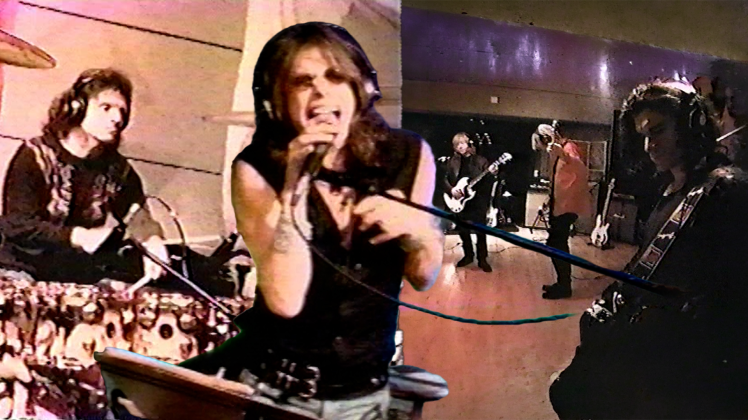
When Aerosmith signed a reported $30 million deal with Columbia Records in 1991 — their original label from the 1972–83 era — the expectation was simple: deliver a blockbuster follow-up to 1993’s Get a Grip, which had sold fourteen million copies worldwide. But the band couldn’t even begin to fulfill the Columbia contract until completing their pre-existing Geffen deal in the mid-nineties, which meant the pressure had been building for years before a single note was recorded. The band had been off the road since December 19, 1994, and had promised Sony a new album by November 1995. What followed instead was a two-year odyssey of creative ambition, managerial sabotage, personal breakdowns, and an entire album recorded, rejected, and re-recorded from scratch — a saga that would push every member of Aerosmith to the breaking point.
The album that finally emerged in March 1997, Nine Lives, is a fierce, stripped-down rock record. But beneath it lies a ghost: an unreleased version cut in Miami with producer Glen Ballard, full of loops, digital experimentation, and vocal performances that Steven Tyler still calls some of his best work. This is the full story of both records — the one the world heard, and the one that got away.
March–May 1995: Seeds in the Boneyard
The writing process began modestly in March 1995, with Steven Tyler and Joe Perry retreating to the Boneyard, the studio built in Perry’s basement. Through March, April, and May, a rotating cast of collaborators came through: Glen Ballard, who had worked with Michael Jackson and was about to change pop music forever with Alanis Morissette; Mark Hudson, a longtime Aerosmith co-writer who had helped craft “Livin’ on the Edge”; and Robert DeLeo of Stone Temple Pilots, who brought a grunge-era sensibility to the sessions.
The atmosphere was familial, even playful. Perry’s son Adrian, visiting from California, picked up a bass during one session and nailed a part in two minutes, ending up on the demo. Joey Kramer’s son Jesse would occasionally sit in on drums during rehearsals at his father’s house. Chelsea Tallarico, Tyler’s daughter, played drums too. The next generation of rock was literally in the room.
But these early sessions were slow. The writing process, as Perry later admitted, was “as slow-moving as ever.” The band decided to shake things up.
June–August 1995: Black Monday and the First Cracks
After those initial writing sessions, the band took a break for the summer. In June and July, Tyler and Perry brought their families to Florida, rented beach houses, went boar hunting. It should have been a recharging period. Instead, it became the first act of a gathering crisis — though not before Tyler and Perry likely snuck away from the family vacation for about a week to write with Desmond Child, who lived nearby. The sessions produced at least two songs that would follow the band all the way to the final album: “Hole in My Soul,” built from a melody Tyler had been carrying since Pump, and an early version of “Ain’t That a Bitch” — a second attempt at a title that had already produced a completely different song during the Get a Grip era.
Manager Tim Collins, who had guided Aerosmith’s spectacular comeback from drug-addled obscurity in the late 1980s, fell into a severe depression. He scheduled a group therapy session with the band members and their wives — an event the band came to call “Black Monday.” Collins, who was never a family man, had decided that Joe and Billie Perry’s close marriage was pathologically codependent, and he wanted a collective confrontation. Nobody was interested. None of the partners wanted to participate because they sensed the session was really about Collins’s own issues, not theirs.
Things deteriorated from there. Collins began calling band meetings to announce that Aerosmith was breaking up. The band members would look at each other in bewilderment — from their perspective, nothing of the sort was happening. They were working. They were sober. They were writing songs. But Collins couldn’t stop. When Karen Whitford’s baby shower was held at the Hamiltons’ house on Cape Cod, Collins didn’t attend. Instead, he sent recovery counselor Bob Timmins with a letter declaring the band was in relapse and on the verge of dissolution.
As Perry recalled: “He’d tell us we were on dangerous ground, we were losing our spirit, our sobriety was in danger. But it wasn’t true.”
October–November 1995: Preproduction and the Club Gigs
With summer’s dysfunction behind them, Tyler and Perry spent October and early November on the road — “roving ambassadors of rock ‘n’ roll in search of the lost chord and the missing groove.” They worked with Jimmy Jam and Terry Lewis at Prince’s Paisley Park studios in Minneapolis — warm hosts with deep R&B and blues roots, but nothing fully jelled. Perry would later say: “We have tapes of those things, and maybe someday they’ll come out… They’re not finished three-and-a-half-minute things. I think one of them got to lyrics.” One of the more complete ideas was titled “Sweet Due.” They went to Nashville and began a song with Taylor Rhodes that would eventually become “Full Circle.” In Los Angeles, they wrote “Taste of India” with Ballard — born in his garage studio above the vocal booth “where Alanis did her whole record.” On October 28, Tyler flew up to the Bay Area to join Neil Young & Crazy Horse onstage at Shoreline Amphitheatre in Mountain View for an all-star “Rockin’ in the Free World” jam — a sign that the writing road trip was still in full swing through the end of the month. Dean Grakal, who had worked on Ringo Starr’s Vertical Man, also contributed during this period — he and Mark Hudson co-wrote “Fall Together.”

By late October, the band gathered in Boston to rehearse the new material together for the first time in over a year, running through the demos and arrangements at Joey’s house. To test the material on a live audience, they booked two secret club gigs as “the G-Spots” in early November: the first at the Middle East in Cambridge, the second at Mama Kin Music Hall in Boston. They opened both nights with “Make It,” the first song on their debut album, and ran through deep cuts — “Bone to Bone,” “Get the Lead Out,” “Sick as a Dog,” “S.O.S.,” “Milk Cow Blues.” They also premiered new material: “The Farm,” “Trouble,” and “What Kind of Love Are You On?” The second night, bikers brawled on Lansdowne Street outside Mama Kin, just like old times.
The club shows proved something important: Aerosmith already had the bones of a very good album. A collection of demos and working songs was taking shape — “The Farm,” “What Kind of Love,” “Trouble,” “Full Circle,” “Taste of India,” “Hole in My Soul” (a melody Tyler had been sitting on since Pump — years waiting for its moment). The question was who would produce it, and where.
The Producer Question
The original plan had been to reunite with Bruce Fairbairn, who had produced Pump and Get a Grip. But Fairbairn was booked solid. He’d penciled in a vague commitment, but the band let it slip. Brendan O’Brien, who had mixed Get a Grip, wasn’t available either.
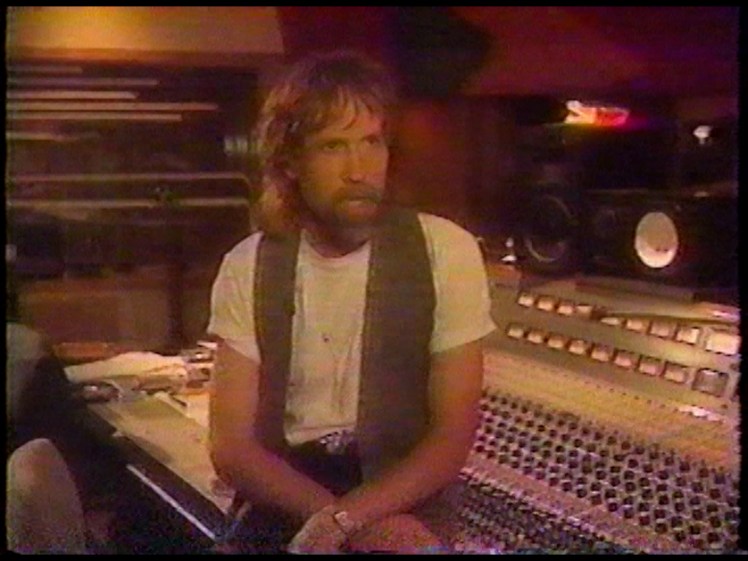
Tyler had seen Alanis Morissette perform and was captivated by her raw power. When he learned that Ballard had essentially made Jagged Little Pill with a drum machine, Alanis, and himself on guitar — and that the album would go on to sell over twenty-five million copies — he became fixated on working with Ballard as a producer, not just a co-writer. Kalodner, who had left Geffen to follow Aerosmith to Sony, championed the idea.
Ballard came off humbly, but Perry sensed an enormous ego under the surface. Capitol Records was building Ballard his own studio. He was forming a production company that would make not just records but films. The world was beating down his door. Still, when Tyler and Perry met with him, they hit it off. Ballard was a Southern gentleman with deep Mississippi blues roots, and the band believed that a shot of Aerosmith rock and roll could make for a lethal combination.
The Marlin Hotel, South Beach 1996
The decision was made: Aerosmith would go to Miami to write and record with Glen Ballard. While Tyler and Perry were already deep into writing, the rhythm section was preparing separately back in Boston. In January 1996, Kramer, Tom Hamilton, and Brad Whitford began rehearsing the arrangements, drilling the songs into shape ahead of the Miami sessions. It was during these January rehearsals that Kramer’s emotional state began to deteriorate — though he wouldn’t fully break down for several more weeks.
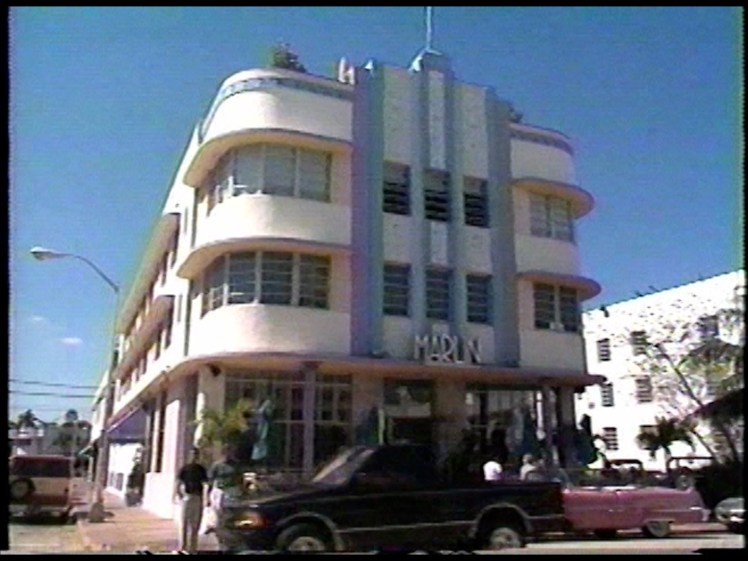
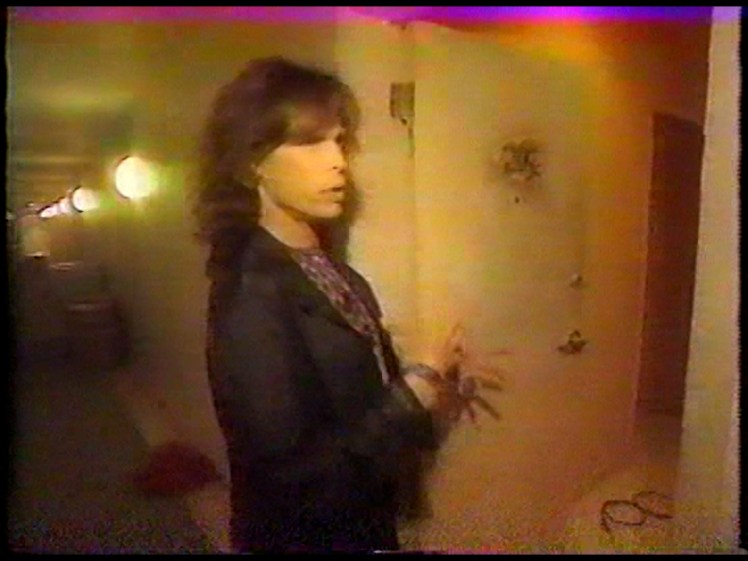
Tyler installed himself in room 306 of the Marlin Hotel in South Beach. Ballard set up his production suite elsewhere in the hotel — keyboards, programming equipment, an espresso machine that became the fuel for marathon writing sessions. MTV footage from May 1996 shows Tyler walking into Ballard’s room with the number 205 clearly visible on the door. Tyler described Ballard as being “next door,” though the rooms may have changed in 6 months. Tyler and Perry would spend all day writing with Ballard in his suite, then Tyler would retreat to his own room at night to work on lyrics, often writing until six in the morning when the sun came streaming through the windows. By two or three the next afternoon, he’d emerge from his cave with a fresh set of words.
The Marlin Hotel doubled as South Beach Studios — a proper recording facility in the building’s basement, equipped with a 64-input SSL G Plus console and both Studer analog and Mitsubishi digital multitrack machines. Studio president Joe Galdo oversaw operations. The arrangement was ideal: Ballard and the band would write and lay down parts in the hotel suites upstairs, with tielines running down to the studio to flesh out recordings that were later finalized at Criteria Studios across town. The setup worked so well that Galdo later commissioned designer Ross Alexander to convert Room 305 into a permanent mini-studio, complete with ISDN capability, a vocal booth, and a Mackie console — a direct legacy of the Aerosmith sessions.
Ballard brought his regular engineer Chris Fogel, who had engineered Jagged Little Pill, with Shad T. Scott as assistant engineer. And Ballard imported the same methodology he’d used with Morissette: a vocals-first approach, building the songs around Tyler’s voice and intending to layer other instruments afterward. It was the opposite of traditional rock production, where you cut the band live and add vocals last. The method meant an extraordinary amount of focus landed on Tyler’s singing — which suited Tyler perfectly — but it also left everyone else feeling sidelined. Desmond Child, who was working nearby and visiting the sessions, observed the dynamic bluntly: “Glen had his magical Synclavier and all this, and the band had nothing to do. It was all like Steven singing to tracks that Glen was making, and Joe was kind of like, ‘Well, when do I play?'”
Despite these tensions, Perry was generous in his assessment of Ballard’s gifts — every artist who’d worked with him said the same thing: he was “a musical soulmate.”
In a later interview, Ballard recalled the experience vividly. He described writing “Falling in Love (Is Hard on the Knees)” in that hotel room, starting with a riff and building it on the spot. He marveled at Tyler’s stamina — the man could sing for twelve hours straight without getting vocally tired. “Cast-iron pipes,” Ballard said. “His range is utterly tremendous.” They were fueled by coffee, not drugs. Ballard had his espresso machine, Tyler was obsessed with it, and they’d drink ten cups a day and write.
The creative output was prolific. Tyler recalled the pace: “Kiss Your Past Goodbye” took two days to write the lyrics. “Pink” took four. “Falling in Love” took about three. “Taste of India” had been born earlier, in Ballard’s LA studio — “We went up to that little room where Alanis did her whole record, a little vocal booth right above his garage.” Perry added that they later “got in this guy who plays the sarangi” for the lead parts, and sent the track to David Campbell for orchestration. Other co-writers were nearby — Richie Supa and Desmond Child lived right around the corner in Miami, and Mark Hudson flew in from L.A. The Marlin became a composers’ free-for-all, all the writers hoping Tyler would sing their songs.
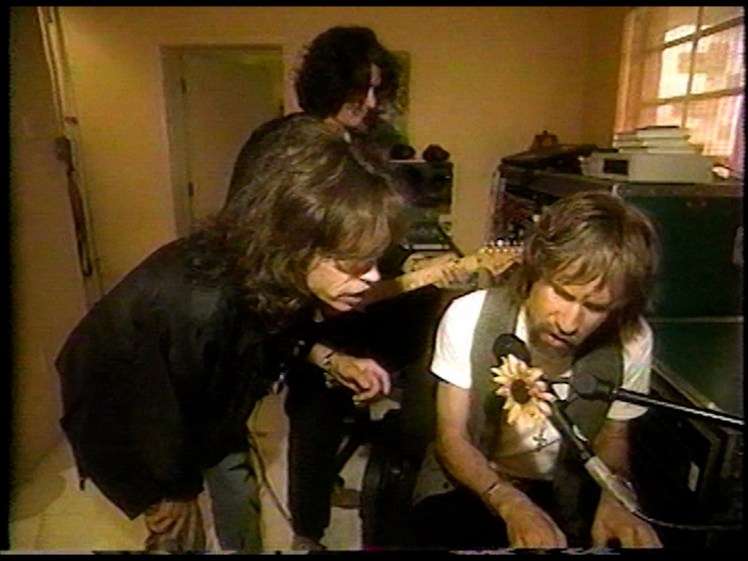
The social scene was intoxicating in a different way. Perry recalled: “We had a really good time down there. Jet skis in the morning, do a little bit of writing in the afternoon. The whole vibe was really good. We wrote a lot of cool songs.” Tyler went fishing, hung out at clubs, met Jack Nicholson, Oliver Stone, Michael Caine, and Quincy Jones. Sylvester Stallone came to his birthday party. The editor of Ocean Drive magazine became a companion. Bikini-clad skaters on Ocean Drive inspired lyrics. “You’re in South Beach, right?” Tyler said. “You’re admiring the flowers and the nude beach and the juice bar around the corner… and something after a while gets inside of your skin and inspires you.” Bono and Larry Mullen Jr. of U2 visited during the sessions; the band played them the tracks and they were blown away.
But South Beach was also a cesspool of rumors. Gossip columns ran photos of Tyler surrounded by models, implying the worst. People around town claimed to be doing drugs with the band, sleeping with them. The rumors circulated like polluted air. Tyler and Perry ignored them, but the whispers reached Boston — and Tim Collins’s ears.
January–February 1996: Marti Frederiksen Enters the Picture
A&R legend John Kalodner had discovered Marti Frederiksen through a number-one rock song he’d written with Brother Cane. Kalodner called him personally: “I really don’t want to get you in with Jackyl… I want to get you in with Aerosmith.” Then came the crucial advice: “You’re going to get in with those guys and they’ll jam, and they jam good. If you don’t take the reins and grab one of those ideas and really make something out of it, that’ll be it.”
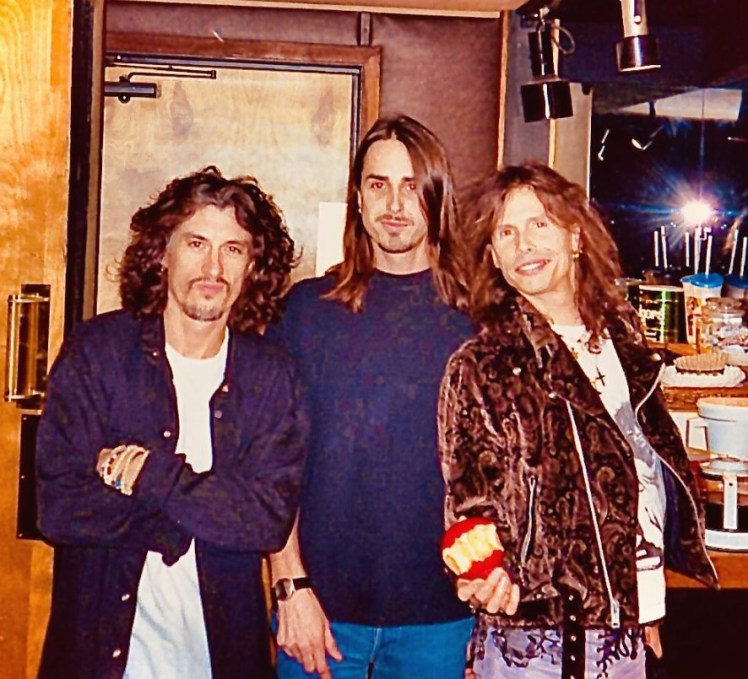
Frederiksen’s first session with Tyler and Perry — likely in early January 1996 — produced “Something’s Gotta Give,” which would make the final album. He walked in carrying a Linn 9000 drum machine — the device behind Michael Jackson’s Thriller — triggering sounds with the pads, then picking up the bass while Perry played guitar and Tyler sang. They jammed five different ideas that first day. That night, after Tyler and Perry left, Frederiksen stayed up and assembled one of the jams into a song structure, wrote a bridge, and laid down a verse melody he’d woken up humming in the middle of the night. When Perry heard it the next morning, he said: “Man, this is rocking.” Tyler, who hadn’t planned to come back — he assumed nothing had come from the jam — got a call from Perry: “This thing’s a freight train. You’ve got to come in.” Tyler showed up, loved the melody, and by the end of the day they were all smiling. As Tyler later confirmed: “We wrote ‘Something’s Gotta Give’ with Marti Frederiksen, fucking great.”
Frederiksen was also present in Miami during the Marlin Hotel sessions. On the night of Sunday, January 21, 1996, Tyler and Perry went to see AC/DC at the Miami Arena and came back buzzing. As Frederiksen recalled: “Me, Joe and Steven were in this little setup, very minimal. We started jamming ‘Whole Lotta Rosie’ by AC/DC, and the next thing you know it turned into a song called ‘Nine Lives.'” Tyler loved it: “I love that fuckin’ band so much… I missed the flavour of those kind of ballbuster songs.” Whitford confirmed the origin: “That tune was kind of inspired by AC/DC. Joe and Steven went to see them live and said they were great. ‘We gotta do something like that,’ they said.” Whitford would later play all the solos on the finished track. Two more Frederiksen co-writes from this same January period — “Attitude Adjustment” and “Falling Off” — would also make the final album.
Perry’s early advocacy proved decisive. Tyler was initially resistant to the new collaborator: “In the beginning, Steven didn’t want to work with Marti, who was just starting out. But I kept insisting that Marti come back, and ultimately I prevailed.” Perry described Frederiksen as “more than a good technician — a real hard rocker, a brilliant cat with whom I loved to jam.” When Frederiksen came to the Boneyard for intensive two-man sessions, they’d “have a blast building up a large catalogue of riffs” — Marti essentially became Joe’s rhythm section, laying down bass, drums, and guide vocals while Perry carved guitar parts. He ended up with four songs on the final album and would go on to write roughly forty songs with the band over the years.
Five tracks from the Perry-Frederiksen two-man sessions survive on a DAT tape, now part of a broader unreleased archive — a fascinating window into the raw material feeding the album. “Do You Wonder Why?” was the most polished, with full harmonies and overdubs; Tyler refused to write new lyrics (possibly because the originals were by Billie Perry), and it eventually surfaced on Perry’s 2009 solo album. “Give It Away/Push” was the only demo with Tyler on lead vocals. Track 3 was an early version of “Where the Sun Never Shines” with Frederiksen singing placeholder lyrics under a working title of “Cheating Nights” — an Indian-flavored rocker with a catchy palm-muted riff and flanger/wah panning; Tyler later simply replaced Marti’s vocals over the same instrumental bed, though the track was ultimately dropped. Track 4 was an energetic semi-grunge sketch with unfinished “better, better” chorus lyrics — not necessarily Aerosmith material. Track 5 contained the riff and pre-chorus that would evolve, after a South Beach pass with Tyler on vocals and a full lyric rewrite, into “Angel’s Eye” (released in 2000); at this stage it was mostly scatted under the working title “When the Monkey Comes.”
Those Frederiksen sessions didn’t decide the album, but they poured rocket fuel on the pile of usable material.
The Preproduction Demo Tape: The Album Before the Album
The preproduction demo tape is likely Aerosmith’s March 1995 to Jan 1996 songwriting portfolio — the body of work Tyler and Perry accumulated across the Boneyard sessions, the week they snuck away from their family vacation in Florida to write with Desmond Child, the fall writing road trip to Minneapolis, Nashville, and Los Angeles, and the very first Marti Frederiksen session in early January 1996. It was compiled before 21 January 1996, before the bulk of the Frederiksen collaboration, and before Ballard was formally locked in as producer. It represents the starting material Ballard inherited — and it demonstrates that a substantial portion of Nine Lives, including songs with roots stretching back to the Pump era, was conceived well before either Ballard or Frederiksen entered the picture in any significant production capacity.
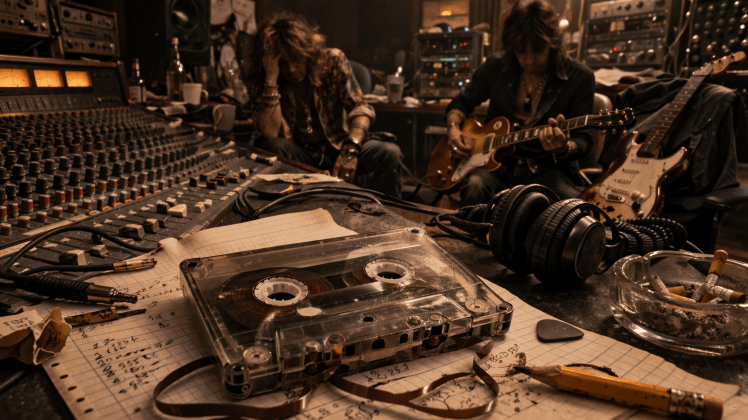
The tape is believed to have originated from someone involved in the project at South Beach Studios. Drums are almost entirely programmed throughout, and some tracks were recorded at slower tempos or in lower keys to accommodate Tyler’s voice in a demo setting. Eleven tracks span the full range of the writing period: “Falling in Love (Is Hard on the Knees),” “Pink,” “Ain’t That a Bitch,” “Something’s Gotta Give,” “Full Circle,” “Fallen Angels,” “Hole in My Soul,” “Crash,” “Kiss Your Past Good-Bye,” “Attitude Adjustment,” and “Roll Away at the Stone.”
The most revealing findings: “Falling in Love” still carries a scrapped bridge where Tyler wisecracks about a stoned Cheshire Cat — “your Cheshire Cat is on hashish, own it, own it, own it…” “Ain’t That a Bitch” is the outlier, sounding like a live band recording with organ and female backing vocals — the polished state consistent with Desmond Child’s reputation for delivering fully realised demos. “Hole in My Soul” is the earliest-sounding demo on the entire tape — no proper first chorus, alternate lyrics including “it takes a group to do the crime” and “I fuck with my boots on, that’s it, enough said,” and a guitar arrangement that sounds unfinished during the chorus, though the solo already contains elements that would survive to the final take. The song was complete enough to be performed at the Middle East club gig on November 9, 1995, but was never tracked in Miami — it went directly from this demo state to Avatar Studios with Shirley in the fall of 1996. “Kiss Your Past Good-Bye” has a completely different solo from the released version — Tyler described the song as “a premonition of the coming breakup” with Collins; one night at the Marlin, after hearing Tom Lord-Alge mixing Sheryl Crow’s “If It Makes You Happy” in the basement studio, Tyler and Perry went upstairs and wrote it. A full track-by-track review is available at AerosmithBackBurner.com.
The February 1996 Reference Tape
By February 21, 1996 — one month after the AC/DC concert that spawned the album’s title track — the South Beach operation had assembled a reference cassette labelled “Tape 1 of 2,” with engineer credits (Chris Fogel, Shad T. Scott) and “Sony Music” as the client. Where the preproduction demo tape captured the raw portfolio Ballard inherited, this tape shows what happened next: a month of intensive development at the Marlin, new songs written, old demos refined, and Tyler stamping his voice onto tracks that had previously carried Frederiksen’s guide vocals. This was at least partly a progress report for the label — here is what we have, here is how far along we are.
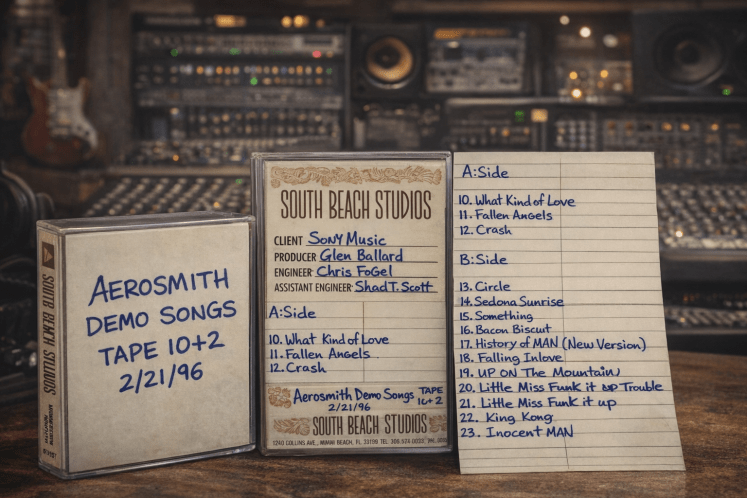
Twenty-two titles span two sides. Side A: “Attitude,” “When the Monkey Comes,” “Taste of India,” “Pink,” “Loretta,” “Kiss Your Past Good-Bye,” “Somethin’s Gotta Give,” “The Farm,” “Where the Sun Never Shines,” “What Kind of Love,” “Fallen Angels,” “Crash.” Side B: “Circle,” “Sedona Sunrise,” “Something,” “Bacon Biscuit,” “History of a Man,” “Falling in Love,” “Up On the Mountain,” “Trouble,” “Little Miss Funk It Up,” “King Kong,” “Innocent Man.”
Several songs performed at the November 1995 club gigs — “The Farm,” “What Kind of Love,” and “Something” (a Perry composition that would eventually surface on 2012’s Music from Another Dimension!) — appear here but were absent from the preproduction demo tape, confirming the February sessions were actively capturing material that had previously existed only in the rehearsal room. “Sedona Sunrise” is a Pump-era (1989) outtake whose country flavour had kept it off that album. A few titles remain true ghosts: “Little Miss Funk It Up” and “King Kong” have never leaked in any form. “History of a Man,” a humorous chronicle of humanity written by Pat Macdonald and Mark Hudson, was confirmed recorded with Ferrone and reportedly considered as a potential single, but the Aerosmith recording has never surfaced. A full track-by-track review is available at AerosmithBackBurner.com.
March-April 1996: Crisis at Criteria
As the sessions moved from the intimate confines of the Marlin Hotel to the professional environment of Criteria Studios for proper tracking, the first serious blow landed: Joey Kramer couldn’t play.
The passing of Kramer’s father — who had suffered from Parkinson’s for years — had triggered a delayed traumatic reaction that the band called “The Big Blue Funk.” Kramer described what happened in raw, painful detail. He had never fully processed his father’s death, and decades of suppressed pain — childhood abuse, the pressure of being Tyler’s constant target in the studio, the grief he’d postponed by throwing himself into work — came flooding to the surface all at once. His therapists at Steps would later call it “flooding”: emotions rising so fast he couldn’t manage them.
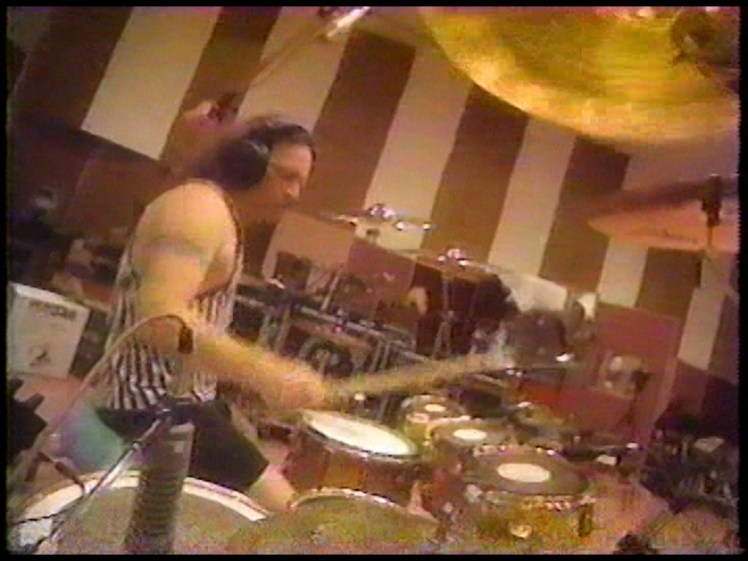
“I went into a really deep depression,” Kramer said. “A lot of issues came up for me that I had to deal with on my own. A lot of stuff around my childhood, I had lost my dad a little while back. It was sort of an emergency that came up for me and I had to take care of myself.” Perry recalled the shock: “He was down rehearsing. The next thing I know, he’s on a plane out of there and unavailable for comment.”
The breakdown had begun during those January rehearsals with Hamilton and Whitford. Kramer wrote that one day, while rehearsing, a horrible feeling hit him, and he told his bandmates that if he had to go on feeling this way, he could understand how someone would want to end their life. Collins immediately made him the “designated patient” and arranged for him to enter Steps, the rehab facility near Malibu run by Steve Chatoff.
At Steps, Kramer confronted the deepest question of his life: “What or who are you without Aerosmith?” The therapist forced him to separate his identity from his role in the band — a painful process that ultimately freed him. “I had made so important that which is not really who I am,” he wrote. He also discovered that Collins had been manipulating his treatment, telling him his bandmates didn’t care about him — “They’re scumbags, they’re really not your friends” — while simultaneously telling the band not to contact Joey because he needed to be left alone. The divide-and-conquer strategy extended even into therapy.
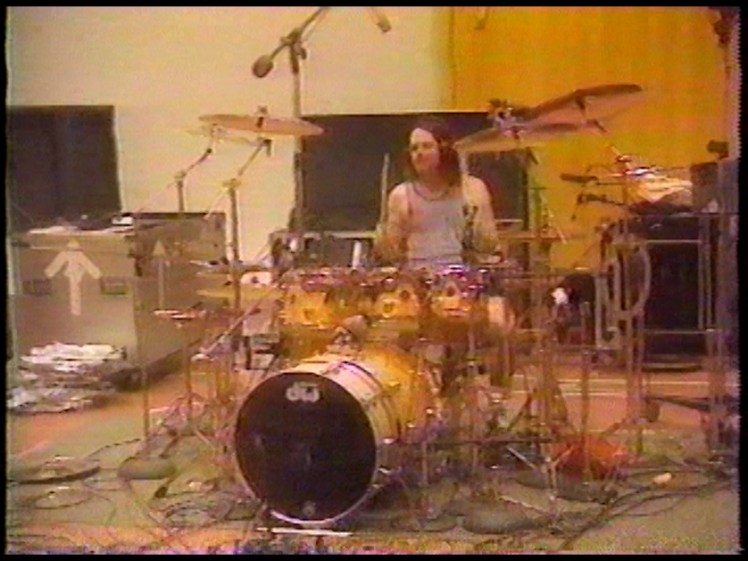
When Kramer learned that the band was going ahead recording without him in Miami, he was devastated. “I didn’t have any say in the matter,” he wrote. “I didn’t have any place to go with my anger.” He seriously considered leaving Aerosmith entirely. But the therapeutic work ultimately gave him clarity, and when he was ready to leave Steps, Collins called demanding he go back — an act of control that Kramer recognized, for the first time, as exactly the pattern of abuse he’d been working to break.
The band faced a choice: wait indefinitely for Kramer, or press on. They chose to press on. Steve Ferrone — the English soul drummer who had played with Average White Band and Tom Petty — was brought in. Ferrone was a consummate professional with a great sense of humor who nailed the arrangements quickly. But his style was feel-oriented, groove-based — not the hard-hitting, distinctly Aerosmith attack that Kramer brought. Without Joey’s rawness, the tracks began to sound polished in a way that made some people uneasy.
Meanwhile, Collins was making himself scarce — and systematically isolating the project. In the past, he’d been hands-on with every project, showing up at every studio session, every press junket, every tour stop. Now he appeared in Miami only once. Something was off. He had already pushed to sideline A&R man John Kalodner, deliberately telling him to stay away from the sessions. Tyler later described the management crisis bleeding into the studio: “The whole thing started bubbling down in Miami, and it threw this spin over the whole project. There was a lot of fear, and, simply said, it wasn’t the Aerosmith that everyone was used to.”
Behind the scenes, Collins was waging a shadow campaign. He had spies attending the twelve-step meetings Tyler frequented, monitoring attendance. He sent a female psychologist to evaluate band members and their wives, hoping she’d confirm his theory that everyone needed rehab. When the psychologist met Billie Perry and declared there was nothing wrong with her or her marriage, Collins threw a fit and fired her, sending a threatening fax — which he accidentally sent to the Perrys’ house, further exposing his tactics.
Collins also told Tyler something different from what he told Perry, and told other people other things still. The triangulation was becoming a pattern impossible to ignore.
April–May 1996: Recording and the Letter
In April, the full band — minus Kramer, plus Ferrone — moved to Criteria Studios to begin proper tracking. Ferrone played with the band through April and into early May, laying down drum parts on the bulk of the songs. Tyler described the setup glowingly: “Glenn was smart enough to have all this outboard gear, ADATs in the hotel room in Florida. So when I walked in — can you do this? Oh, no problem. Can you do this? Yeah, it’s already done.”
When Kramer returned from Steps in May, he attempted to replace Ferrone’s drum parts on four or five tracks. MTV visited Criteria mid-May for a studio tour, which included footage of Kramer playing drums on “Falling in Love.” But the overdubbing proved frustrating. As Kramer explained: “For me to go and put drum tracks on already existing tracks — it kind of worked, but it didn’t sound as good as it could have. By virtue of how the band records, it’s usually the five of us in the studio at the same time, all in the same room.” The realization that retrofitting one element onto finished tracks wasn’t working would become a key factor in the decision to re-record everything in New York.
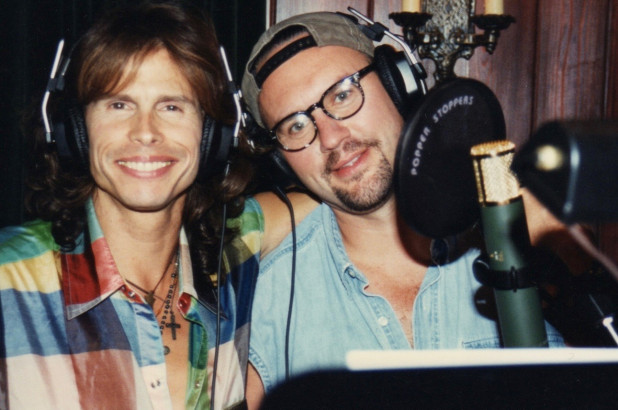
But two songs that had been written with Desmond Child — “Hole in My Soul” and “Ain’t That a Bitch” — had not been part of the initial tracking plan. Child, working with Ricky Martin next door at Criteria, was keeping a close eye on whether his songs had made the cut. As he later recalled, the band had “snuck out” to write those songs with him, but Ballard’s sessions had gone in a different direction and neither was on the tracking list. So Child went in through the back way — past the tape storage, avoiding the front entrance — walked into the control room while the band was eating lunch, and made his pitch. “I said, ‘Well, that’s funny. The Rolling Stones haven’t gone in a different direction for 35 years, and that seems to be working just fine.'” The gambit worked: “Ain’t That a Bitch” was tracked at the very last minute before the band left Miami — Perry recalled they “wrote three different versions before it finally came out right. We did that one right at the end of the record. At the last moment. They were wheeling the amps out.” “Hole in My Soul,” however, would be pushed to the New York sessions.
Perry would later reflect that the whole process suffered from insufficient preparation: “Whenever we finished and said ‘OK, we’ve got the songs,’ we should have had a month of rehearsals. Looking back, that would be one thing we should have done differently.”
The creative process, however, was becoming strained. Ballard’s vocals-first methodology meant that Perry’s guitar parts were an afterthought. Tyler later admitted that Perry “eventually threw him out because Glen was working on tracking and vocals and wasn’t paying attention to Joe’s leads or working with him on guitar sounds.” Tyler told Perry to talk to Ballard about it — “it’s your guitar, get your own sounds” — but the damage was done. To make matters worse, Ballard’s engineering team had been staying up all night fixing Perry’s timing on the tracks and aligning them to a grid, which was standard production practice but infuriated Perry, who saw it as an insult.
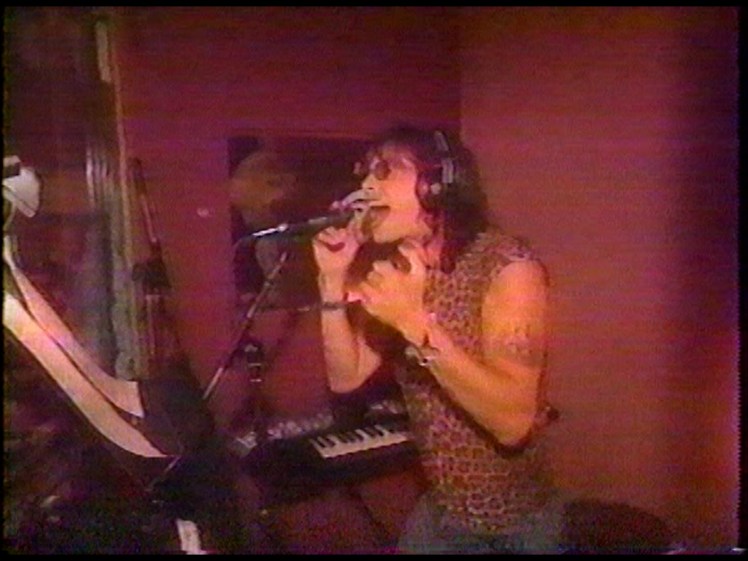
On top of the guitar frustrations, Ballard had grown obsessed with the Alesis Digital Audio Tape (ADAT) format, which enabled simultaneous multi-track recording onto Super VHS tapes. He started with three ADAT machines and eventually expanded to eight, recording across 170 tracks. Worse, he refused to make decisions about which takes to use — if Perry wanted a rhythm part, Ballard would record eight versions and keep them all, saying they’d sort it out in the mix. Track sheets that were normally a couple of pages long had ballooned into hundred-page binders for each song.
The band couldn’t take rough mixes home at the end of the day, which had always been their practice. Without basic mixes, they couldn’t hear what the songs were actually becoming. Perry felt disassociated from the music. “Too much tech, too little blood and guts,” he said. His wife Billie noticed he wasn’t listening to the tracks at home the way he usually did — pumping them up, blowing out the car speakers. The excitement was gone.
At the same time, Ballard was distracted. He was preparing to produce Van Halen and was frequently on the phone during Aerosmith sessions. Tyler antagonized him by claiming Bruce Fairbairn’s production methods were superior.
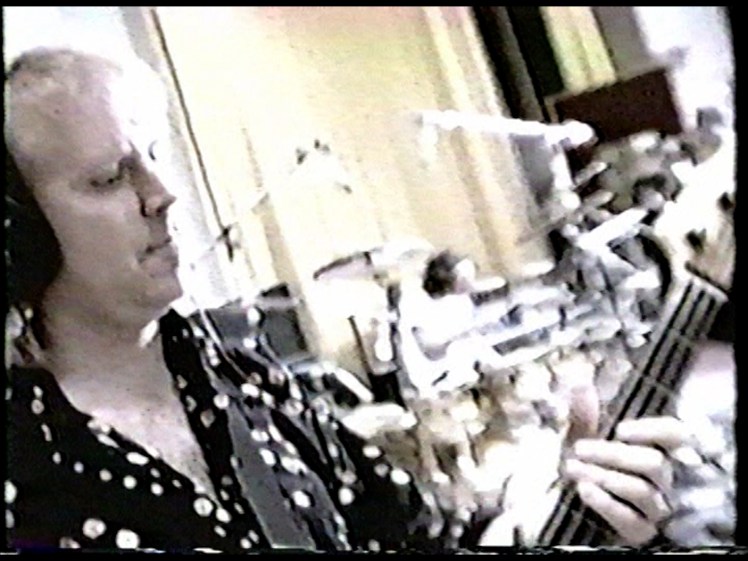
Then Collins dropped his most destructive bomb yet. In May, he staged what Perry called a “Spanish Inquisition meeting.” He told Joey and Tom Hamilton that Tyler wanted them out of the band — which, according to Perry, was not true. He browbeat the band into writing a confrontational letter to Tyler, demanding he address his raging behavior or face the dissolution of the partnership. Perry signed it, though his gut told him it was overreaching. “If the only tool you’ve got is a hammer, everything looks like a nail,” he reflected.
Then Collins went further. He called Tyler’s wife Teresa to tell her that Steven had been cheating on her in South Beach, citing tabloid photos as evidence. Perry exploded when he found out: “You can’t take a picture in South Beach without a bimbo in it.”
Tyler received the letter and was put on ice for seven weeks. Collins ordered Ballard to keep Tyler out of the studio. The band had no communication with their lead singer. The songwriting engine that had been running on ten cups of espresso a day and pure creative joy ground to a total halt.
June 1996: The Exile
Tyler was away for seven weeks — the saddest period of his life, by his own account: “It was the saddest seven weeks of my life, all because of Tim Collins. He kept me away from the studio finishing anything with Glen Ballard.” During his absence, Ballard was left to work on the tapes without the band present. When Sony asked to hear something, Ballard mixed the songs himself. Neither Tyler nor Perry was in the room.
This became a fatal wound. Tyler was adamant that you cannot mix an Aerosmith record without an Aerosmith member present. “You don’t remix ‘Dream On,’ ‘Sweet Emotion,’ ‘Mama Kin,’ ‘Janie’s Got a Gun’ without me in the room. You don’t do that.” In his view, mixing is the final act of authorship — “taking all your music and sifting it through a fine chamois.” To hand that process to an outside producer, however talented, was a betrayal of everything the band stood for. “No album would have ever been good if I didn’t get in there and mix it with a producer.”
Collins’s role in this was clear to Tyler. Collins had sent Ballard a cease-and-desist letter, warned him of trouble in the band, told him Steven was on drugs, and instructed him not to let Tyler into the studio. Whether Ballard’s solo mixes were a product of Collins’s manipulation or Ballard’s own initiative, the result was the same: Sony received mixes that didn’t sound like Aerosmith.
The Glen Ballard Mix Tape: June 26, 1996
This is likely the tape that killed the Miami album. Dated June 26, 1996, it contains eighteen tracks — a full album and then some — assembled during the seven weeks Tyler was exiled from the studio. Two tracks at the front predate the June mixes by over a month, offering a snapshot of the production in mid-May.
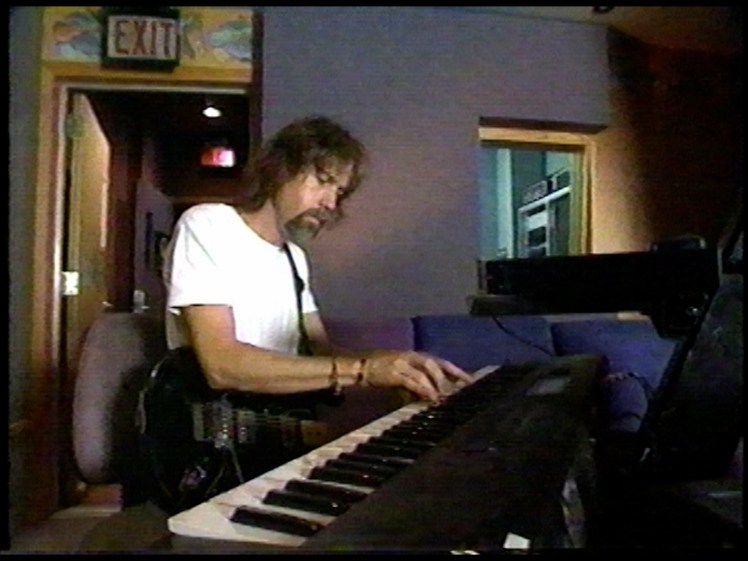
The tape contains: “Falling in Love“ (three versions including a “Nicole Mix” and a “Dance Mix,” with additional “Moby” mixes on associated tapes suggesting Columbia was already preparing single formats), “Heart of Passion“ (a drumless Tyler/Supa ballad demo that feels more like a solo pop track), “Taste of India,” “Pink,” “Loretta“ (punk-tinged pop-rocker with real drums, believed to have reached mastering before being cut), “The Farm“ (vocals possibly identical to the 1997 release), “Kiss Your Past Goodbye,” “Nine Lives“ (vastly different from the released version — slide solos mimic the vocal melody, no intro guitars, a haunting alternate vision), “Fall Together,” “What Kind of Love You Want,” “Something’s Gotta Give,” “Biscuit Boogie Blues,” “Ain’t That a Bitch“ (two versions), “Bridges Are Burning“ (real drums, likely Ferrone — left behind when the project moved to New York), and “Falling Off“ (dated December 18, 1996 — months after the rest, suggesting it was only remixed in New York).
The tape reveals an album caught between two identities — Ballard’s loops and digital sophistication pulling one direction, the band’s instinct for rawness pulling another. The drums across most tracks remain clearly electronic even at this late stage, and most tracks were still missing finished guitar parts from Perry. The exceptions — “Loretta,” “Bridges Are Burning,” and “Ain’t That a Bitch” — appear to have real drums, possibly Ferrone’s, yet two of those three never made the final album. Tyler’s vocals, by contrast, are often magnificent — complete, committed, sometimes better than what ended up on the released record. A full track-by-track review is available at AerosmithBackBurner.com.
July 1996: The Rejection and the Reckoning
The Sony executives flew to Miami for a listening party. The band played them the album from start to finish. When the last song ended, there was dead silence — an uncomfortable thirty seconds that felt like eternity.
Then one of the suits said the words that were already on Perry’s mind: “I don’t like it.”
“Why not?”
“It doesn’t sound like an Aerosmith record. I don’t hear the band.”
Ballard argued. Ironically, it was Tyler who most passionately defended the record — understandably, since he’d sung his heart out on every track. “It just needs a different mix,” he insisted. But the verdict was final: Sony wanted them to start over.
The attempt to salvage the Miami sessions by having Kramer — now out of rehab and back in fighting shape — replace Ferrone’s drum parts didn’t work. The sonic DNA of Ballard’s production was too embedded. When Sony gave the tapes to another engineer to mix, he couldn’t make heads or tails of the 170-track labyrinth.
Why the Miami Album Was Discarded: Every Side of the Story
The rejection of the Ballard sessions wasn’t driven by a single cause. It was the convergence of multiple failures — creative, technical, managerial, and personal — and each participant saw it differently.
Sony’s perspective was the simplest: they didn’t hear the band. The mixes submitted lacked the raw, five-piece-in-a-room energy that had defined Aerosmith since Rocks. Kalodner, reinstated after being sidelined by Collins, told the band point-blank: the record didn’t sound like the Aerosmith he knew. Brad Whitford was characteristically blunt about what he heard when he went home and listened on his own: “What am I hearing? This does not sound like an Aerosmith record. It sounded like a Huey Lewis record” (MTV Rockumentary). The label had a contractual right to demand another album, and they exercised it.
Perry’s perspective was that the sound was wrong on multiple levels: “It just didn’t sound right, and a big part was because Joey wasn’t on it.” Beyond the missing drummer, he hadn’t been able to get the guitar tones he wanted, the production process had left him feeling disassociated from the music, and the mixes he heard didn’t show enough of the band. Yet even Perry acknowledged the creative value: “I think that he took us to places we couldn’t have gone otherwise. We got the best out of that in Miami, and then we took it to New York and just let it fly.”
Kramer’s perspective added another layer. When he returned from Steps and tried to overdub his drums onto the existing Ferrone tracks, the results were disappointing: “For me to go and put drum tracks on already existing tracks — it kind of worked, but it didn’t work as good as it could have. It didn’t sound as good as it could have. So what happened was that everybody just decided to redo all of the songs.” The band’s recording method depended on all five members playing together in the same room — retrofitting one element onto a finished track simply wasn’t how Aerosmith worked.
Tyler’s perspective was the opposite — and far more bitter. His central frustration was that Sony had judged an album that wasn’t finished. The band was still recording when Collins pulled Tyler out of the studio; the songs hadn’t been fully tracked, Perry’s guitar parts were incomplete, and the mixes Ballard submitted were done without any band member in the room. Sony was effectively rejecting a rough draft that was never meant to be a final presentation. “We weren’t finished with the record. It was pulled out from under Glen.” Tyler explained: “Glen mixed them himself — Joe and I weren’t there. It was supposed to be co-production.” He elaborated: “You’re not going to get a good rendition of anything Aerosmith does unless one of the guys who wrote the song is in the studio to mix it… It will be his take.” Tyler believed he had sung better in Florida than anywhere else. He never got his day in court. “I felt really sad that Glen Ballard got fired, and I felt really sad that the path we were on with those songs got blown out of the sky.” He acknowledged Perry’s frustrations but maintained there were at least three songs he would never have re-recorded. Tyler’s regret was palpable: “I thought that we were really on to something a little different. And maybe that’s the fight that’s going to keep me alive and want to create. In fact, I know it is, because I’m a fighter. But I saw something there. I saw something there.” He painted the difference in vivid terms: “‘Taste of India’ from New York is like an unplugged version,” he said, whereas the Florida take had “a great, different tape loop” that made it sound like “a different Aerosmith.” And “‘Pink’ from Florida was a very sexy dance with lingerie, and you couldn’t see any genitals and you couldn’t see any tits, but enough was showing to get you really hot and bothered. The one in New York City, the best we could do was rock it out.”
Ballard’s role was complicated. His vocals-first, digital-heavy approach had produced the best-selling debut album of the nineties with Morissette, but it was the wrong methodology for a five-piece rock band that needed to hear itself play. His distraction with a Van Halen project didn’t help. And when Collins forced him to mix alone, the result was mixes filtered through his sensibility rather than Aerosmith’s. Whitford offered the most balanced take: “Steve and Joe and Glenn wrote some incredible music together. They do have that chemistry. It’s just kind of a sonics thing and an energy thing. It wasn’t quite right.”
Collins’s perspective, offered in later interviews, was characteristically defiant. He blamed Tyler for the dysfunction — arguing that the singer’s “megalomania” had interfered with a proven producer. “Glen Ballard studied under Quincy Jones,” Collins said. “He’s a master record maker.” He insisted that the mixing arrangement was standard practice: Ballard would mix, Tyler would give input, then they’d revise — the same way every Aerosmith record since Permanent Vacation had been made. He saw Tyler’s complaints as paranoia and control issues, and went further, claiming that Tyler had even proposed replacing Kramer, Whitford, and Hamilton with three younger players earlier in the Miami period — an idea Collins said he rejected outright.
The technical reality was perhaps the most damning factor. As the June 1996 mix tape reveals, the production was caught between Ballard’s digital sophistication and the band’s rock instincts — and neither side had won. The album Sony heard was, by any measure, unfinished.
The question of what would have happened if Tyler had been allowed to mix those songs himself — with Perry in the room, with Kramer on the drums — remains one of the great what-ifs in Aerosmith’s history.
July 1996: The Malibu Summit
Before the band could make a new record, they had to save themselves.
The meeting took place at Steps, the same rehab facility near Malibu where Kramer had been treated, run by therapist Steve Chatoff. The band flew out in July, anxious and uncertain. Aerosmith was literally on the line.
Collins agreed to attend but said he’d wait at a nearby hotel until the band was ready for him. Chatoff, recognizing Collins’s pattern, insisted on meeting with the band alone first — and refused all of Collins’s calls before the meeting, blocking his attempts to control the agenda.
What unfolded was a revelation. For the first time, the five band members sat together and compared notes:
“Collins said that about me to you? I can’t believe it.”
The same exchange, repeated around the room. Tom to Brad, Brad to Joey, Joey to Joe, Joe to Steven. Half-truths and innuendos came spilling out — stories none of them had shared with each other because Collins’s system had ensured they never communicated directly outside of business meetings. The triangulation, the divide-and-conquer strategy that had been operating for years, was suddenly visible.
Tyler was the most vocal. At one point he challenged the others: “What part of you believed the stuff Tim was saying about me? What was in you that wanted to believe him?” He later admitted he nearly walked away: “I quit Aerosmith for about 20 minutes. When I heard that he had said that and the boys believed him, I was prepared to quit on paper. If you want this man to manage you, I quit the band.” Then he looked at Perry and said something that cut through all the anger: “Joe, if you shot and killed my mother tomorrow, I’d still come and visit you in jail.”
Chatoff’s assessment was clear: the band was fine. They were sober. They hadn’t relapsed. They simply needed to take their power back. Chatoff sized up Collins perfectly after listening to the band compare notes: “He’s the one who’s been pushing all of you to get healthy, and he’s the sickest one of all.” He offered a piece of wisdom that turned on the lights: “Steven’s going to be the way he is. You can’t change him. If Steven wants to change, that’s going to come from Steven. Collins can’t fix him. Collins can only fix Collins. If we don’t accept each other as we are, we’ll spend all our time angling for control.”
Collins was invited to come in and do the work. He refused. He said he didn’t feel safe. He wouldn’t subject himself to their questions. The man who had sat in on every therapy session for twelve years suddenly declared he wasn’t part of the band and shouldn’t be involved.
If he had walked through that door, there was a chance — in spite of everything — that he’d have remained their manager. But he left, and on his way out, he went to fire Glen Ballard.
August 1996: The Four Seasons
Back in Boston, the end came at the Four Seasons Hotel, the site of so many monumental Aerosmith meetings over the years. Perry, who had originally brought Collins on board, delivered the message. The meeting lasted less than fifteen minutes.
“We appreciate all your hard work. We appreciate all that you’ve done for us in these past twelve years, but we’re moving on.”
They went around the room. Tom, Brad, Joey, Steven — each addressed Collins directly. No one was accusatory. They thanked him for his service. Collins thanked them and left.
Within hours, he was on the phone with journalists, telling them the band was no longer sober. The stories appeared in Newsweek and Rolling Stone. Tyler bore the brunt. Perry watched his brother endure the fallout of false accusations and seethed: “It was a deliberate lie to make us look bad.”
The band brought on Wendy Laister and Burt Goldstein — who had been handling day-to-day management for years — as their new management team, in partnership with the band itself. Joe Perry was appointed as the group’s business chairman. For the first time in over a decade, Aerosmith had taken itself back.
September–December 1996: Avatar Studios, New York
Kalodner, restored to his role, recommended a new producer: Kevin Shirley, a tough South African raised in Australia whose nickname was “Caveman.” Built like a linebacker with long dark blond hair, Shirley had the look of a Viking and a no-nonsense attitude. His thing was straight-up, hard-edged rock and roll. He hated digital, loved analog, and was the fastest man with a razor blade Perry had ever seen — cutting tape, splicing, throwing things in. As Tyler put it, Shirley won Perry’s heart by “turning his amp up to 11” and swearing he’d rock the album like it hadn’t been rocked before. His method was old-fashioned in the best sense: when he played back a track, he wanted to “see” the band playing it live.
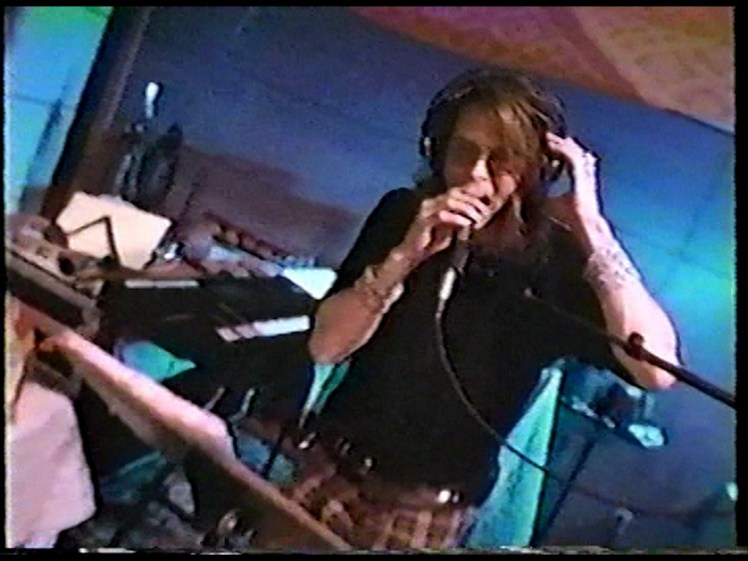
It was the polar opposite of the Ballard approach. Where Ballard had recorded 170 tracks and deferred all decisions, Shirley wanted all five members playing together in the room, recording on 24-track analog tape. Where Ballard used loops and digital processing, Shirley wanted uncut rock and roll. Yet Perry recognized that the two experiences were symbiotic: “If we hadn’t worked with Glen the way we did, the songs wouldn’t sound the way they do now, as far as arrangements and stuff. We got all of the things that we liked about what Glen brought to the table, and then we cut it live.”
The sessions took place at Avatar Studios on West 53rd Street in Hell’s Kitchen — a “kind of Star Trek country house” with a woody, log-cabin-like control room and an old Neve console. The recording method was defiantly analogue, but not without innovation: “We used the kind of headphones that airplane pilots use, and put AKG transducers in them,” Perry explained, “so we could play at stage volume and still hear each other.” Tyler transformed his vocal booth into an incense-steeped, candlelit sanctuary draped with exotic cloths, indigenous instruments scattered everywhere — what Shirley described as looking like “a yard sale from The Lord of the Rings.”
Tyler entered the studio each day like a whirlwind — sometimes in a long leather cape and a Cat-in-the-Hat hat, cackling his raucous laugh, jumping into Shirley’s lap. Other times, sessions ended in shouting matches refereed by road manager Jimmy Ayers. You never knew which Steven would show up.
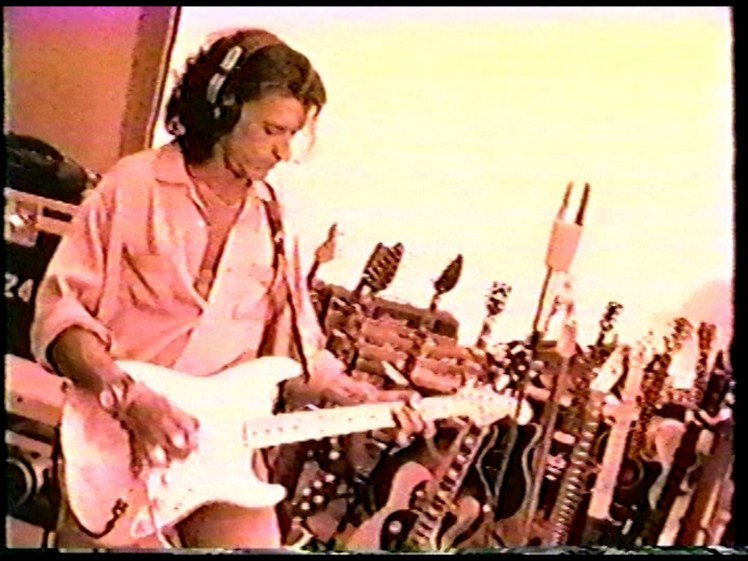
The songs hadn’t changed. They were the same basic tunes written with Ballard, Hudson, Frederiksen, Supa, and Child in Florida. But now they were stripped of multiple overdubs and rendered with greater grit. Shirley pushed the band to play with fire. As Whitford put it: “This was like going back to the old days. Twenty-four tracks, all we need, and bingo.” Not everything was re-recorded from scratch, however. Perry revealed that he had “flew over solos from the demos” — the guitar solos on “The Farm,” “Attitude Adjustment,” and “Hole in My Soul” were all original takes from the earlier sessions. “Attitude Adjustment was one take,” he said. “No splicing, no jumping around.” Whitford, meanwhile, played all the solos on the title track “Nine Lives” and “Fallen Angels”: “We’re crossing over in our styles.”
Kramer, back from his breakdown, returned “with a vengeance” and brought the pounding heartbeat the Miami tracks had lacked. He took particular pride in the organic sound: “All the drums that you hear on the album, everything’s organic. There’s no samples used at all in any place.” Reflecting later, Kramer said his absence turned out to be exactly what he needed: “I came back with a nice perspective on what I bring to the table in Aerosmith. That was healthy for me.”
Shirley described one of his favorite sessions — a Saturday in November, overdubbing the chorus of “Full Circle.” He wanted a drunken sing-along feel, not the polished stadium vocal of a Def Leppard record. So he threw character ideas at Tyler: “Do Bob Dylan… do Tom Waits… do a little old lady avoiding being run over on a highway… do Joni Mitchell… a choir boy… a throaty cigarette whore.” Tyler nailed every impression. It was, Shirley said, “probably the most enjoyable day of my dream experience of producing an Aerosmith album.” Hidden in the final mix, Tyler slipped in a lyric change — “Don’t piss Kevin off, we got Hell to pay” — as a private joke.
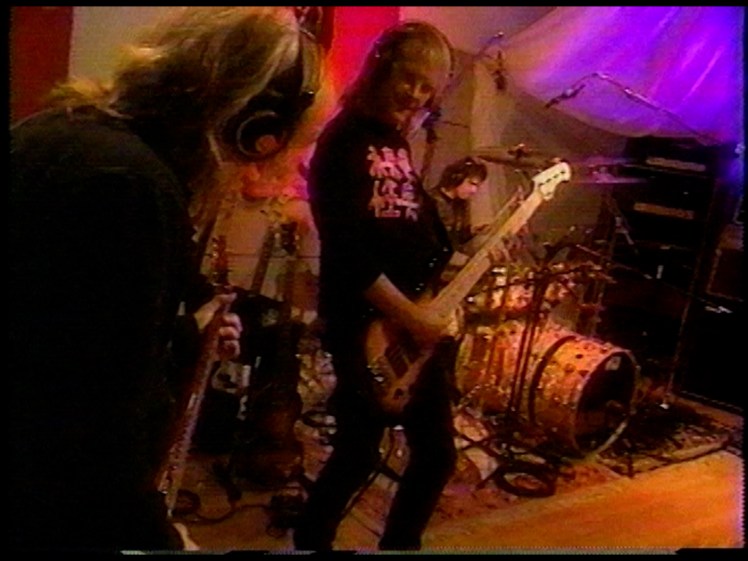
After the vocal session, Tyler went for a walk in the chilly November air. He returned with a newly purchased CD, tore off the cellophane, slid it into the studio’s player, and cranked the speakers. Out came a South African choir singing “Nkosi Sikelel’ iAfrika” — the anthem that had been banned throughout Shirley’s entire upbringing in apartheid South Africa. Shirley, a man who had left his birth country and its racial distortions behind, burst into uncontrollable sobs. Tyler cradled his head and rocked him gently, both of them apologizing for nothing and everything. Shirley felt he had, indeed, come full circle.
In November, string arrangements were discussed and planned. David Campbell — the veteran arranger and conductor who also happened to be the father of the musician Beck — came to Avatar to work with Tyler, Perry, Shirley, and Kalodner on the orchestral elements that would grace the final record. By December 1996, the sessions were wrapping up. Tyler noted: “We just finished the last song today called ‘Pink,’ which has been sitting around dying to be mixed for four months.”
The sobriety rumors that Collins had planted still stung. Tyler addressed them head-on: “Anybody that knows me or Aerosmith knows that the kind of drugs that I used to do, I would have been incapable to write the songs that are on this record.” He added: “Down in Florida, the worst it got was I stayed up a couple nights. And if some people saw that as some kind of drug behavior, well, they didn’t know me when I was using.”
But the Tyler-Shirley dynamic remained combative throughout. Tyler was meticulous; Shirley was going for raw. They argued over every vocal take, every detail. One battle had an unexpectedly touching resolution: “Hole in My Soul” originally contained the lyric “there’ve been all kinds of shoes underneath your bed, you fucked with my mind now I’ll fuck with your head.” Tyler was adamant he wouldn’t change it — until, as Shirley recalled, “one day he brought his two young kids to the studio and I played the song. He came in and asked me to erase the original vocal and he re-sang the lyric.” By the time Tyler finished the new take, he looked up and saw both Chelsea and Taj had fallen asleep in the control room behind Shirley’s desk. At the very end of the recording, you can hear Tyler whisper “good night Taj, good night Chelsea” — and they kept it on the record. Perry spent weeks walking with Tyler from their East Side apartments to the West Side studio, trying to calm him down before each session. By the time they arrived, Tyler would have settled — and then the arguments with Shirley would begin.
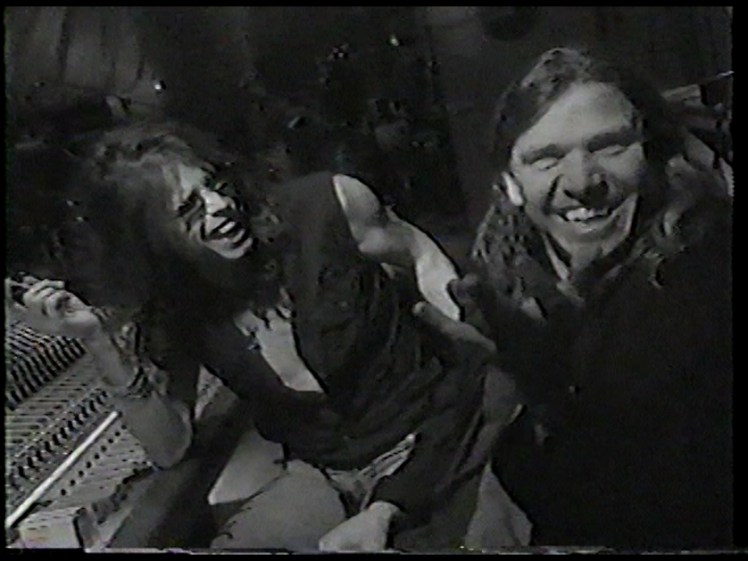
Tyler’s frustration ran deeper than personality clashes. He resented the entire premise of re-recording. He believed the Miami sessions had been sabotaged and that Shirley’s approach, while effective, had stripped the songs of something essential. He accused Shirley of reducing the songs to their “lowest common denominator, thinking that Aerosmith is just a rock band and should stay true to its form.” Tyler’s retort: “If that’s true, then what the fuck is ‘Janie’s Got a Gun’?”
He was also angry about the loss of the loops and digital experimentation that had excited him in Miami: “Kevin Shirley just said, ‘I hate loops, get ’em off,’ which made me hate Kevin Shirley. I hate anyone who tells me what to do with my art. Especially when I’ve come up with something clever. There’s a reason they call Kevin Shirley ‘Caveman.’ He’s very basic. But Joe Perry loved it, because Joe Perry’s just really interested in getting his guitar to be just right.”
And yet, even Tyler admitted: Shirley got things out of him that Ballard hadn’t. The Caveman was, in the end, “the perfect thing for Aerosmith at the time.”
What Survived from Miami
The final Nine Lives album wasn’t a complete do-over. Evidence suggests that some Miami performances survived into the released version. Perry confirmed that the guitar solos on “The Farm,” “Attitude Adjustment,” and “Hole in My Soul” were flown over directly from the original demos. “The Farm” vocals also appear to be Tyler’s original Miami takes, with only the instruments re-recorded.
Two tracks had remarkably fast New York mixes. Shirley later revealed that “Falling Off” was mixed in under five minutes — “only to document what we had for B-sides.” When Tyler heard it, he insisted it go on the album; Perry was not a fan. “Pink” was similarly dispatched — mixed quickly in New York, though the South Beach demo had already been sent to radio stations as a promotional single and was considered nearly as good as the finished version. The commercial CD single even bore the label “Florida version.” Fogel and Ballard later created a remix titled “Pink (The South Beach Mix),” a direct artifact of the Miami sessions that made it onto the album’s bonus materials. Same as the “Miami Madness” mix of Taste of India pulled from the South Beach sessions, which present the song in the same structure, but with electric drums and missing some overdubs in the outro jam.
A Sterling Sound reference CD dated December 6, 1996 — mastered by engineer George Marino — reveals the album’s state in early December: thirteen tracks bookended by an oddity called “Little Grass Shack” (an intro and reprise), plus single edits and a curiosity called “Tickle My Pickle.” Notably, “Kiss Your Past Goodbye” on this reference CD features an alternative guitar solo not found on the final release, suggesting the solos were still being finalized even at mastering stage.
The band had written more than two dozen songs during the Miami period — Perry said there were “eight songs finished for this album that won’t be used” plus “seven finished from Get a Grip that weren’t used” — all winnowed to the thirteen that appeared on the final U.S. release.
Tyler estimated that four or five songs should have been left as they were from the Miami sessions: “Just out of courtesy to our muse — let it go where it wants to go. Your muse is like a bloodhound. You don’t smack a bloodhound for going down a path. You’ve got to trust that it’s sniffing something down.”
The Aftermath
Nine Lives was released on March 18, 1997, with thirteen tracks. “Fall Together” — which Tyler called “one of the best songs on the album” — was the first cut, relegated to a Japanese bonus track and a U.S. B-side. Tyler was furious but had no fight left in him. When the band finally played the new material live for Sony ahead of the tour, Tyler said it felt like “climbing into the driver’s seat of a Ferrari after not driving for two years.” Kramer, asked whether there were ever doubts the band would survive, was candid: “We probably reached a point where we all weren’t sure if the band was going to continue, really. It had gotten that disjointed. The communication had broken down so completely, and we needed a chance to go away and get reacquainted and get in touch with the mission statement.”
The original album cover, featuring Hindu-inspired imagery, offended religious groups and was quickly replaced. Video director Marty Callner was fired and later sued the band. Sales fell short of Get a Grip‘s blockbuster numbers, though the band’s camp argued they were tracking comparably at the same point in the release cycle.
Tyler remained haunted by the Miami sessions. In interview after interview, he returned to them — calling Ballard a genius, mourning the path not taken, vowing to release the Florida material someday. “I guarantee if the plane goes down, or, you know, 20 years from now, somewhere, somehow, some of the songs will come out.” He added: “I’ve got a copy right now of a song called ‘Kiss Your Past Goodbye’ that was done. We were heading in a direction that wasn’t… it never was allowed to come to fruition.” His promise grew more emphatic over time: “I promise that as long as I’m not dead first, I will make sure to get those Glen Ballard sessions out there.” He also described the unreleased material as “genius — we were getting into loops. The music had a different sway to it.” And: “One of the reasons I liked some of the songs in Florida better was because I thought I sang them better down there.”
Perry, characteristically more pragmatic, has expressed his own desire to revisit the material on multiple occasions. “I’m actually interested to see if we can go back and mix it and have a whole different take on those songs for people to hear one day,” he said in 2023. He acknowledged that scrapping five or six months of work was painful, but maintained the right call was made: “It just didn’t sound right, and a big part was because Joey wasn’t on it.” Yet Perry also called Nine Lives the album he’d put in a time capsule: “It has the sophistication, and the songwriting is at a level that we haven’t hit yet. The production and the sound of it, the production value is better than anything we’ve done.”
A Nine Lives Legendary Edition?
As of this writing, the Miami version of Nine Lives remains unreleased — a ghost album, known only through a handful of private tapes, preproduction cassettes, and the vivid memories of the people who made it.
But the door may finally be opening. In March 2026, Aerosmith released the Legendary Edition of their 1973 self-titled debut — a lavish boxset featuring a full 2024 remix overseen by Tyler and Perry, plus unreleased live recordings and studio outtakes. The project proved the band is actively engaged in revisiting their catalogue with fresh ears and modern tools. Both Tyler and Perry have said, on the record, that they want people to hear the Miami material. Frederiksen, too, has confirmed the quality of what’s in the vaults: “Some of them were done,” he said in his 2020 masterclass. “‘Innocent Man‘ is a full-on production, fully produced, just like that record, with strings, backgrounds and everything.” The tapes exist. The technology to untangle Ballard’s 170-track labyrinth has advanced enormously since 1996.
The timing could not be better: 2027 marks the 30th anniversary of Nine Lives. A Legendary Edition treatment — the released 1997 album newly remixed, paired with a properly mixed version of the Miami sessions and the best outtakes from the entire 1995–97 process — would be the holy grail. And there’s more material waiting in the vault than just studio recordings. In 2025, Aerosmith’s official social media accounts posted a clip from the November 1995 “G-Spots” show at Mama Kin Music Hall — stereo board audio from the in-house camera feed, confirming that the full tape has been found and digitised. That 200-capacity sweatbox show, where the band premiered “The Farm,” “Trouble,” “Something,” and “What Kind of Love Are You On” to a seven-dollar crowd, would be a perfect companion piece: pro-shot footage of Aerosmith road-testing the Nine Lives songs with the original lineup firing on all cylinders, before any of the drama that followed.
For the first time, the full story of the album that nearly broke Aerosmith could be heard, not just read about.
The album they released in 1997, for all the agony of its creation, is a powerful rock record — raw, fierce, and unmistakably the work of five men who nearly lost everything and fought their way back. As Perry put it: “When we got in a room together and started playing, it was like, ‘This is why we’re here.'”
Nine Lives should probably have been called Nine Hundred Lives. That’s how many they burned through making it. But if the ghost album from Miami and the Mama Kin tapes ever see the light of day, we might finally hear what those lives sounded like before the fire stripped them down to bone.
Sources and References
Books and Autobiographies
- Walk This Way: The Autobiography of Aerosmith (1997, HarperCollins) — band autobiography
- Joe Perry, Rocks: My Life in and Out of Aerosmith (2014, Simon & Schuster)
- Steven Tyler, Does the Noise in My Head Bother You?: A Rock ‘n’ Roll Memoir (2011, Ecco/HarperCollins)
- Joey Kramer, Hit Hard: A Story of Hitting Rock Bottom at the Top (2009, HarperOne)
- Julian Gill, Aerosmith on Tour, Vol. 2: 1985–2000 (2024)
Magazine and Newspaper Interviews
- Alan K. Stout, “Making Nine Lives,” The Times Leader (1998) — Steven Tyler interview — YouTube: https://www.youtube.com/watch?v=9JP7wWZa-Ho
- Steven Tyler and Joe Perry interview, Metal Edge Magazine (June 1997) — “Aerosmith is a Ferrari” by Gerri Miller — room numbers, lyrics timeline, South Beach life, Ballard regret, Perry on solos from demos — http://www.metaledgemag.com/archives/aerosmith-is-a-ferrari
- Joe Perry interview, Guitar World Vol. 44, No. 12 (December 2023) — unreleased Miami version
- Tyler, Perry, Whitford interview, Guitar World (April 1997) — analog vs digital production, Brad’s solos, Taste of India origins, spiritual themes
- Larry Katz, “Aero Dynamics,” Boston Herald (March 14, 1997) — Tyler and Perry quotes, syndicated via Spokesman-Review / Billboard
- Larry Katz, “Aero Turbulence,” Boston Herald (June 27, 1997) — Tyler on Shirley, loops, solo album plans
- Larry Katz, “Ex-Manager Hits a Sour Note,” Boston Herald (June 27, 1997) — Collins’s account of the firing
- The A.V. Club profile (2015) — tabloid atmosphere, $30M deal context
- Dan Daley, “South Beach Studios,” Mix Magazine / Mix Online (July 1999) — studio technical specs
- Desmond Child interview, The Kenny Aronoff Sessions — hustling to get songs on the record at Criteria — YouTube: https://www.youtube.com/watch?v=kEPs2t9qhRI
Interviews and Songfacts
- Glen Ballard, Songfacts interview — Suite 205, espresso machine, “Falling in Love” writing, Tyler’s stamina
- Chris Fogel profile, Produce Like A Pro — https://www.producelikeapro.com
- Joe Perry, Minneapolis Star Tribune (August 12, 1997) — Jimmy Jam/Terry Lewis tapes quote
Kevin Shirley’s Blog and Social Media
- Kevin Shirley, “Avatar Studios, November 1996” (blog) — Full Circle session, “Nkosi Sikelel’ iAfrika” moment, working with Tyler
- Kevin Shirley, Instagram posts — “Hole in My Soul” lyrics changed when Tyler brought daughters; “Falling Off” mixed in under 5 minutes; “Pink” and “Ain’t That a Bitch” production details; Tyler quote: “Steven Tyler is up there with the people who have the deepest musical vocabulary of anyone I’ve worked with”
Video and Masterclass Transcripts
- Marti Frederiksen, Rock ‘n’ Roll Fantasy Camp Masterclass (July 27, 2020) — https://aerosmithbackburner.com/2020/07/29/marti-frederiksen-talks-writing-and-producing-aerosmith-with-new-details-on-outtakes-during-rock-n-roll-fantasy-masterclass/ — YouTube: https://www.youtube.com/watch?v=ZitBHjboPw0
- MTV, “The Big Cats Are Back” — Aerosmith Spring Break Special, hosted by John Norris (March 1997) — YouTube: https://youtu.be/8FuDsgqJg1I
- MTV Rockumentary: Aerosmith 3 — Nine Lives section, hosted by John Norris (March 1997) — YouTube: https://youtu.be/hztfIPfyPhQ
- MTV Files: The Making of Aerosmith’s Nine Lives (released March 1997, recorded December 1996) — transcript
- Aerosmith Making of Nine Lives EPK video (1997) — YouTube: https://youtu.be/n2G75eS2Fqo
Radio Interview Transcripts — Larry Katz Collection, Northeastern University
The Larry Katz Collection (1980–2005) consists of interviews recorded on audiocassettes conducted by Larry Katz, a reporter, critic, columnist and editor at Real Paper and The Boston Herald. For decades he interviewed some of the most established names in music.
- Larry Katz, full interview with Steven Tyler (June 15, 1997) — touring, the making of Nine Lives, extended Miami vs NY comparison, Pink “lingerie vs rock” description, Ballard mixing without him, Collins’s interference, solo album plans — http://hdl.handle.net/2047/D20428782 — also: https://repository.library.northeastern.edu/files/neu:4f16hn39p
- Larry Katz, full interview with Tim Collins (circa June 1997) — for Boston Herald article “Ex-manager hits a sour note” — his perspective on producers, Tyler’s megalomania, the Four Seasons firing, Steps boycott — http://hdl.handle.net/2047/D20428220 — also: https://repository.library.northeastern.edu/files/neu:4f16gv93j
Aerosmith Back-Burner Articles
- “Aerosmith Secret Performance: The Middle East Club, 09/11/1995” — https://aerosmithbackburner.com/2020/08/02/aerosmith-secret-performance-the-middle-east-club-09-11-1995/
- “History of Man” — https://aerosmithbackburner.com/2020/07/05/history-of-man/
- “Give It Away/Push” — https://aerosmithbackburner.com/2020/07/05/give-it-away-push/
- “When the Monkey Comes” — https://aerosmithbackburner.com/2020/07/07/when-the-monkey-comes/
- “Roll Away the Stone” — https://aerosmithbackburner.com/2020/06/24/roll-away-the-stone/
- “Loretta” — https://aerosmithbackburner.com/2019/03/24/loretta/
- “Bridges Are Burning” — https://aerosmithbackburner.com/2019/03/24/bridges-are-burning/
- “Heart of Passion / Throws of Emotion” — https://aerosmithbackburner.com/2019/03/24/heart-of-passion/
- “Bacon Biscuit Blues” — https://aerosmithbackburner.com/2019/03/24/bacon-biscuit-blues/
- “Where the Sun Never Shines” — https://aerosmithbackburner.com/2019/03/24/where-the-sun-never-shines/
- “Innocent Man” — https://aerosmithbackburner.com/2019/03/24/innocent-man/
- “Trouble” — https://aerosmithbackburner.com/2019/03/24/trouble/
- “Falling in Love and the Deleted Cheshire Cat Line” — https://aerosmithbackburner.com/2023/03/10/falling-in-love-and-the-deleted-cheshire-cat-on-hashish-line-from-the-early-1995-demo/
- “Ain’t That a Bitch — 3 Completely Different Versions” — https://aerosmithbackburner.com/2022/03/22/aint-that-a-bitch-and-the-3-completely-different-versions-aerosmith-wrote-with-the-same-title/
- “Little Grass Shack — Aerosmith’s Lost Nine Lives Island Detour” — https://aerosmithbackburner.com/2025/05/20/the-curious-case-of-little-grass-shack-aerosmiths-lost-nine-lives-island-detour/
- “Tickle My Pickle” — https://aerosmithbackburner.com/2022/05/20/tickle-my-pickle-the-tyler-limerick-that-was-considered-for-nine-lives/
- “Aerosmith’s 1995 Gig at Mama Kin’s Music Hall — The Night the G-Spots Rocked Lansdowne Street” — https://aerosmithbackburner.com/2025/06/21/aerosmiths-1995-gig-at-mama-kins-music-hall-the-night-the-g-spots-rocked-lansdowne-street/
- “The Complete Story of Aerosmith’s Mama Kin Music Hall 1994 to 1999” — https://aerosmithbackburner.com/2025/06/21/the-complete-story-of-aerosmiths-mama-kin-music-hall-1994-to-1999/
- “Nine Lives: Outtakes, Demos and Leaks from the Miami and New York Sessions” — https://aerosmithbackburner.com/2019/08/30/nine-lives-album/
- “How Marti Frederiksen Wrote His Way Into Aerosmith” — https://aerosmithbackburner.com/2026/04/09/how-marti-frederiksen-wrote-his-way-into-aerosmith-and-the-solo-sessions-with-perry/
- “The Album Before the Album: Aerosmith’s 1995–96 Demo Tape” — https://aerosmithbackburner.com/2026/04/09/the-album-before-the-album-aerosmiths-1995-96-demo-tape/
- “The South Beach Sessions Tape: February 1996” — https://aerosmithbackburner.com/2026/04/09/the-south-beach-sessions-tape-aerosmiths-nine-lives-takes-shape-february-1996/
- “Glen Ballard’s Unreleased Mixes of Nine Lives from June 1996” — https://aerosmithbackburner.com/2026/04/09/glen-ballards-unreleased-nine-lives-mixes-of-june-1996/
- “Sedona Sunrise: Aerosmith’s Country Song, from Pump — 17 Years in the Making” — https://aerosmithbackburner.com/2022/03/22/sedona-sunrise-aerosmiths-country-song-from-pump-17-years-in-the-making/
- “Aerosmith Lost Archive: The Story, The Secrets, The Songs Inside” — https://aerosmithbackburner.com/2025/07/25/aerosmith-lost-archive-story-secrets-and-songs-inside/
Private Collector and Unreleased Tape Reviews
- Preproduction demo tape (1995–1996, South Beach Studios origin) — reviewed at AerosmithBackBurner.com
- Glen Ballard Mixes tape, dated June 26, 1996 — reviewed at AerosmithBackBurner.com
- Aerosmith Demo Songs Tape 2/21/96 “Tape 1 of 2” — reviewed at AerosmithBackBurner.com
- Perry-Frederiksen DAT tape — five tracks reviewed at AerosmithBackBurner.com
- Sterling Sound reference CD, December 6, 1996 — mastered by George Marino — early tracklist including “Little Grass Shack” intro, alternative “Kiss Your Past Goodbye” solo, “Tickle My Pickle”
Aerosmith Legendary Edition Coverage (2026)
- “Aerosmith’s Legendary Edition 2024 Remix and Bonus Track Review” — https://aerosmithbackburner.com/2026/03/20/aerosmiths-legendary-edition-2024-remix-and-bonus-track-review/
- “Aerosmith’s Legendary Edition: From Lost Masters to a 2024 Remix” — https://aerosmithbackburner.com/2026/03/18/aerosmiths-legendary-edition-from-lost-masters-to-a-2024-remix-a-famous-pauls-mall-tape-and-one-very-intriguing-aerojam/
- “Aerosmith’s 1973 Debut Album Gets Expanded Legendary Edition,” Ultimate Classic Rock (January 2026) — https://ultimateclassicrock.com/aerosmith-legendary-edition-release/
- Aerosmith Legendary Expanded Edition, official store — https://store.aerosmith.com/products/aerosmith-legendary-expanded-edition-3cd
- Universal Music Canada press release (January 27, 2026) — https://www.universalmusic.ca/press-releases/aerosmith-celebrate-five-decades-of-groundbreaking-self-titled-debut-album-with-new-aerosmith-legendary-edition-out-march-20-2026/
 The Back-Burner: Aerosmith Outtakes & Demos