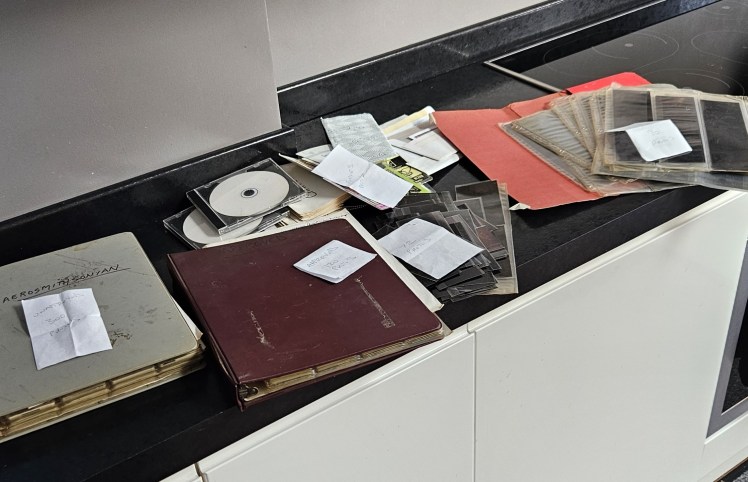
In 1998, a battered cardboard box packed with Aerosmith memorabilia was nearly thrown out. The story first surfaced on the AF1 forums in 2003 and quickly captured fan attention. But new details suggest the box’s journey was even more unusual than originally believed.
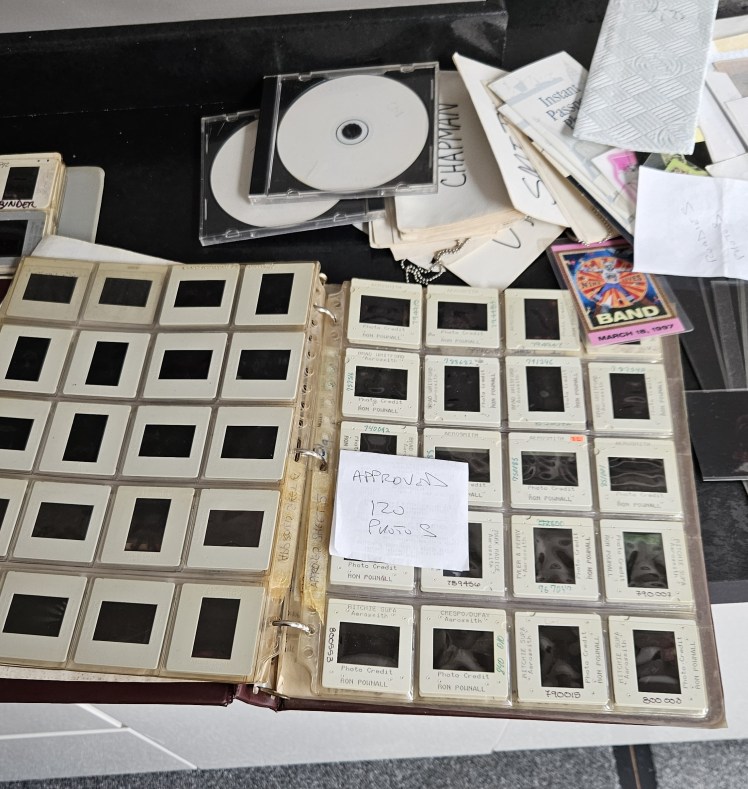
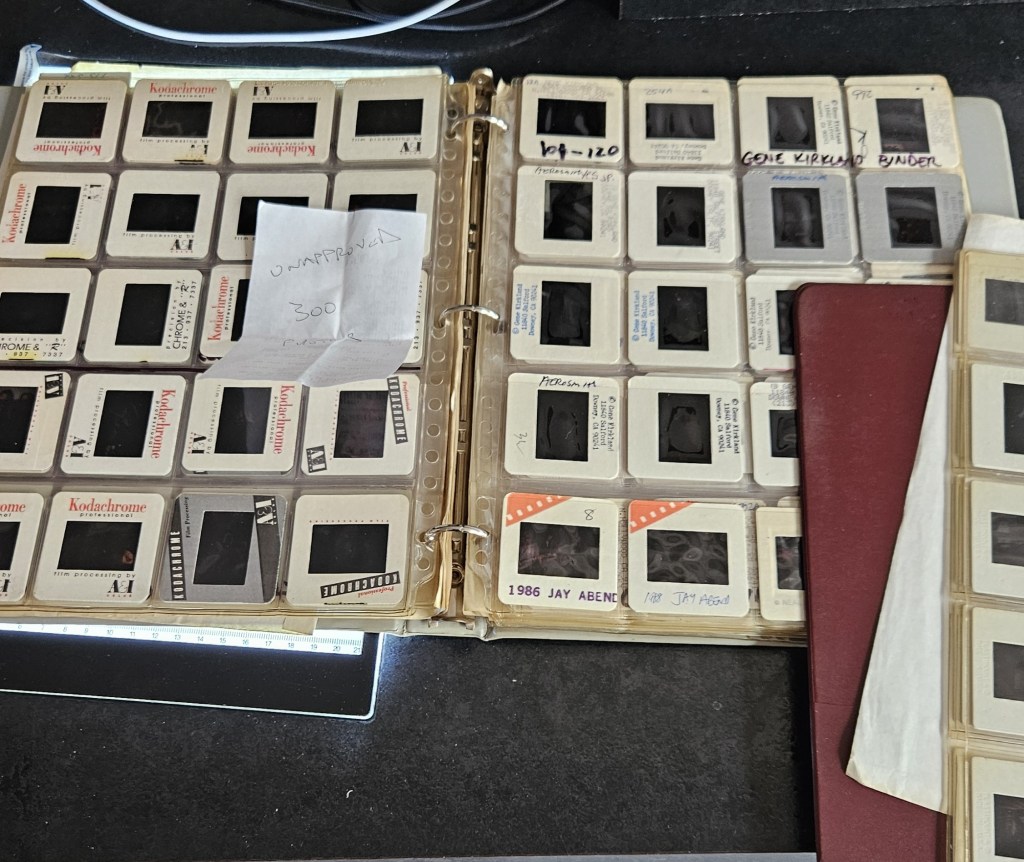
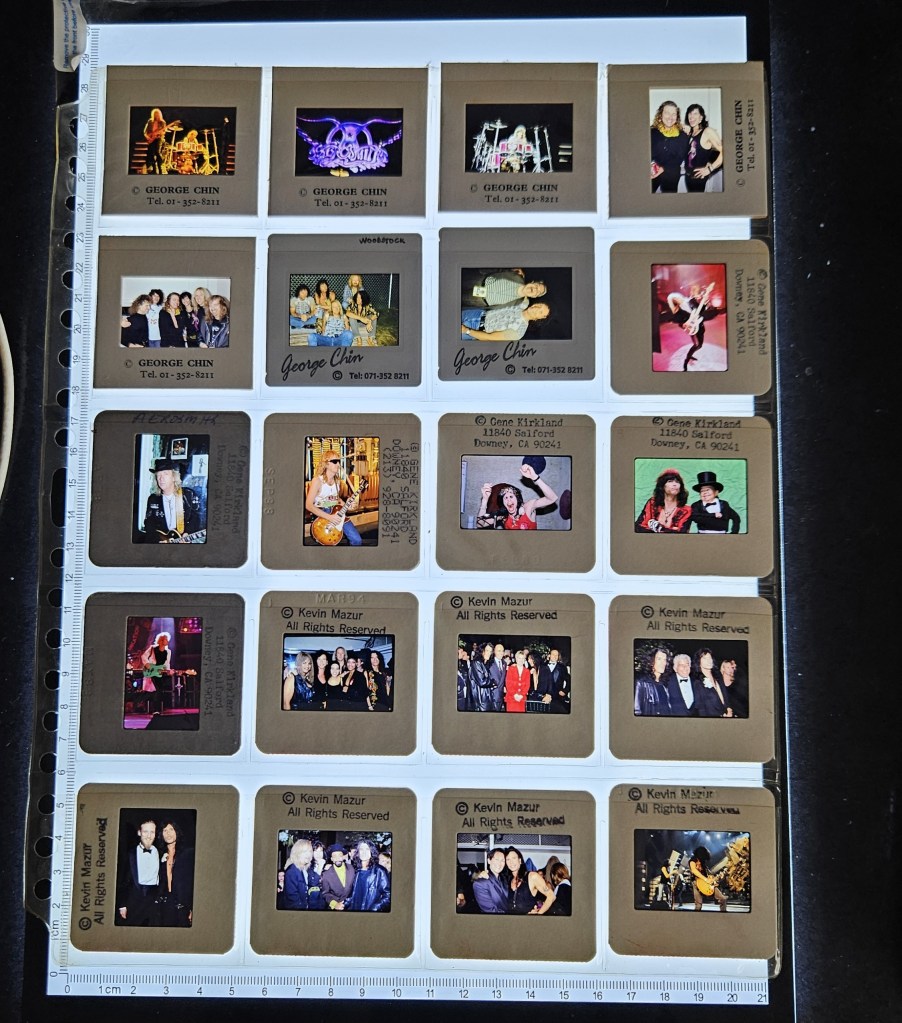
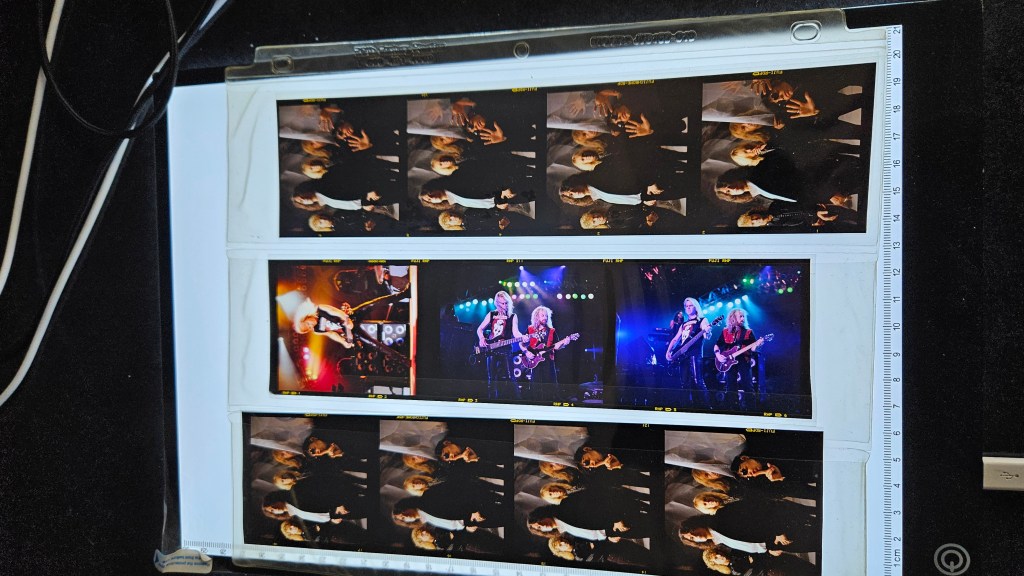
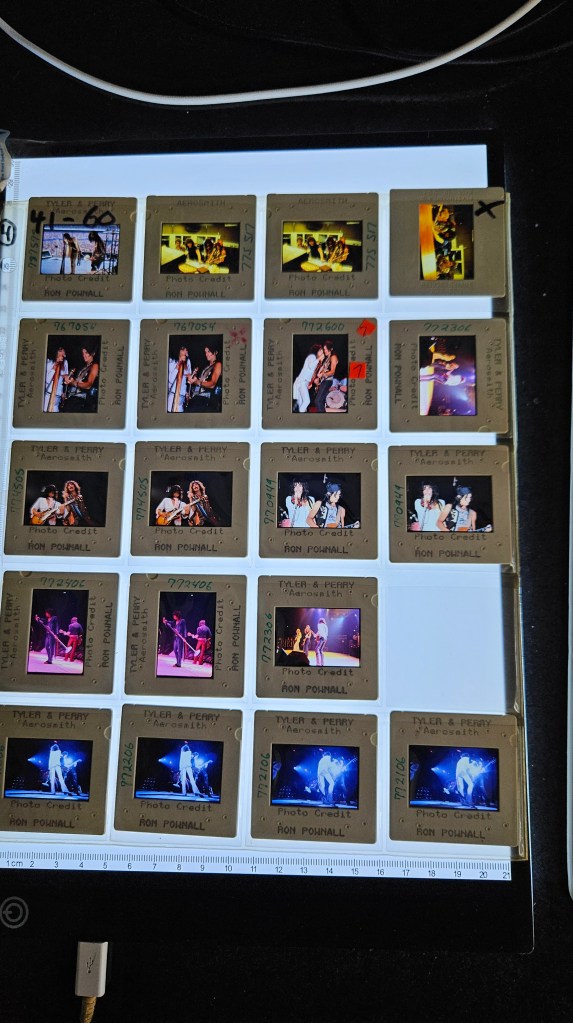
The contents were extraordinary: several DATs containing finished and un-finished studio tracks, over 150 passport-style photos of the full Nine Lives tour crew (37 people, five shots each), piles of backstage passes, and three thick folders labelled “AerosmithSonian,” filled with 16mm slides marked “approved” and “not approved.” The photos captured the band live, in the studio, and backstage with icons like Les Paul—signing one of Joe Perry’s guitars—and Jimmy Page in London, 1990. Most of the slides were taken by top rock photographers including Gene Kirkland, Jay Abend, Ron Pownall, George Chin, and Kevin Mazur, spanning the 1980s and ’90s. Fans believed the archive had been abandoned by Collins Management after their 1996 dismissal, and later discarded by Sony staff during an office clean-up.
But that’s only part of the story. New information suggests the box may have originally been left behind in a Brooklyn loft in the late ’90s. The loft’s leaseholder—active in New York’s art scene—claimed he had paid a year’s rent up front using proceeds from selling a painting “attributed” to Jean-Michel Basquiat. Not long after, a young blond man from Iowa, reportedly working in PR, moved in, failed to pay rent, and left abruptly after a few weeks. The box was among the belongings left behind.
Years later, now living in London, the original leaseholder rediscovered the box while clearing out a flat and nearly threw it out—before recognising what it was. So, the box did nearly end up in a London dumpster, but not before surviving a previous close call in Brooklyn.
The DATs—Ampex or 3M stock—have since been lost in a flood, but silver CD pressings remain, featuring TV mixes and early “rough” demos. The rest of the archive is reportedly being prepared for online auction. Two decades, two cities, and two narrow escapes later, this forgotten Aerosmith archive may finally see the light of day.
- DAT #1 – Pink TV Mixes 09/16/1997 – Sony Music – Avatar Studios NY
- 1. Pink | Full Mix
- 2. Pink | No Lead Vocals, No Harmonica, No Gtr solo
- 3. Pink | No Lead Vocals, No Vocal Harmonies, No Harmonica, No Gtr solo
- 4. Pink | No Vocals at All, No Harmonica, No Gtr solo
- 5. Pink | No Vocals, No Harmonica, No Gtr solo, No Joe Gtr
- 6. Pink | No LV, No Harmony Vocals, No Harmonica, No solo, No Joe, with BV and Ahhs

- DAT #2 – Full Circle TV Mixes 03/11/1997
- 1. Full Circle | TV Track No Lead Vocals
- 2. Full Circle | No Joe Gtr W/ LV and Harms
- 3. Full Circle | NO Joe Gt No LV W/Harms
- 4. Full Circle | No Joe or Brad Gtr W/ All VOX
- 5. Full Circle | No Joe Or Brad Gtr No LV W/ Harm No End Voc
- 6. Full Circle | No Joe Or Brad Gtr No LV W/ Harm No End Voc
The TV mixes are made for the band to perform on top of while promoting the new album, where they usually use the studio track and only Steven’s voice and Joe’s guitar are live. These were probably used in shows like Letterman, Billboard, Leno etc (and various European Nov 97 appearances). Full Circle was released as a single in Europe in 1999 but may have been considered as a second international single instead of “Hole in my Soul”.
- DAT #3 – Sedona Sunrise demo 02/08/1996
- 1. Sedona Sunrise
While the band reportedly never recorded a Sedona Sunrise demo for NL, they maybe have considered it for redevelopment, added a few overdubs or altered the mix from the Pump sessions. As “Sedona” was the only track on that DAT, it may have been done to give to Marti as reference material for his initial sessions with the band.
- DAT #4 – Rough Demos
These tracks are believed to stem from the very first songwriting session between Joe Perry and Marti Frederiksen in early January or February 1996 after A&R legend John Kalodner asked Marti to help developed song ideas. The demos are early pre-production ideas, and Marti later described the session—during a Rock ’n’ Roll Fantasy Camp Masterclass—as him essentially being Joe’s band, with Frederiksen laying down the rhythm section. Four of the five tracks almost certainly feature Marti on vocals. While the recordings carry Perry’s unmistakable sonic fingerprint, it’s unclear how much guitar he contributed to the demos, given Frederiksen’s role as a skilled multi-instrumentalist.
Track 1, Do You Wonder Why?, was a song Joe Perry hoped Aerosmith would record, but Steven Tyler reportedly refused to write new lyrics—possibly because the original words were written by Joe’s wife, Billie Perry. Of all the demos on the DAT, this one is the most polished, featuring fully developed sections, vocal harmonies, and layered overdubs. Joe later said he held onto the track for years, but with Tyler unwilling to use it, the song eventually surfaced on Perry’s 2009 solo album, re-recorded with a more laid-back production.
Track 2 is the only “rough” demo that featured Tyler on lead vocals, this is the demo we are referring to as “Give it Away/Push”. It is unknown if the musicians playing on the original demo are the Aerosmith members, but its most likely, again, only a Perry/Frederiksen demo with Tyler on top.
Track 3 contains the basic recording of what would later become the Aerosmith outtake Where the Sun Never Shines, but with a different vocalist—almost certainly Marti Frederiksen—and alternate chorus melodies featuring placeholder or scat lyrics. These may suggest an early working title of Cheating Nights. Steven Tyler clearly saw potential in the track, later replacing Marti’s vocals with his own. However, it’s highly unlikely that Aerosmith ever recorded a full-band version of the song.
Track 4 sounded like a semi grunge song, very 90s and energetic, but not necessarily what Aerosmith would do. Vocals again by someone else, unfinished lyrics repeating “better” during the chorus and decent sounding solos by Perry.
Track 5 is one of the rougher demos, but it clearly features the opening riff and pre-chorus later heard in Angel’s Eye. However, the chorus at this stage had completely different chords and melody, with mostly scatted lyrics—though the word “disguise” was repeated at the end, hinting at its early working title, When the Monkey Comes. A later South Beach demo version featured Steven Tyler on vocals with alternate lyrics that, while nearly complete, didn’t flow as well as the final released version. Tyler eventually reworked the lyrics into their final form and released in 2000.






 The Back-Burner: Aerosmith Outtakes & Demos
3 thoughts on “AEROSMITH LOST ARCHIVE: the story, the secrets, the songs inside!”