The tale of Joe Perry’s Rock Your World starts the way a lot of good side-projects do: too many bland meals on tour and one very particular palate. Long before there were labels or launch parties, the Aerosmith guitarist was hauling a personal stash of sauces from city to city, never quite finding that elusive balance of smoke, sweetness and heat. So he did what true tinkerers do—he built his own.
In the early 2000s Perry partnered with Boston’s Ashley Food Company, trading riffs for recipe tweaks across hotel rooms and studios. After years of tasting and tuning, the prototype hit its stride. In May 2002 the first batch of Boneyard Brew rolled out—named for Perry’s home studio, The Boneyard. By 2003, the venture had a name, a company, and a clear ethos: all-natural ingredients, no preservatives, and only flavours Joe would actually eat at home. It was a family outfit too, with his eldest son steering the marketing and online store.
The first pour: Boneyard Brew
Boneyard Brew wasn’t a dare; it was an everyday table sauce with swagger. Think smoky, tangy, medium heat—fresh habanero and chipotle for the kick, bell pepper, onion, garlic, lime and a light touch of cane sugar to round it all out. The flask-shaped bottle nodded to rock ’n’ roll mischief, early runs even shipped with a collectible guitar pick. Small-batch production kept the flavours bright and consistent, and the first retail pushes sold out fast.
Perry launched like a musician: in person. He signed bottles at Newbury Comics in Cambridge, did meet-and-greets, and folded the sauce into the tour ecosystem—gifts for crew, treats for fans, a new kind of backstage pass for the taste buds.
The follow-up single: Mango Peach Tango
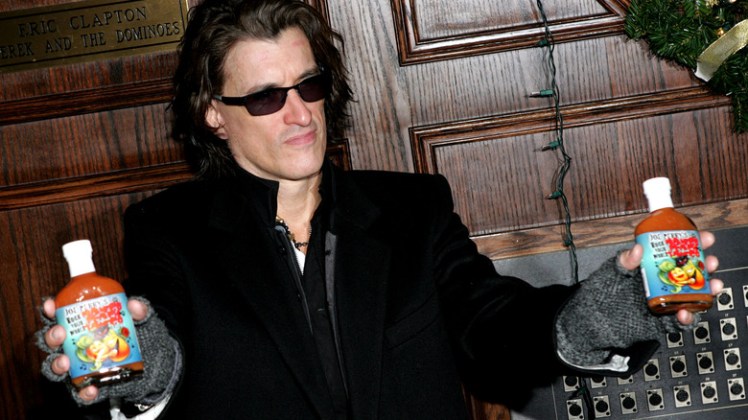
By late 2004 the sequel dropped: Mango Peach Tango. If Boneyard was the smoky riff, Mango Peach Tango was the Caribbean chorus—lush peaches and mangos up front, a lively habanero bite at the back, brilliant on chicken, seafood… even cocktails. Perry debuted it with a mini Hard Rock Café tour (New York, Dallas, Los Angeles), where chefs pushed limited-time menu items and even mixed a cheeky “Mighty Mango Mary”. Fans queued, bottles flew, and the Hard Rock shops stocked the line next to the band tees.
Media heat: food shows, trade shows, and packed launches
The crossover was irresistible. Food mags put Perry on their covers; TV segments showed him tweaking recipes at home; radio spots sprinkled stories of hotel-room taste tests between guitar talk. In 2005, Perry walked the floor at the Summer Fancy Food Show in New York as both sauces went in for specialty awards. He kept the message simple: add flavour, add heat, never smother the food.
Back in Massachusetts, a Mango Peach Tango launch party jammed Jake’s Dixie Roadhouse. The kitchen turned out Mango-glazed scallops, wings, and flautas while Joe signed, posed, and swapped stories. For fans, lining up for hot sauce suddenly felt a lot like waiting for a guitar pick at the barrier.
Beyond sauce: snacks, seasonings… and Rockin’ Roni
With momentum building, Perry started sketching a pantry you might find on the Aerosmith tour bus: spicy tortilla chips, beef jerky, maybe a rub or seasoning. The boldest idea was a mac ’n’ cheese line called Rockin’ Roni, planned in White Cheddar & Shells and Spicy Buffalo Cheddar & Elbows. No gimmicky guitar-shaped pasta—just deeply satisfying comfort food designed to sing (and yes, it was meant to be even better with a shot of hot sauce). The project never reached shelves, but it captured the brand’s vibe: real food, a bit of swagger, flavours that actually work.
Intermission and a reload
In early 2006 the team hit pause to refresh packaging and prep a broader relaunch. The 5 oz bottles gave way to bigger 12 oz “table sauce” formats with updated labels. Touring and recording picked up again, the craft-sauce landscape got crowded, and distribution stayed boutique by design. The brand kept a presence online and in specialty stores, with fans hoarding favourites and swapping recipes.
The final trio: Original BBQ joins the band
A second-wind arrived in 2013 with Original BBQ Sauce—a thicker, sweet-smoky, tomato-forward number, perfect for ribs and burgers and clearly related to Boneyard’s flavour DNA. For a while the catalogue settled into a tight trio:
- Boneyard Brew – the smoky, tangy everyday table sauce
- Mango Peach Tango – the bright, fruity sweet-heat
- Original BBQ Sauce – the easygoing, sweet-smoky crowd-pleaser
Fans grabbed bundles online and at shows, sometimes right off the same tables as the tour merch. Then, quietly, the releases stopped.
Distribution, superfans, and cult status
Rock Your World took a multi-channel approach ahead of its time: direct-to-fan online, regional chains like Newbury Comics, Stop & Shop in New England, specialty hot-sauce boutiques, and those clever Hard Rock placements that let diners taste before they bought. Internationally, niche importers kept European fans supplied. Reviewers praised the balance and build quality—“more than just a name on a label” was a common refrain—and Boneyard Brew in particular picked up a cult following among BBQ people who loved its “rock ’n’ roll ketchup” versatility.
Fade-out and legacy
By the mid-2010s, stock grew sporadic, then scarce. Retailers marked the bottles out of stock, the official site went dark, and production ended without a grand finale. Unopened bottles drifted onto resale sites as memorabilia. Perry turned his energy back to albums, tours and side-projects, keeping the Rock Your World trademark and the stories. Ask him and he’ll still talk about the hotel-room test batches, the trade-show floor, and serving sauce-spiked plates to packed rooms—always returning to the same through-line: flavour first, heat in harmony.
Today, the brand lives on as a fond, spicy footnote—a proof-point that a rock star can build a genuine gourmet product, not just a novelty. Boneyard Brew remains a minor classic of the 2000s sauce boom, remembered for its smoky balance and everyday usefulness. And tucked in the broader mythos is a fun, related curio from the same creative period: a Flash game with a Joe Perry soundtrack remix—“Genie Joe and the Axeman”—archived here.
 The Back-Burner: Aerosmith Outtakes & Demos