
Aerosmith’s Legendary Edition of their debut album is now out, and with it comes a fresh 2024 remix of the full record plus a fascinating set of bonus tracks. Below is our detailed track-by-track review, breaking down what stands out in the new mixes, what has changed, and what these alternate takes, rehearsals and jams reveal about early Aerosmith.
Make It: “Make It” comes out like a gunshot. Right from the start, the remix feels sharper, louder and far more aggressive, with the tambourine suddenly much more present in the picture. The guitars are crisp and right in your face, and the drums hit with much more authority than on the original mix. One of the biggest improvements is how much easier it is now to tell Brad and Joe apart during the solo sections, with both guitars clearly complementing each other instead of blending into one wall of sound. The bass under the first solo is especially killer, and the echo in the break works beautifully.
Somebody: The spoken intro is a cool touch and immediately gives the track a bit more attitude. The backing vocals are much easier to pick out this time, and the bass has noticeably more body. There also seems to be a tiny guitar slip or rough moment around the 0:57 mark, possibly from Brad, which is exactly the kind of human detail this remix seems happy to leave in.
Dream On: “Dream On” starts even cleaner now, and that opening space feels beautifully exposed. On the right side, you can hear the fingers on the strings much more clearly, which gives the intro a fragile, intimate feel. The Mellotron echo sitting off to the right is also a very cool detail. During the guitar solo there are tiny studio sounds and bits of physical noise that now come through much more clearly, adding to the sense that you are hearing deeper into the tape (could that be Steven biting a nail and spitting it out?). Sounds like the solos Brad usually play during the ending in crescendo “Dream On” screams and now position to the right, Joe’s usual stereo spot.
One Way Street: “One Way Street” opens with a dirtier feel than before, Steven’s extra improvised talking over the opening harmonica adds character, and the first part of verse one almost sounds like it could be from a different vocal take or at least a very different vocal presentation. There also seems to be more harmonica coming through during the chorus, that at times can feel distracting (or perhaps we are just not used to it – yet). Steven sounds gloriously ragged here, almost like an old blues shouter, and the whole arrangement is much easier to unpack. Extra guitar bits that were once buried are now clean and obvious. Brad’s solo on the left is super loud, nasty and distorted in the best way, and the piano feels far more present than it ever did in the original mix.
Mama Kin: “Mama Kin” starts with Steven audibly saying “Mama Kin, take five” into the mic. Once again, everything is brighter, punchier and more present, especially the drums. One of the more surprising choices is that they leave more of the recorded sax in the mix, including some higher-pitched stabs in the chorus that most listeners will not be used to hearing so clearly. The solo section almost feels overcrowded now, but in an interesting way, because you can finally hear just how much is going on at once: two different sax lines, a guitar solo, and all of it fighting for space. As the lead promotional track for the box set, it makes sense, because it really does represent the overall character of the remix: crisper, punchier and much more in your face. You can even hear Steven clapping to help guide the tempo, along with other little in-room details.
Write Me A Letter: The drum intro is now very wide in stereo, which makes this track stand out immediately from the rest. It almost feels like the mic placement was different here, or at least treated differently in the remix. There are also extra Steven vocal bits floating behind the main performance. On the “I said write me” lines, it sounds like three vocal layers are being used now, which gives those moments more weight and colour. The outro also seems to bring out a flanged effect on the drums that was either buried before or simply never this obvious.
Movin’ Out: There is more audible counting in the intro, which fits perfectly with the set’s more open, tape-conscious approach. The kick drum has more low-end and physical feel, giving the track stronger forward momentum. Brad’s guitar on the left during the verses has a great thick distorted tone, one of the nastiest sounds on the remix. Steven’s breathy “ahhh” in the bridge jumps out more clearly here, and the snare reverb helps that section feel bigger without losing the rawness. Joe’s backing vocals in the final chorus are also much more obvious now, drenched in reverb and sitting proudly in the mix.
Walkin’ The Dog: Steven’s flute is finally back where it belongs in the intro, or at least far more noticeable than before. That alone changes the opening character of the track. The final line also seems to carry a discreet little Steven scream tucked into it, a small but fun detail that adds to the sense of hearing more of the real performance.
Train Kept A Rollin’ (Session Take): This really does sound like an extra take from the same studio world as the debut album, maybe even something knocked out spontaneously while the tape was rolling. It has that same clean, live, early-Aerosmith sound, and it feels like it may well be a single live studio take with no real overdub-heavy ambition behind it. Joe taking the chorus at the end is a great surprise, and the lack of obvious overdubs only adds to the charm. The sound effect at the end is cool, and Tom’s bass really stands out.
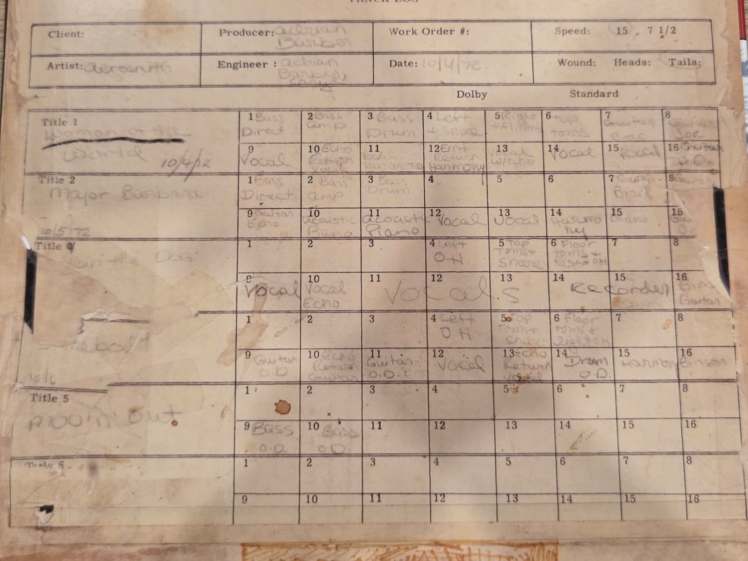
Make It (Rehearsal Take): This version feels looser and more revealing than polished. Steven still sounds like he is warming up into the vocal, which gives the whole performance an informal, in-the-room charm. Some of the humming and shaping around the intro almost feels like an early cousin to ideas he later brought back in the 2007 re-recording. There are also some cool verse ideas here, especially the way guitars holds notes with drums stopping to allow Steven to shine. Steven is much more relaxed with both the vocals and the lyrics, and there may even be alternate lines or phrasing in spots. Brad throws in some nice small funky bits, and during the solos Steven adds little breaths and noises. The final chorus seems to feature two Steven vocal lines, which makes it especially interesting, since it hints at an overdub pass, when it was an obvious rehearsal take.
Make It (Alternate Take): This “take 2” feels cleaner than the rehearsal version, but still not fully committed. The arrangement is broadly the same, yet the performance sounds a bit undercooked, almost as if the band were still feeling out the structure rather than attacking it at full strength. It is also a touch slower, which does not help. The repeated stopping at each verse breaks the momentum, and while it is an interesting variation, it does not really work dramatically.
Write Me A Letter (Alternate Take): The most striking thing here is the structure. It starts with a section of the bridge before the full band kicks in, and honestly, that could have been a cool way to introduce the song live. The intro harmonica passage with drums underneath is a great touch. The “write me” vocal responses are also much plainer here, more like simple “uuhs” without the extra screams, hums and layered character that made the final version more distinctive. Joe echoing the “write me” in the last chorus is a nice moment, and the take closes with “don’t fight me baby,” which gives it a different flavour and makes it well worth hearing.
Harmonica Bass Jam Jelly (Session Take): This is a small but very enjoyable blues sketch. The harmonica is soaked in reverb as the track starts, Tom plays some cool bass lines underneath, and the whole thing has a loose, smoky late-night feel. It sounds very much like something assembled or preserved from unused studio material rather than a formally developed song, but that is also what makes it interesting. You really do hear the creative conversation between bass and harmonica.
Joined At The Hip (Aerojam): This is the gem of the whole box. Instead of some ragged throwaway jam, it turns out to be a surprisingly well-shaped, upbeat, almost happy-hippie instrumental with excellent definition across the board. It is much cleaner than I expected, and the source is good enough that it really does make you wonder whether it came from a multitrack or at least a much better tape than fans might have assumed. Tom and Joey are fantastic throughout, with the bass locked tightly to the kick drum. And yes, the “Sweet Emotion” connection is absolutely there, not the famous intro, but that recognisable later riff idea sitting clearly in embryonic form. Around 2:16 there seem to be muted solos or ghosted guitar lines in the background, unless that is simply an echo effect creating the illusion. Around the three-minute mark the bass and atmospheric guitars are especially strong. Around four minutes, it almost feels like the ending of “Rats in the Cellar” before shifting into something rhythmically close to the later “Walk This Way” drum beat. The solos are great, the arrangement feels thought through and rehearsed, and overall it comes across not as a loose fragment or random improvisation, but as a genuinely worked-up unreleased piece. It is the highlight of the set and one of the most exciting unheard items to come out of the Aerosmith vault in years.
If you’re reading this, you’re already in. This set is essential listening. The remix reshapes the debut in a way we’ve never really heard before, and the bonus material adds genuine new pieces to the early Aerosmith story. Give it a proper spin, turn it up loud, and let us know what you’re hearing.
 The Back-Burner: Aerosmith Outtakes & Demos
Awesome review. I have this loaded up in my Apple library but I may need to purchase this on CD thanks to your review.
LikeLike
Great review! The new mix is killer.
LikeLike